Introduction
Udawatta Kele Sanctuary is a historic forest reserve located in the heart of Kandy, just above the Temple of the Sacred Tooth Relic. This protected sanctuary is one of Sri Lanka’s most important ecological and cultural sites, offering a rare combination of natural beauty and heritage in one place.
Once reserved exclusively for Kandyan royalty, today it serves as a peaceful escape for nature lovers, researchers, and travelers seeking calm within the city. Despite being close to busy streets and urban life, the forest feels quiet and secluded, almost like stepping into another world.
For visitors exploring Kandy, Udawatta Kele Sanctuary offers something different from temples and city attractions. It provides a chance to experience nature, history, and wildlife in a single visit.
Historical Significance
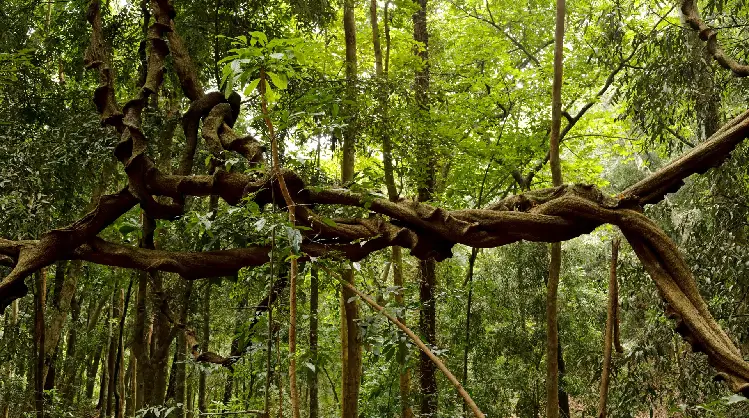
Udawatta Kele Sanctuary has a deep historical connection to the ancient Kandyan Kingdom. During the reign of Sri Lankan kings, the forest was used as a royal garden and a place for meditation and relaxation.
It was strictly protected, and access was limited to members of the royal family. The forest was valued not only for its beauty but also for its spiritual importance.
Even today, the forest holds cultural importance and is closely linked to nearby sacred sites in Kandy. Hidden among the trees are reminders of its past, including old hermitages and historical pathways once used by monks and royals.
Walking through the sanctuary today still carries a sense of that history. The forest feels both ancient and alive.
Rich Biodiversity
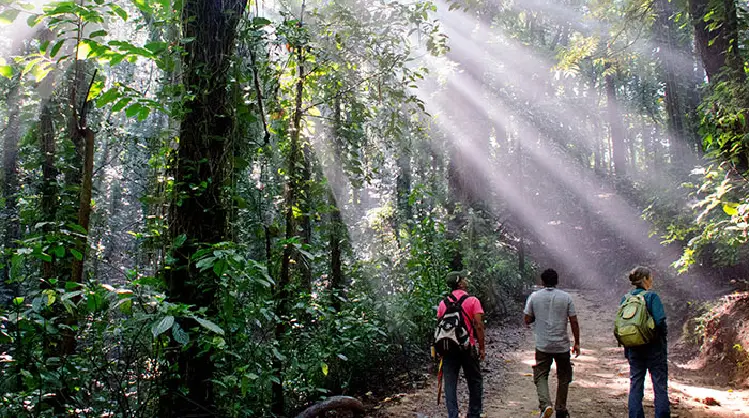
The sanctuary is home to a wide variety of flora and fauna. Towering trees, medicinal plants, and dense vegetation create a thriving ecosystem that supports many species.
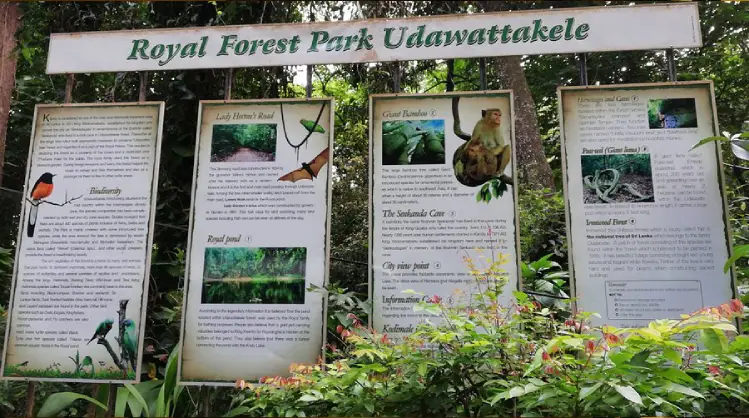
Udawatta Kele is especially famous for its birdlife, making it a popular destination for bird watchers. Species such as endemic birds, monkeys, reptiles, and butterflies can be seen throughout the forest, offering a rich wildlife experience.
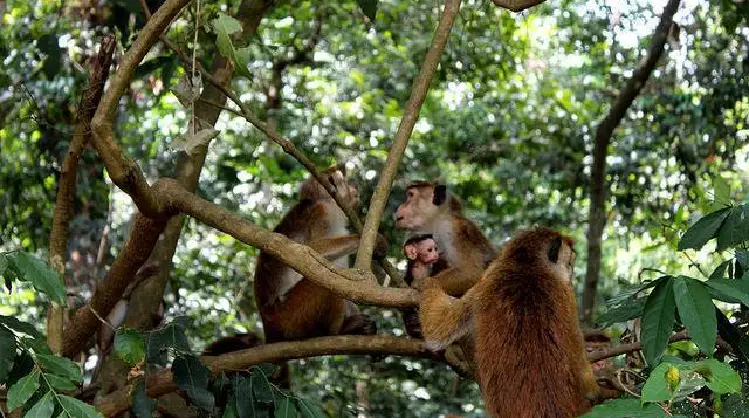
Purple-faced langurs and toque macaques are often seen among the trees. Giant squirrels can sometimes be spotted jumping between branches.
The plant life is equally fascinating. Large hardwood trees, climbing vines, ferns, and medicinal species create a lush forest environment that feels untouched despite being in the city.
For those interested in biodiversity, the sanctuary is a small but remarkable example of Sri Lanka’s natural richness.
Walking Trails and Exploration
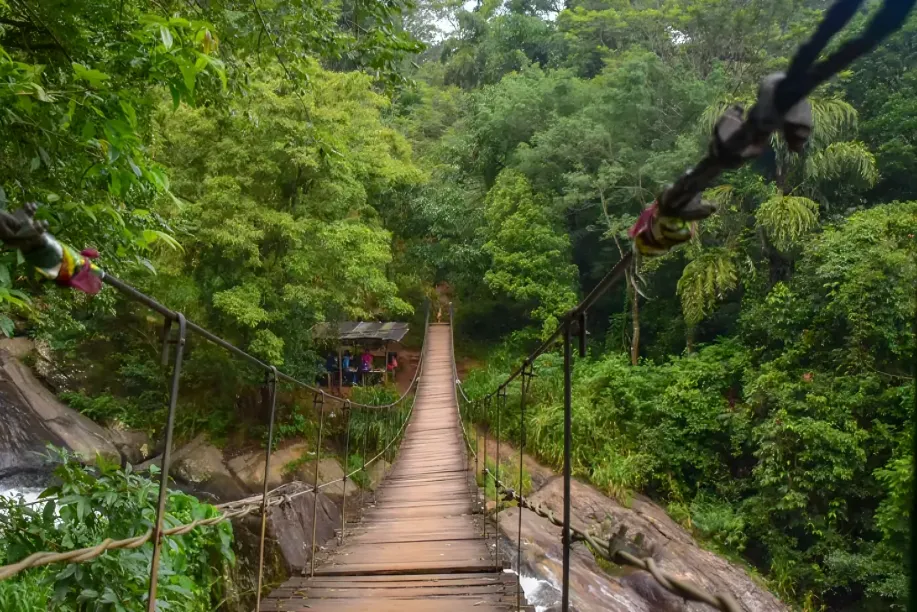
Udawatta Kele features a network of walking trails that take visitors deep into the forest. These paths are shaded by tall trees, providing a cool and comfortable environment even during warmer days.
As you explore, you will come across small clearings, viewpoints, and quiet corners perfect for resting or observing nature.
Some trails are easy and ideal for casual walks, while others feel more adventurous and lead deeper into the sanctuary. The sounds of birds, rustling leaves, and occasional wildlife make each walk immersive.
The sanctuary is especially rewarding for slow exploration. Rather than rushing through, taking time to wander often reveals hidden beauty.
For photographers and nature lovers, every path offers something different.
The Royal Pond (Senanayake Samudraya)
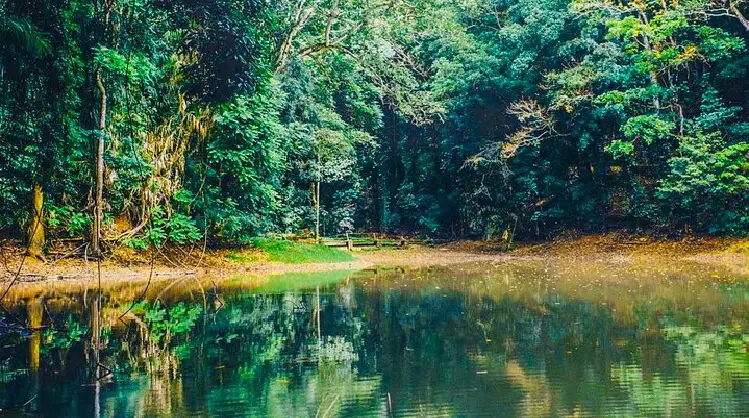
One of the highlights of the sanctuary is the Royal Pond, also known as Senanayake Samudraya. Surrounded by thick forest, this serene water body adds to the beauty and tranquility of the sanctuary.
Its still waters reflect the trees around it, creating a peaceful setting that feels far removed from city life.
It is a great place to pause, reflect, and enjoy the quiet atmosphere. Many visitors spend time here simply listening to nature.
The pond also attracts birds and small wildlife, making it an interesting stop for both relaxation and observation.
Its connection to the sanctuary’s royal history makes it even more special.
A Haven for Bird Watching
Udawatta Kele Sanctuary is considered one of the best bird-watching spots in Sri Lanka. Early mornings are the ideal time to visit, as the forest comes alive with the sounds of birds.
Both endemic and migratory species can be observed, making it a paradise for bird enthusiasts and photographers.
Bird watchers may spot species such as the Sri Lanka hanging parrot, brown-capped babbler, and various kingfishers.
Even casual visitors can enjoy the constant sounds of birds echoing through the forest. The peaceful environment makes bird watching here feel very natural and rewarding.
For anyone interested in wildlife photography, the sanctuary offers excellent opportunities.
A Place for Relaxation and Meditation
Due to its calm and quiet environment, Udawatta Kele is also a popular place for meditation and relaxation.
The natural surroundings, combined with the absence of city noise, create a perfect setting for mindfulness and inner peace.
Many visitors come here not only to walk but also to slow down and disconnect. The cool shade, fresh air, and gentle forest sounds make it ideal for reflection.
There is a peaceful rhythm in the sanctuary that encourages stillness. It is easy to understand why this place once served as a retreat for royalty and monks.
Even a short visit can feel restorative.
Accessibility and Location
The sanctuary is conveniently located within Kandy city, making it easy to access. Despite being close to urban areas, it offers a completely different experience, allowing visitors to feel immersed in nature without traveling far.
This makes Udawatta Kele one of the easiest natural escapes to include in a Kandy itinerary.
It can be visited as a short morning walk or as part of a longer day exploring the city’s cultural attractions.
Its central location makes it appealing for both casual visitors and serious nature enthusiasts.
Few places offer this combination of convenience and wilderness so close to a city center.
Best Time to Visit
The best time to visit Udawatta Kele Sanctuary is during the early morning or late afternoon. The cooler temperatures and active wildlife during these times enhance the overall experience.
Morning visits are especially rewarding for bird watching and peaceful walks before the day gets warmer.
The forest is particularly beautiful after rain, when the greenery is fresh and vibrant. Leaves shine with moisture, the air feels cooler, and the forest seems even more alive.
If visiting during wetter periods, proper footwear is helpful as some trails can be muddy.
No matter the season, the sanctuary has a quiet beauty that changes with the weather.
Conservation and Protection
Udawatta Kele Sanctuary plays an important role in preserving biodiversity in the Kandy region. As a protected area, efforts are made to conserve its natural environment and maintain ecological balance.
The sanctuary also serves as an important green space for the city, helping support wildlife and protect native plant life.
Visitors are encouraged to respect the rules and avoid disturbing wildlife. Staying on marked trails and leaving no waste helps preserve the sanctuary for future generations.
Conservation here is not just about protecting a forest, but also protecting an important part of Sri Lanka’s natural and cultural heritage.
Its preservation makes it valuable both locally and internationally.
Conclusion
Udawatta Kele Sanctuary is more than just a forest—it is a place where history, nature, and peace come together.
Whether you are interested in wildlife, photography, bird watching, or simply enjoying a quiet walk in nature, this sanctuary offers a unique and refreshing experience in the heart of Kandy.
Its blend of biodiversity, historical significance, and peaceful atmosphere makes it one of the city’s most rewarding places to explore.
For travelers looking beyond the usual attractions, Udawatta Kele Sanctuary offers a side of Kandy that feels calm, authentic, and deeply memorable.
Location Map
Nearby Atractions
- Athgala Sri Dalada Maligawa - 0.4 km
- Sri Dalada Maligawa - Temple of Tooth Relic - 0.6 km
- Ehelepola Walawwa - (Wax Museum kandy) - 0.6 km
- Bahirawakanda Temple Kandy - 1.3 km
- Pekoe Trail Stage 2 – Galaha to Loolkandura Scenic Hiking Guide - 2.6 km
- Adigar's Manor: Sleeping Inside the Last Days of the Kandyan Kingdom - 3.1 km
- Nelligala International Buddhist Centre, Kandy: A Complete Visitor's Guide - 9.1 km
- Sagama Raja Maha Viharaya - 9.3 km
- Sagama Perahera - 9.4 km
- Bellwood Kandy - The hidden landscape - 11.2 km