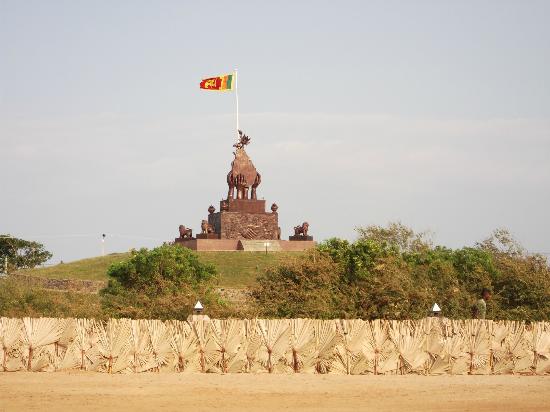
I still remember learning about Elephant Pass as a kid. It wasn’t just a place on the map, it was always mentioned with war, strategy, and something important about the North. Years later, I finally stood there myself, on my way to Jaffna,and it felt very different from what I had imagined.
Where is Elephant Pass?
Elephant Pass sits on the narrow strip of land that connects mainland Sri Lanka to the Jaffna Peninsula. It lies between the districts of Kilinochchi and Jaffna, surrounded by vast lagoons on both sides.
If you’re driving north:
- Anuradhapura → Jaffna You must pass through Elephant Pass
That’s exactly what I did.
My Journey to Elephant Pass
I started my trip from Kandy and decided not to rush. It’s a long drive, so I stayed the first night in Anuradhapura. Early the next morning, I continued my journey toward Jaffna.
Elephant Pass became my first real stop before entering the peninsula.
And honestly, you feel it.
The landscape suddenly changes. The road stretches straight ahead, with open lagoons on both sides. It feels exposed, quiet, and powerful at the same time.
The History of elephant pass
Elephant Pass is not just a location, it’s one of the most strategic military points in Sri Lanka.
During the Sri Lankan civil war, this narrow land bridge was heavily contested between the Sri Lankan Army and the LTTE. Controlling Elephant Pass meant controlling access to Jaffna.
Some key historical context:
- It was a major military base for the Sri Lankan Army
- Site of several intense battles, especially in the 1990s and early 2000s
- Fell under LTTE control at one point before being recaptured by government forces
For many Sri Lankans, this place holds emotional weight.
It’s not just history, it’s memory.
Standing there, it’s hard not to think about what happened on that exact ground.
The War Memorial Today
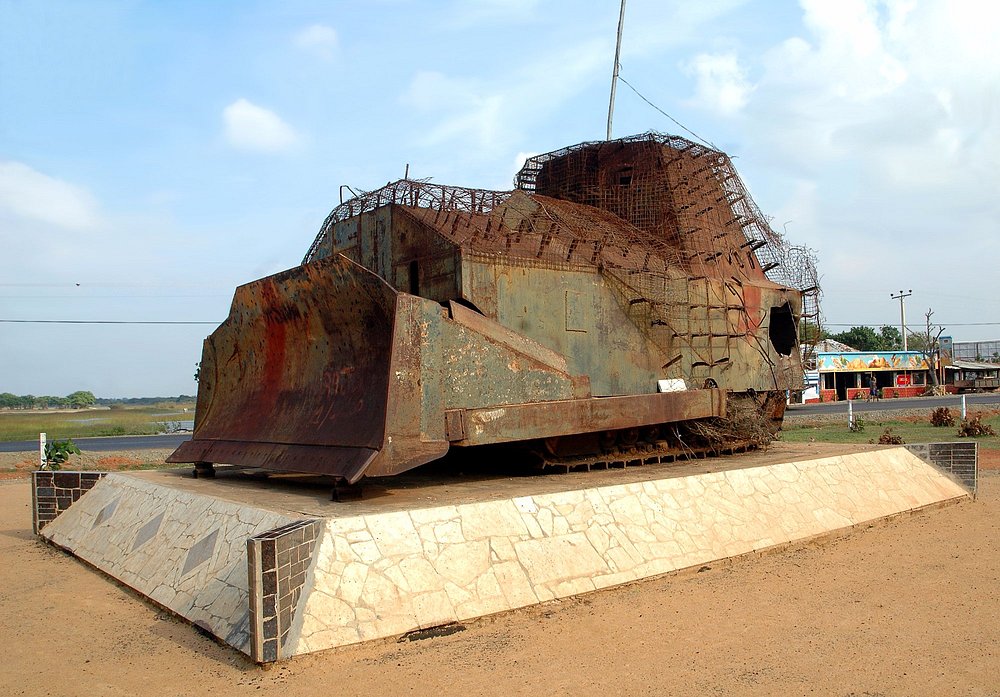
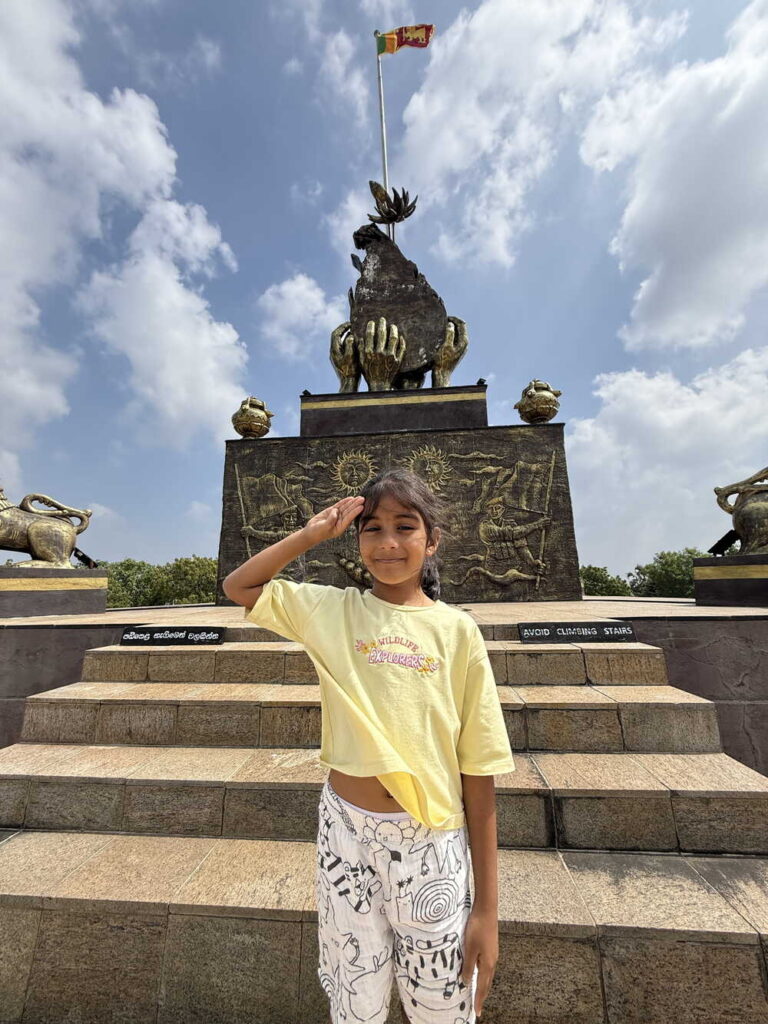
Today, Elephant Pass is peaceful, but it hasn’t forgotten its past.
There is a war memorial site you can visit, maintained by the Sri Lankan Army.
When I stopped there:
- There was a small pathway leading up to the memorial
- It’s not a long climb, but it feels meaningful
Once you reach the top…
You get a full 360° view of the surrounding lagoons and land
It’s quiet. Windy. Open.
And then I noticed something interesting,
the railway line cutting across the landscape.
If you’re lucky, a train passes through.
That moment — the train moving slowly across this once war-torn land — is something you don’t forget.
The Army Information Center
Near the memorial, there’s an army office where you can learn more about Elephant Pass.
This is worth stopping for.
They explain:
- What happened during the battles
- Why this location was so important
- Stories and details you won’t find online
It adds depth to your visit.
You’re not just looking, you’re understanding.
How Elephant Pass Feels Today
This is what surprised me the most.
Elephant Pass today is:
- Calm
- Quiet
- Almost minimal
There’s no chaos. No heavy crowds.
Just:
- Wind
- Water
- Open sky
And yet, underneath all that peace, there’s a strong sense of history.
It’s one of those places where:
You don’t spend hours… but it stays in your mind for a long time
What Makes It Special
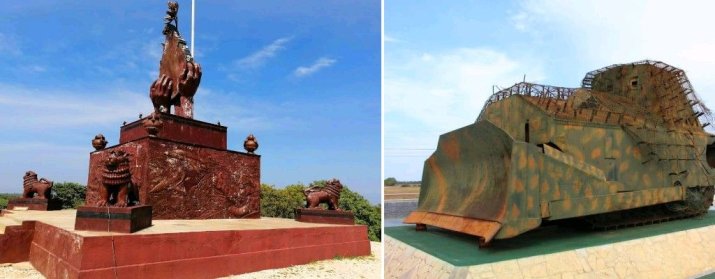
- Unique geography (land strip between lagoons)
- Deep historical significance
- Panoramic views from the memorial
- Chance to see trains crossing the landscape
- Educational value through the army center
Travel Tips
- Best visited during your drive to Jaffna (short stop)
- Morning or evening gives better light and cooler weather
- Spend at least 20 – 40 minutes exploring
- Respect the site, it’s a place of remembrance
Final Thoughts
Elephant Pass was not a place I planned to spend much time at.
But it ended up being one of the most memorable stops on my journey.
Maybe because I had heard about it since childhood.
Maybe because of its history.
Or maybe because of how peaceful it feels now.
Either way, if you’re traveling to Jaffna, don’t just pass through Elephant Pass.
Stop. Walk. Look around.
You’ll understand why this place matters.
Location Map
Nearby Atractions
- Hulu Ganga Waterfall - 241.4 km
- Ehelepola Walawwa - (Wax Museum kandy) - 251.7 km
- Pekoe Trail Stage 2 – Galaha to Loolkandura Scenic Hiking Guide - 253.9 km
- Bathalegala (Bible Rock) A Simple Hike - 262.3 km
- Loolkandura Tea Estate – Sri Lanka’s First Tea Plantation by James Taylor - 262.4 km
- Galaha – A Quiet Tea Country Escape Near Kandy - 262.5 km
- Kondagala Rock – A Hidden Hike Above Sri Lanka’s First Tea Estate - 268.8 km