A few hundred metres from the Temple of the Tooth, on Raja Veediya, stands a two-storey mansion with a tiled roof and a quiet inner courtyard. It was built around 1800 to 1810 on a plot of 141 perches, in the last years of the Kandyan Kingdom. For more than two centuries, most people in Kandy knew it only from the outside, as part of the Bogambara prison. Today it’s one of the city’s newest attractions: Sri Lanka’s first wax museum.
This is Ehelepola Walawwa (ඇහැලේපොල වලව්ව), the Kandy home of Ehelepola Nilame, the last king’s chief minister. His story is the most dramatic of the whole Kandyan period. In just a few years, he rose to the top of the royal court, fell out with the king, lost his wife and four children in one of the cruellest executions in Sri Lankan history, helped the British bring down the kingdom, and then died in exile on an island in the Indian Ocean.
In this article, I go through the history of the Ehelepola family, the tragedy that made them famous, what happened to the walawwa after 1815, and what you’ll find there today.
Ehelepola Walawwa at a Glance
| Sinhala name | ඇහැලේපොල වලව්ව |
| Location | Raja Veediya, Kandy, about 300 m from the Temple of the Tooth |
| Built | About 1800–1810, on 141 perches of land |
| Floors | Two, built around a central courtyard (meda midula) |
| Original owner | Ehelepola Nilame (1773–1829), First Adigar of King Sri Wickrama Rajasinghe |
| Later use | Prison and part of the Bogambara prison complex, from 1818 |
| Protected status | UNESCO-listed conserved building (1998), archaeological protected monument (8 July 2005) |
| Today | Ehelepola Walawwa Wax Museum, King’s Court restaurant and Prison Arcade |
| Managed by | Temple of the Sacred Tooth Relic (Sri Dalada Maligawa) |
| Opened as a museum | 17 July 2025 |
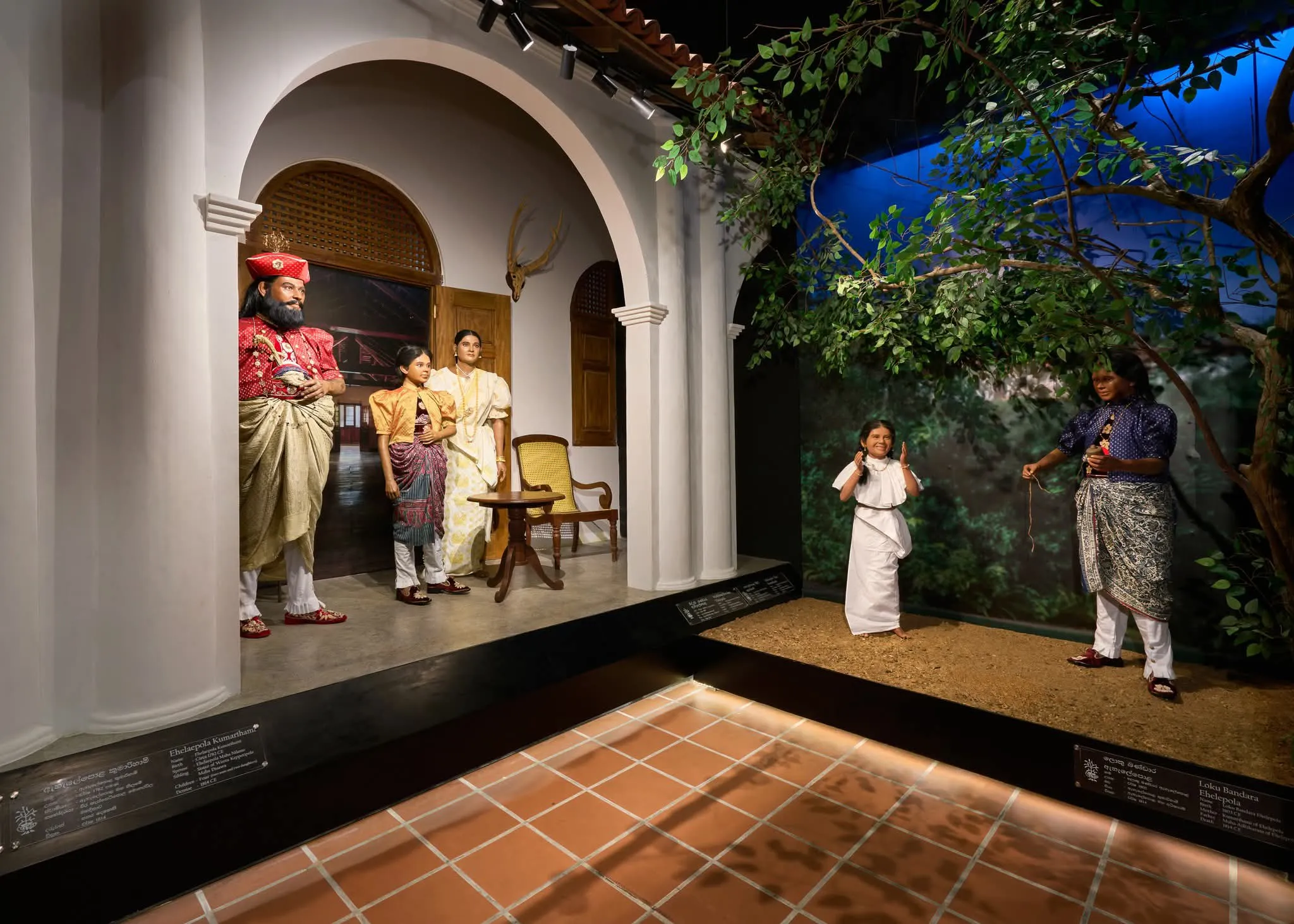
The Ehelepola Family
The Ehelepolas were a radala family, one of the aristocratic families who served the kings of Kandy as ministers and governors. Like most Kandyan noble families, they took their name from their wasagama, their home village: Ehelepola, in the Matale district.
According to family genealogies, the first Nilame identified with the village of Ehelepola became Maha Disawe (governor) of Matale in 1711, succeeding a relative who lived at Monaravila. The family received royal land grants (sannas) in the Matale Maha Disawa, including one dated 1722. Over the next century, the Ehelepolas married into the most powerful families of the court, including the Pilimatalawe and Keppetipola families, which is how they ended up at the centre of the kingdom’s final drama.
Ehelepola Nilame’s mother was Pilimatalawe Kumarihamy, the sister of Pilimatalawe Adigar, the most powerful chief of his day. Some accounts also trace the family to the Madawala Kulatunga family of Uva, through a grandfather who served as Mohottala of the Dadimunda shrine at Aluthnuwara, and link them to Ven. Weliwita Sri Saranankara Sangharaja Thera, who was born Kulatunga Banda. The genealogies aren’t consistent, though, so it’s best to treat these links as family tradition.
The family’s home village is still remembered. Ehelepola Raja Maha Viharaya in Matale holds an annual commemoration for Madduma Bandara, the family’s most famous son, every May.
A name with many spellings
You’ll see the family name written as Ehelepola, Ehelapola, Ahelepola and even Eyhelepola in British records. His full name was Ehelapola Wijesundara Wickramasinghe Chandrasekara Seneviratna Jayatillake Ekanayaka Amarakoon Wahala Panditha Mudiyanse, a string of honorific titles typical of the Kandyan nobility.
Ehelepola Nilame: The King’s Chief Minister
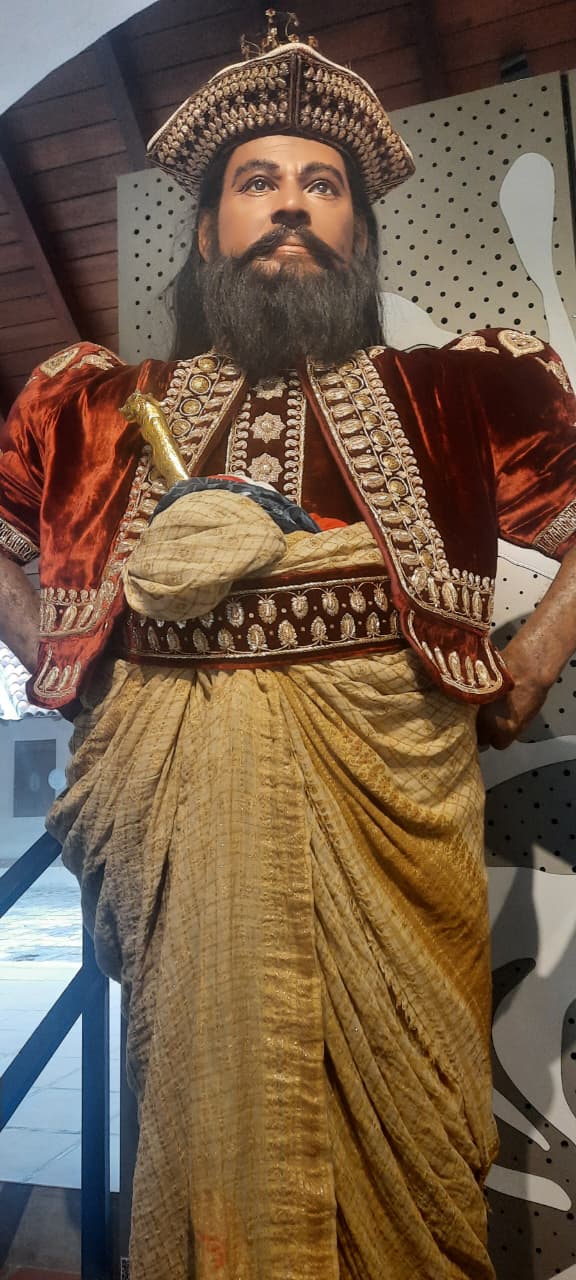
Ehelepola was born in 1773 and educated by the chief priest Yatawatte before he joined the royal household. His first post was Paniwidakara Nilame, and from there he rose quickly through the court of King Sri Wickrama Rajasinghe (reigned 1798–1815), the last king of Kandy.
Ehelepola was born in 1773 and educated by the chief priest Yatawatte before he joined the royal household. His first post was Paniwidakara Nilame, and from there he rose quickly through the court of King Sri Wickrama Rajasinghe (reigned 1798–1815), the last king of Kandy.
- 1808: appointed second Adigar (Udagampahe Adigar) on the death of Megastenne
- As Maha Disawe of Sabaragamuwa: governor of one of the kingdom’s richest provinces, with a residence in Ratnapura
- 1811: appointed first Adigar (Pallegampahe Adigar), the most powerful office in the kingdom after the king, combining the powers of a prime minister and a chief justice
A court full of rivals
The late Kandyan court was a dangerous place. When the province of Sath Korale was split between Ehelepola and his rival Molligoda in 1811, the move caused riots that had to be put down by Ehelepola’s uncle, Pilimatalawe Adigar, and it left lasting bad blood between the two chiefs.
That same year, Pilimatalawe himself was convicted of high treason for plotting to replace the king with a young prince, Kannasamy, and he was beheaded. Ehelepola stepped into his uncle’s place as first Adigar. But the king, who had already executed one chief minister, grew increasingly suspicious of the nobles around him, and his treatment of anyone he saw as an enemy became more and more brutal.
The break with the king
In 1814, a revolt broke out in Sabaragamuwa, and the king sent Ehelepola, as its governor, to put it down. Instead, Ehelepola stayed away and ignored the king’s summons to return to Kandy. The king sent Molligoda after him. After a clash with Molligoda’s men, Ehelepola fled from Ratnapura to the British-held coast at Kalutara and asked the British for help to overthrow the king.
Molligoda returned to Kandy with 47 chiefs of Sabaragamuwa as prisoners, and all of them were executed in a single day. Ehelepola’s wife and children were still in Kandy.
The Tragedy of Ehelepola Kumarihamy
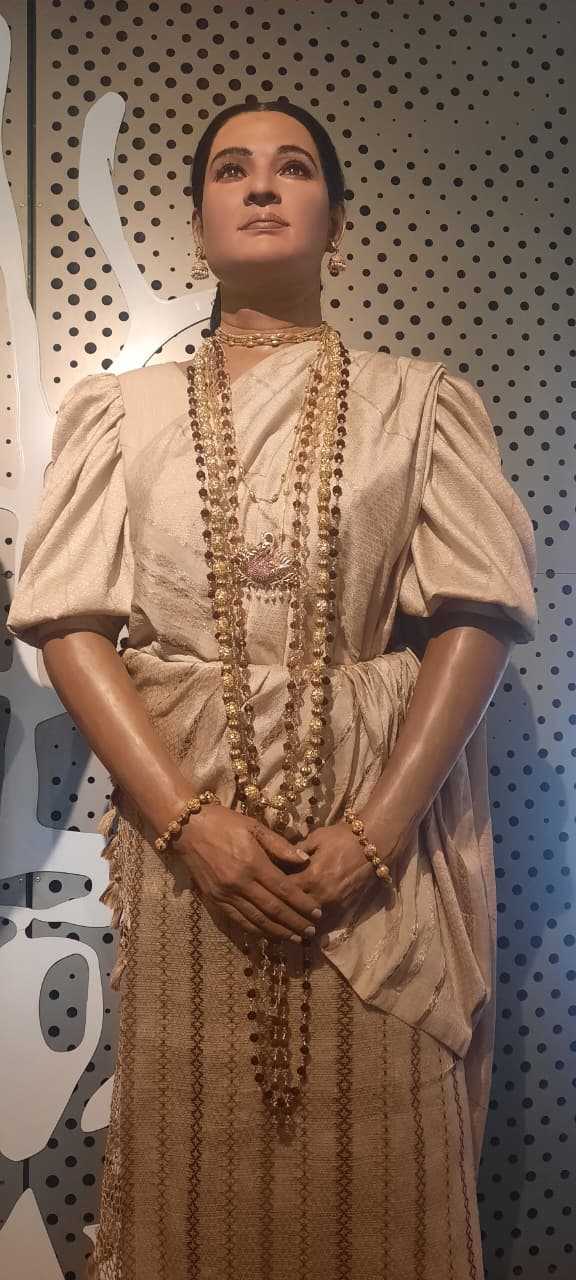
The event that made the Ehelepola name known to every Sri Lankan schoolchild happened in May 1814. Unable to reach Ehelepola himself, the king took his revenge on the family he had left behind in Kandy.
Ehelepola Kumarihamy came from the Keppetipola family; she was a close relative of Keppetipola Disawe, who would later lead the great rebellion of 1818 against the British. She and Ehelepola had four children:
- Loku Bandara, the eldest son, about 11 years old
- Madduma Bandara, the second son, born in 1806 and about 8 years old
- Tikiri Manike and Dingiri Menike, two young daughters, the youngest still a baby
What happened
Kumarihamy and her children were brought out to be executed in front of a crowd near the Natha Devale, close to the palace. According to the traditional account, Kumarihamy told her children that they were doomed and must not be afraid. The two boys were to be beheaded. When Loku Bandara was too frightened to step forward, eight-year-old Madduma Bandara went first and asked the executioner to take his head with a single stroke.
The accounts that follow are among the most horrifying in Sri Lankan history. Nineteenth-century writers, including the British army surgeon Henry Marshall, recorded that the children’s heads were placed in a rice mortar (wangediya) and that the king ordered their mother to pound them. Kumarihamy and three other women of the household were then taken to the Bogambara Wewa, the lake below the palace, where stones were tied around their necks, and they were drowned.
Where the accounts disagree
As with many stories from this period, the details aren’t certain.
- The date: sources give 14, 17 and 21 May 1814. The anthropologist Gananath Obeyesekere, after studying contemporary writings including John D’Oyly’s diary, settled on 21 May 1814. The annual commemoration in Matale is held on 17 May.
- The details: Obeyesekere described some of the informants behind early accounts as unreliable, and he noted that no British account of the time names Bogambara as the lake where the women were drowned.
- The motive: a popular legend says the king had made advances towards Kumarihamy, who was famous for her beauty. This appears in folklore rather than in the historical record.
What isn’t in doubt is that the king executed Ehelepola’s wife and children, and that the killings horrified his own people.
The aftermath
The execution turned the kingdom against its king. According to one popular account, for three days afterwards no fire was lit in any house in Kandy. Riots broke out, the king lost the support of his chiefs and people, and he fled to Hanguranketha. Within a year, he had lost his throne.
The tragedy also gave Sri Lanka one of its national heroes. Madduma Bandara is remembered as a child who faced death without fear, and a statue of him stands in front of the Temple of the Tooth. A later legend even claimed that the ghost of Ehelepola Kumarihamy could be seen at midnight on full moon nights near the old lake.
1815: The Fall of the Kingdom
After the execution of his family, Ehelepola threw in his lot with the British. In early 1815, British forces marched on Kandy with his support, and the war that followed lasted only about 40 days. The king was captured and later sent into exile at Vellore Fort in India, where he died in 1832.
On 2 March 1815, the Kandyan chiefs and the British signed the Kandyan Convention, which handed the kingdom to the British Crown. Ehelepola was one of the chiefs most responsible for bringing it about, and some Sri Lankan accounts suggest he hoped to be made king himself, or planned to use the British to remove the king and then turn on them.
If he hoped for a crown, he didn’t get one. The British were wary of a chief so popular with the people. He was even banned from small displays of power, such as riding his white horse in public, in case people began to see him as a future king of Kandy.
Arrest, Exile and Death in Mauritius
In 1817, a great rebellion against British rule broke out in Uva and spread across the Kandyan provinces. The British suspected Ehelepola of being involved, and on 3 March 1818 he was arrested along with several other Kandyan chiefs. In an irony he never got to enjoy, a medal designed especially for him by the Prince Regent, in gratitude for his help in 1815, reached the Governor just days after the order for his arrest had been issued.
Ehelepola was never tried. He was held in Colombo for seven years and then banished. On 14 May 1825, he left Colombo aboard the ship Alexander, and on 6 June 1825 he landed at Port Louis in Mauritius, where about 30 Kandyan prisoners had already been sent. He arrived with a small group of attendants, including his interpreter, Don Bastian.
His exile was comfortable by the standards of the time. He was held at Moulin à Poudre near Pamplemousses, in buildings that had become a state prison in 1823, but he was allowed to move around freely and was given a spacious residence, a butler and his choice of food and wine.
Ehelepola died in Mauritius on 5 April 1829, of cholera, at the age of about 56. At his family’s wish, his body was taken to be cremated before sunset, escorted by a military guard and accompanied by his male relatives and servants. He left one son, born in exile.
The man who had served one master and helped topple him, then been betrayed by the next, is still a complicated figure in Sri Lankan history: a traitor to some, a victim to others, and to many the father of Madduma Bandara.
The Walawwa
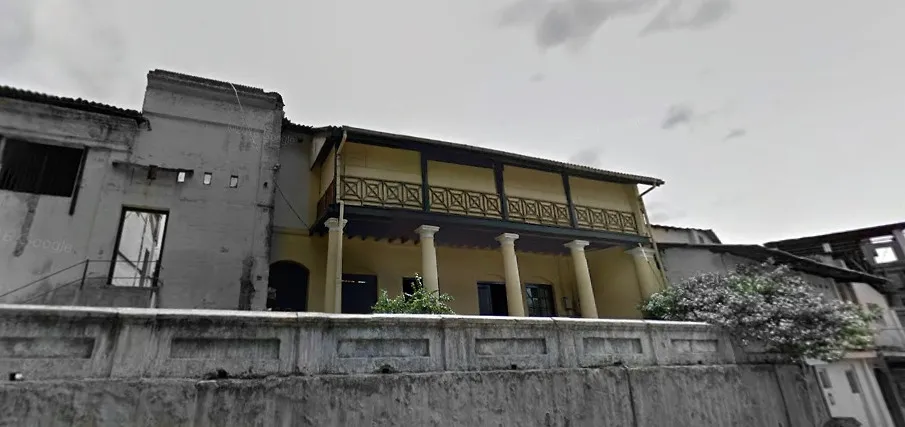
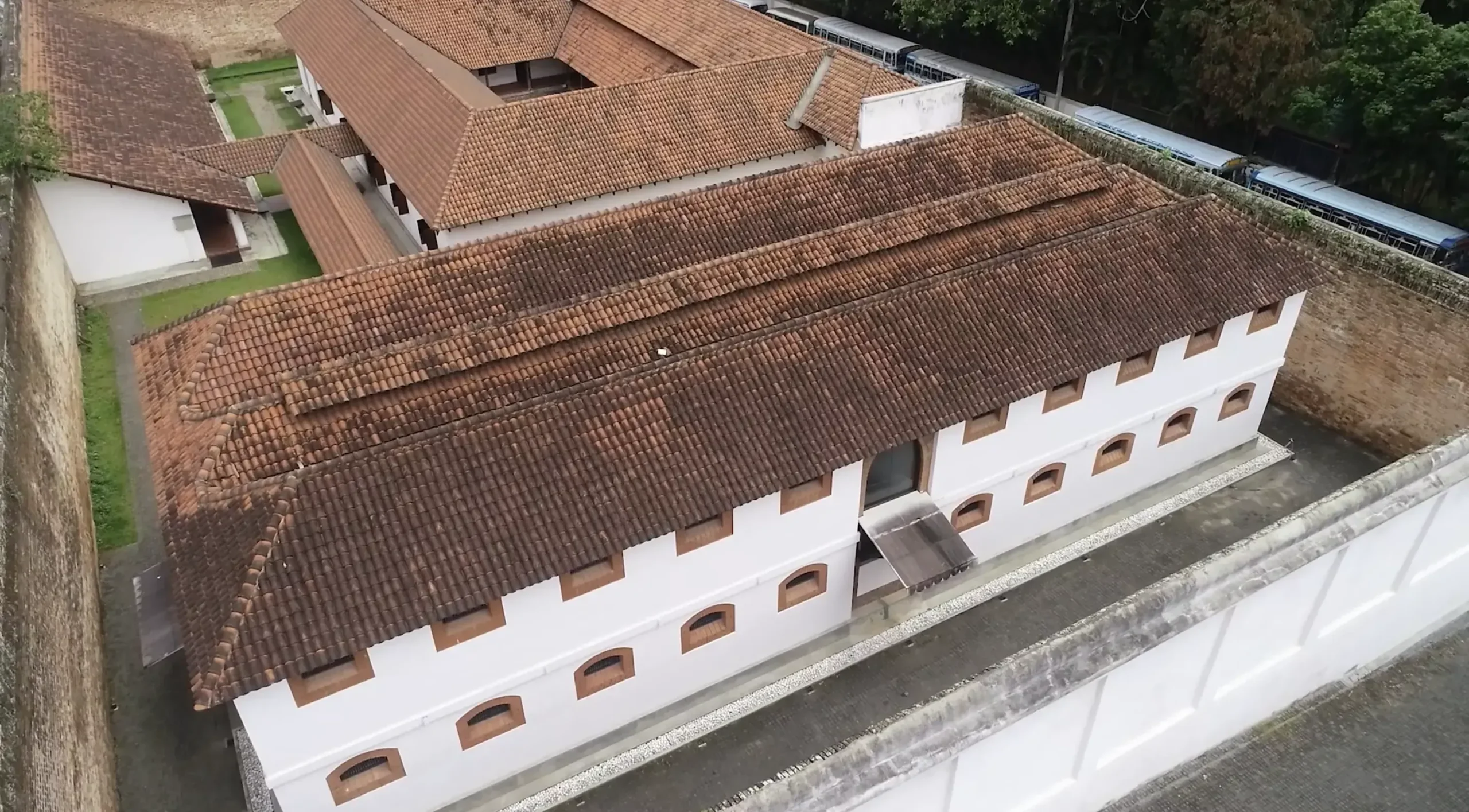
Ehelepola Walawwa was one of the 18 walawwas that stood in the grid of streets next to the palace and the Temple of the Tooth in the last years of the kingdom. The great chiefs had to attend court regularly, so each powerful family kept a house close to the king. Ehelepola’s was on Raja Veediya, the “King’s Street”, only a few minutes’ walk from the palace. King’s Street was the road the royals took when they went out into the city, and the walawwa still stands on it today, between the old legal offices and St. Paul’s Church.
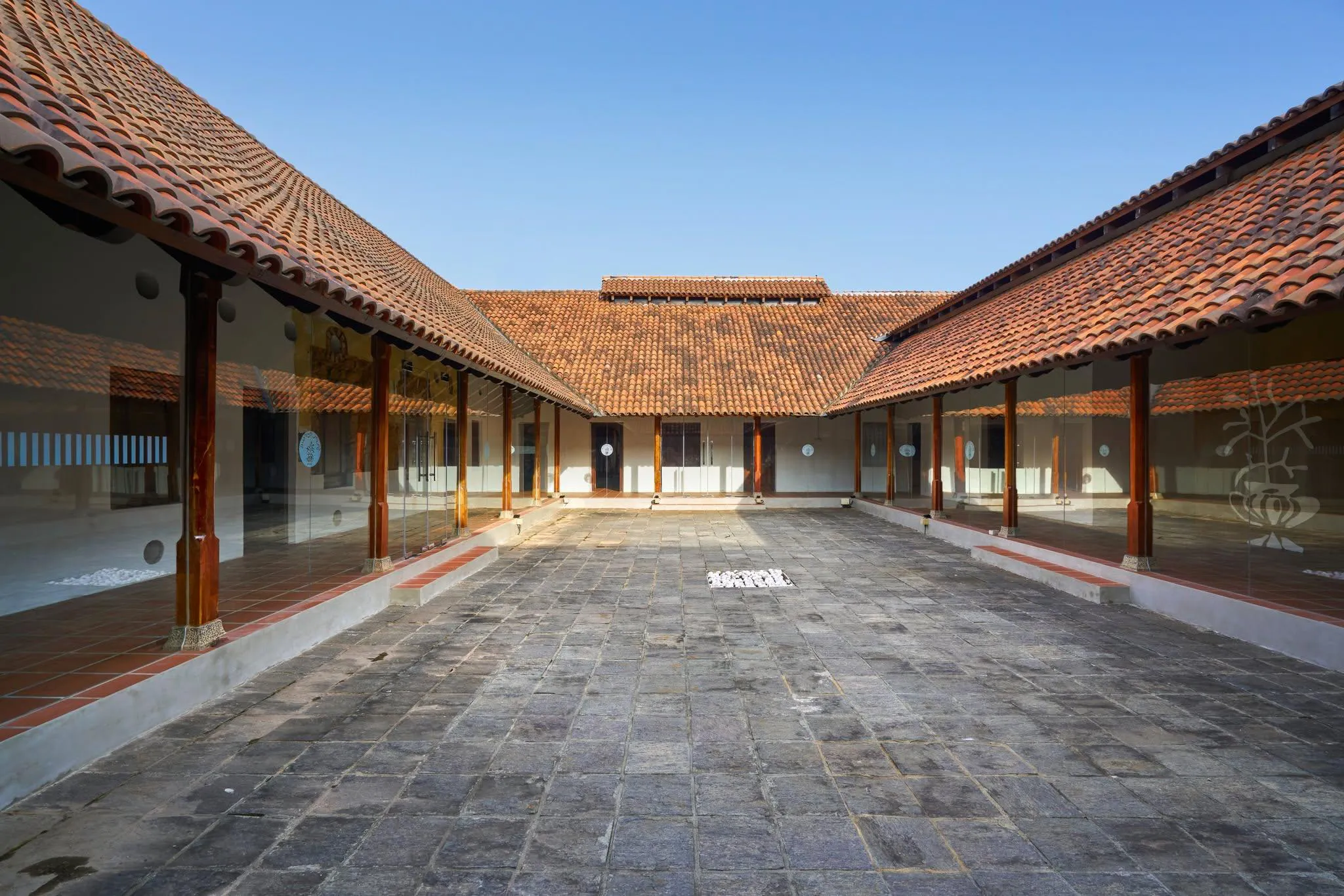
The walawwa is believed to have been built between 1800 and 1810, during Ehelepola’s rise at court, on a plot of 141 perches. It’s a two-storey walawwa built around a central open courtyard, the meda midula (මැද මිදුල), with a terracotta-tiled floor, verandahs and rooms opening onto it. Like other walawwas of the highest officials, it had a tiled roof, clay floors and painted walls, privileges that ordinary Kandyans were forbidden to use without the king’s permission.
Two Centuries as a Prison
According to some accounts, Ehelepola offered his walawwa to the Maha Sangha. If so, the gift didn’t last. After the rebellion of 1817–1818, the British seized the house and turned it into a prison.
They filled it with the leaders of the rebellion. Around 53 chiefs, nobles and Buddhist monks were held here, among them Madugalle Nilame, Ellepola Nilame, Keppetipola Disawe and Kivulegedara Mohottirala, all of whom were later executed by the British.
The cruellest irony was that Ehelepola himself was among the first prisoners held in his own former home, together with Keppetipola Disawe. More than 50 leaders of the rebellion made up that first group of inmates. To turn the house into a jail, the British are said to have damaged its original shape and built new prison cells in the grounds.
Keppetipola’s death is the walawwa’s most poignant link to the family tragedy of 1814. He was related to Ehelepola Kumarihamy and was the uncle of the children who had died four years earlier. On 26 November 1818, he and Madugalle were taken from their prison to the execution ground near Bogambara Lake and beheaded. Like his young nephew Madduma Bandara, Keppetipola is said to have asked the executioner to take his head with a single stroke. Their bodies are said to have been buried on the banks of the lake.
Part of Bogambara Prison
The walawwa stayed a prison for the rest of the colonial period. The Bogambara Wewa, the lake where Kumarihamy is said to have been drowned, was later filled in, and the large Bogambara Prison was built on the land, opening in 1876. The walawwa became part of this prison complex, used as the Bogambara Remand Prison, with two two-storey cell blocks built beside it.
It stayed in the hands of the Prisons Department even after independence in 1948. For most of the 20th century, people walking along Raja Veediya saw only its outer walls. The prison itself has since moved to Pallekele, outside Kandy.
Recognition
The walawwa’s return to the public took more than a decade.
- 13 July 2013: the Prisons Department released the 0.39-hectare site to the President for development as a cultural and urban facility centre. Despite the handover, the building stayed closed.
- June 2018: the Urban Development Authority and JICA opened the walawwa to the public for four days during a programme to promote Kandy’s heritage. JICA’s survey that year found that the cell blocks had been repaired without proper conservation, with most of their historic materials replaced, while the walawwa itself still had its central courtyard and a temporary shed over its roof to keep out the rain. At the time, the UDA was considering a restaurant and craft shop.
- 2022: the Diyawadana Nilame of the Temple of the Tooth, Pradeep Nilanga Dela, proposed a wax museum on the Kandyan era to the then President, Ranil Wickremesinghe. That January, after nearly three years of work, the UDA finished restoring the walawwa and the Temple announced that it had been handed over. The restoration was carried out under the supervision of the Department of Archaeology and the guidelines of the Central Cultural Fund, with labour from the Sri Lanka Navy and Army, at a cost of about Rs. 150 million. According to the Temple, it was done without damaging the walawwa’s original plan.
- 2025: following a Cabinet decision in February 2024 that formally handed the walawwa to the Temple of the Sacred Tooth Relic and approved the wax museum, the museum was installed. Before the opening, an all-night pirith chanting and alms-giving were held to honour the Ehelepola family.
- 17 July 2025: President Anura Kumara Dissanayake formally opened Sri Lanka’s first wax museum at Ehelepola Walawwa. It opened to the public a few days later, on 20 July.
The project, the Ehelepola Walawwa Museum Special Project, cost around Rs. 300 million, on top of the Rs. 150 million spent restoring the building.
The man behind the wax figures
The museum was designed by Athula Herath of Gampola. His interest in wax sculpture began in 2000, when he bought a magazine about Madame Tussauds from a street vendor on Kotugodella Veediya in Kandy. With almost no local knowledge to draw on, he taught himself the craft and went on to complete a wax museum in Polonnaruwa. The interior of the Kandy museum was designed by his son, Mahima Herath, a chartered architect.
What’s Inside Today
The restored walawwa is now a small heritage complex with four parts.
The Kandyan Era Wax Museum
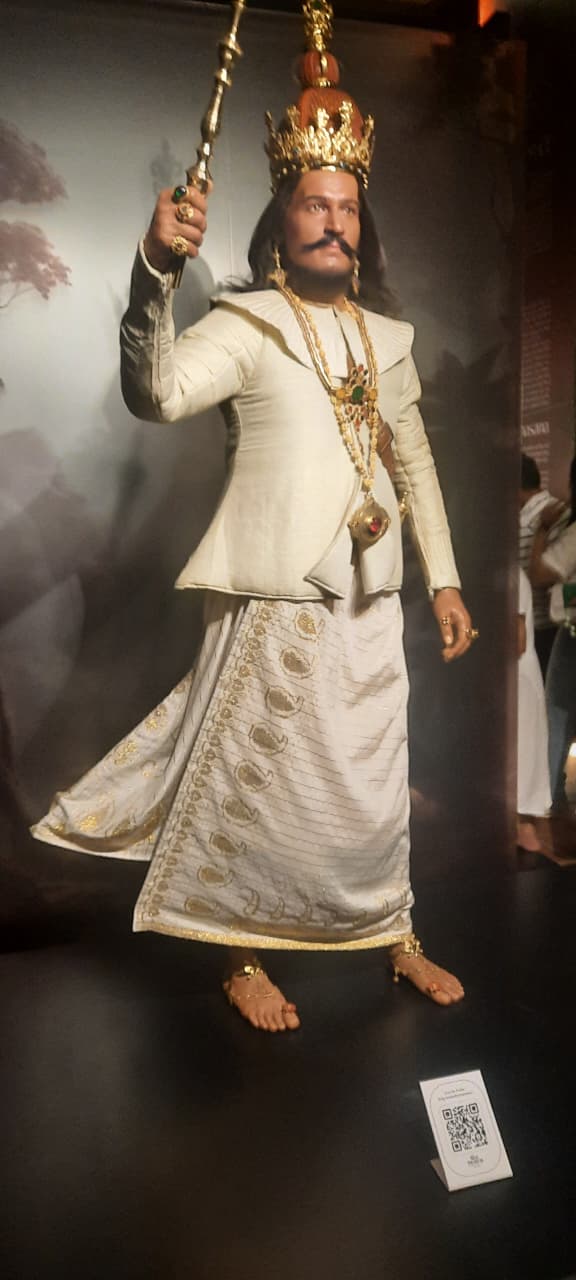
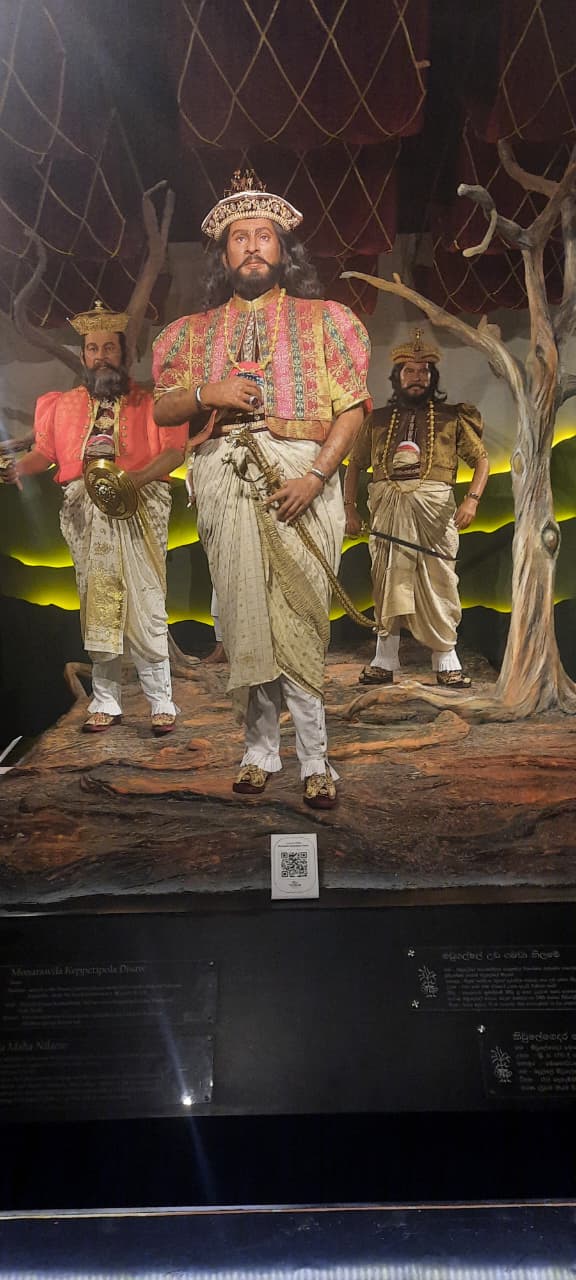
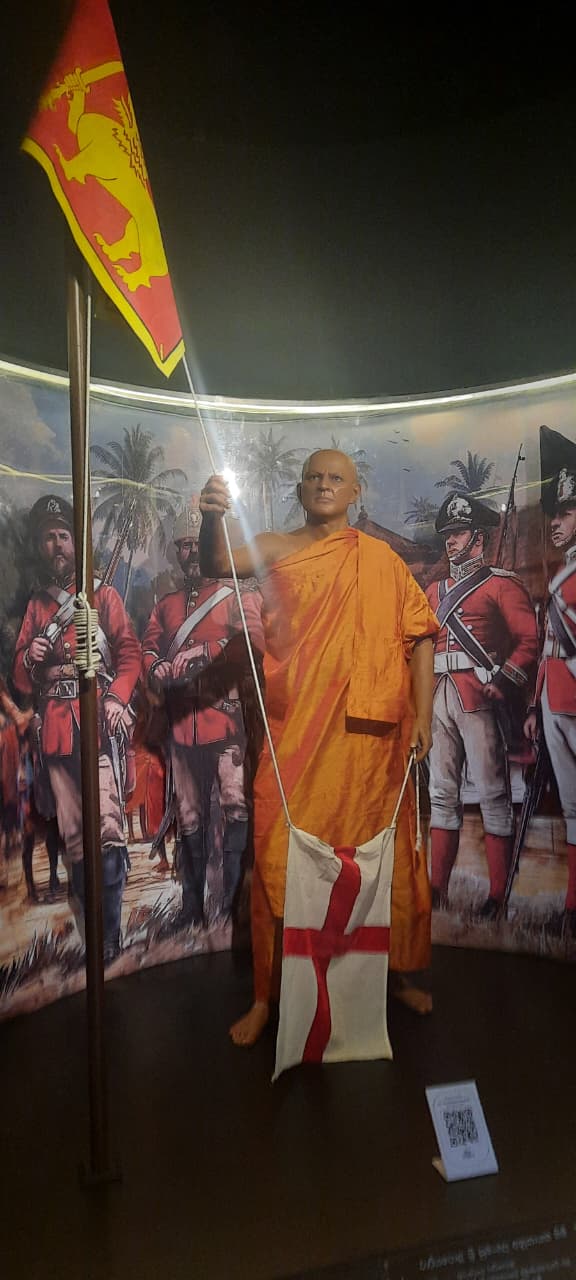
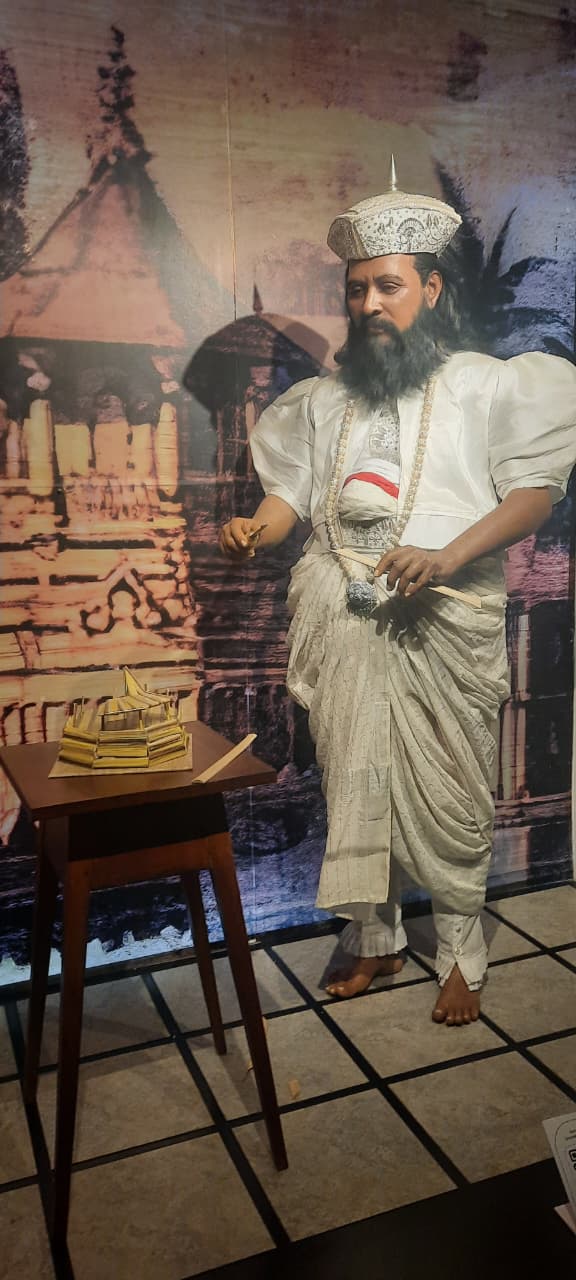
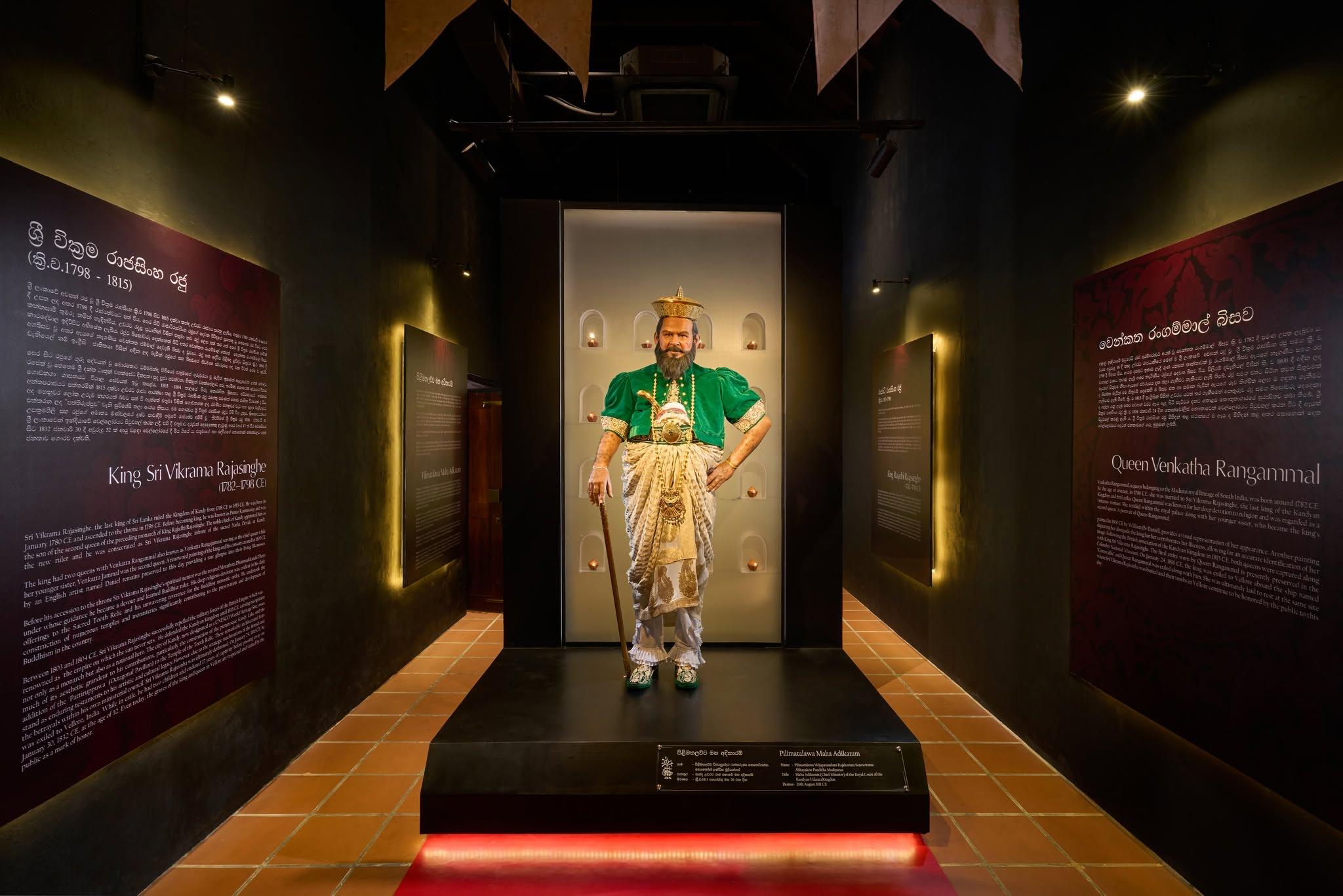
The museum tells the story of the Kandyan Kingdom from 1594 to 1818 through 35 life-size wax figures of the people who shaped it. They include:
- Ehelepola Maha Adikaram and members of the Ehelepola family
- King Sri Wickrama Rajasinghe, the last king of Kandy
- King Wimaladharmasuriya I
- Keppetipola Disawe
- Devendra Mulachariya, the royal architect
- Ven. Weliwita Sri Saranankara Sangharaja Thera
- Ven. Wariyapola Sri Sumangala Thera
Alongside the figures are displays on Kandyan architecture, customs, crafts and royal cuisine. Each figure has a QR code you can scan to read the full story of the person or moment it shows.
The Meda Midula
The walawwa’s original terracotta-floored courtyard has been restored as a quiet open space at the heart of the building, laid out with traditional landscaping. It’s the best place to get a sense of what the house was like before it became a prison.
King’s Court
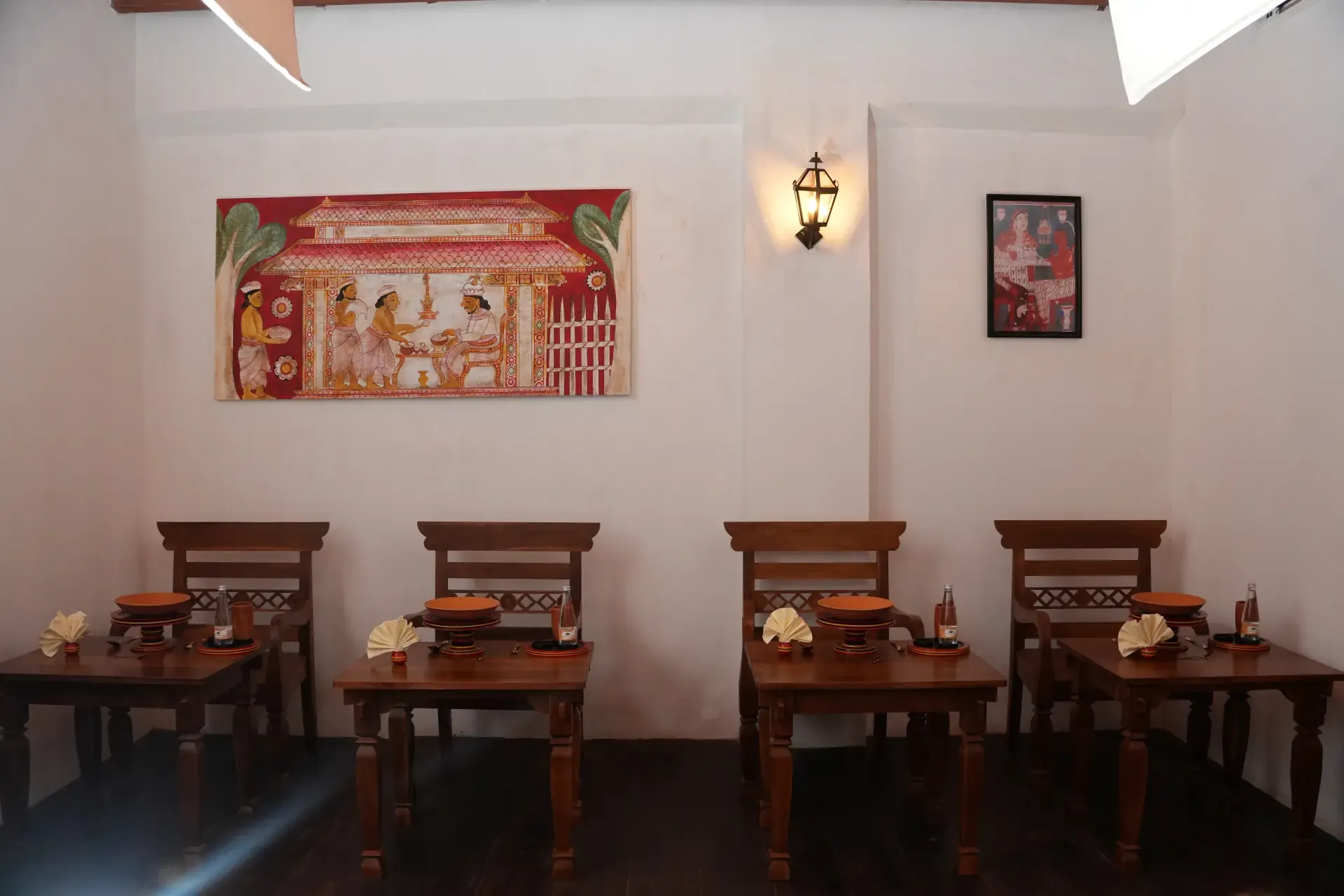
The restaurant serves Sri Lankan dishes in a setting inspired by the walawwa’s past, with earthenware cups and plates, rattan sofas, working cloth fans and dumb waiters.
The Prison Arcade
The two old cell blocks are now the Prison Arcade, a two-storey shopping arcade with 40 shops, 20 on each level. From inside the old prison, you can look out through the iron bars towards the seated Buddha statue on the hill above Kandy, a striking view given the building’s history. One of the first shops to open was Royal Touch, a specialty tea and coffee boutique run by a Kandyan couple, and its owner, Dr. Sujatha Rajapaksha, likes to point out that you can see the Bahirawakanda Buddha from the shop.
Visiting Ehelepola Walawwa
Location: Raja Veediya, Kandy, about 300 m (a five-minute walk) from the Temple of the Tooth
Opening hours and tickets: check the official website, ehelepolawalawwa.lk, before you go
Time needed: allow 1 to 2 hours for the museum, the courtyard and the arcade, more if you’re eating at King’s Court
Tips
- Read the story first. The wax figures mean much more if you already know who Ehelepola, Kumarihamy, Madduma Bandara and Keppetipola were. That’s partly why I wrote this article.
- Use the QR codes. Every figure has one, and the stories behind them are worth reading on your phone as you go.
- Combine it with the Temple. Visit the Temple of the Tooth in the morning, then walk to the walawwa and have lunch at King’s Court.
- Look for Madduma Bandara. His statue stands in front of the Temple of the Tooth, a short walk away. It’s worth seeing before or after your visit.
- Avoid Perahera evenings. During the Esala Perahera in July or August, the streets around Raja Veediya are closed and crowded in the evenings.
Other Ehelepola Places in Sri Lanka
- Ehelepola Walawwa, Ratnapura: Ehelepola’s official residence as governor of Sabaragamuwa. It has been the Ratnapura National Museum since 13 May 1988 and a protected monument since 1999. Among its exhibits is a sword believed to have belonged to Ehelepola himself.
- Ehelepola Raja Maha Viharaya, Matale: the temple in the family’s home area, where Madduma Bandara is commemorated every year on 17 May.
Final Thoughts
Few buildings in Sri Lanka have lived as many lives as Ehelepola Walawwa. It was the home of the most powerful man in the kingdom after the king, the Kandy home of a family destroyed in 1814, the prison where the next generation of rebel chiefs spent their last days, a closed corner of a city jail for most of two centuries, and now a museum that tells their stories in wax.
When you stand in the restored courtyard today, it’s hard to imagine everything these walls have seen. That’s exactly why it’s worth the visit.
Sources and Further Reading
- Amal Hewavissenti, “The last days of Ehelepola Adikaram: A grudge that rewrote history”, Sunday Observer, 19 September 2010
- S.B. Karalliyadda, “The child hero who made the supreme sacrifice for his father”, Daily News, 20 May 2004
- “Murder of Ehelepola family, Bogambara Wewa and sightings of Wangediya”, The Island (discussing Gananath Obeyesekere’s research)
- “An imperial saga: the Kandyan Sinhalese prisoners in Mauritius 1819–1832”, Colombo Telegraph
- L.B. Senaratne, “All in wax: The Ehelepolas’ tragic story and the fall of the Kandyan Kingdom”, Sunday Times, 6 July 2025
- Jonathan Frank, “Past Perfect: Wax museum revives Kandyan majesty”, Sunday Observer, 27 July 2025
- Reports on the opening of the wax museum, 17 July 2025 (Presidential Media Division, Daily FT, Daily Mirror, The Morning)
- Japan International Cooperation Agency, Greater Kandy Urban Plan, Final Report, Vol. 2 (2018)
- Kandyan family genealogies, Sri Lanka Kandyan Sinhala Family Genealogy (WorldGenWeb), Ehelepola family #3114
- Department of Archaeology, List of Archaeological Protected Monuments (Kandy and Ratnapura districts); Sri Dalada Maligawa, “The Ehelepola Walawwa was handed over to the Temple of the Sacred Tooth Relic after its renovation” (7 January 2022); “Ehelepola Walawwa to become first wax museum in Sri Lanka”, Daily Mirror (2024); “Ehelepola Walawwa to house wax museum”, The Island (2024)
Location Map
Nearby Atractions
- Ehelepola Walawwa - (Wax Museum kandy) - 0 km
- Athgala Sri Dalada Maligawa - 0.3 km
- Sri Dalada Maligawa - Temple of Tooth Relic - 0.3 km
- Udawatta Kele Sanctuary – A Tranquil Forest Reserve in Kandy - 0.6 km
- Bahirawakanda Temple Kandy - 0.9 km
- Pekoe Trail Stage 2 – Galaha to Loolkandura Scenic Hiking Guide - 2.2 km
- Adigar's Manor: Sleeping Inside the Last Days of the Kandyan Kingdom - 3.7 km
- Nelligala International Buddhist Centre, Kandy: A Complete Visitor's Guide - 8.7 km
- Sagama Raja Maha Viharaya - 9.2 km
- Sagama Perahera - 9.4 km