The Complete Guide to Panthera pardus kotiya – Sri Lanka’s Apex Predator
Introduction
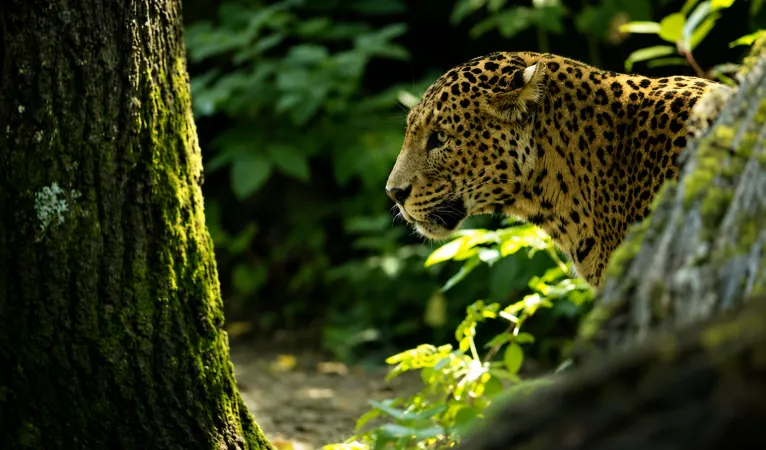
There is a moment, somewhere in the dry scrub of Yala or in the mist-heavy highlands of Horton Plains, when the forest goes still. The spotted deer freeze. The jungle fowl scatter without a sound. And then, moving through the shadows like a whispered rumour, the leopard appears golden, unhurried, sovereign.
Sri Lanka is one of the finest places on earth to watch a wild leopard. Unlike the vast savannahs of Africa, where sightings can require days of searching, Sri Lanka’s leopards are remarkably accessible. They lounge on open rock faces. They cross dusty jeep tracks in broad daylight. They stare back at the camera with an unsettling calm. This accessibility, however, should not be mistaken for abundance. The Sri Lankan leopard (Panthera pardus kotiya) is an endangered subspecies unique to this island. With fewer than 800 mature individuals estimated to remain in the wild, every sighting carries weight.
This guide is both a celebration and an education. It covers everything you need to know about the Sri Lankan leopard: its biology, behaviour, ecology, conservation status, and the best places to find it in the wild.
The Animal Itself
Scientific Classification
| Category | Detail |
|---|---|
| Kingdom | Animalia |
| Phylum | Chordata |
| Class | Mammalia |
| Order | Carnivora |
| Family | Felidae |
| Genus | Panthera |
| Species | Panthera pardus |
| Subspecies | Panthera pardus kotiya |
| Described by | Deraniyagala, 1956 |
| Common name (Sinhala) | Kotiya (කොටියා) |
| Common name (Tamil) | Siruththai |
| IUCN Status | Vulnerable (listed 2020) |
The subspecies was first formally described in 1956 by Sri Lankan zoologist Paules Edward Pieris Deraniyagala, and its scientific name kotiya is derived directly from the Sinhala word for leopard. It is one of nine recognised leopard subspecies worldwide and the only one entirely endemic to an island in Asia.
Physical Description
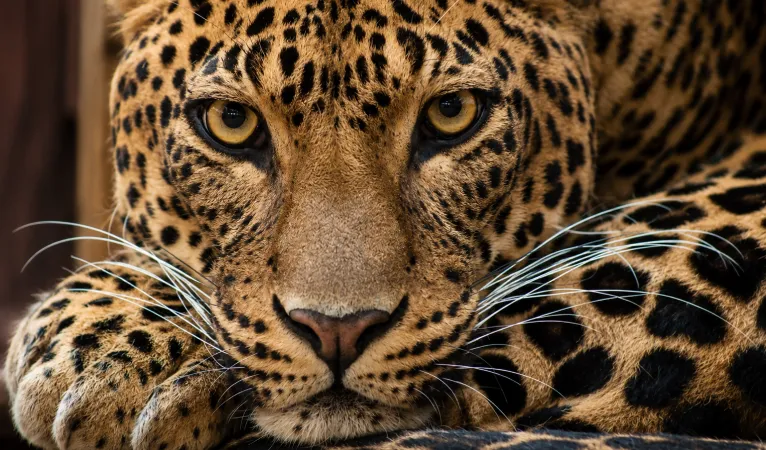
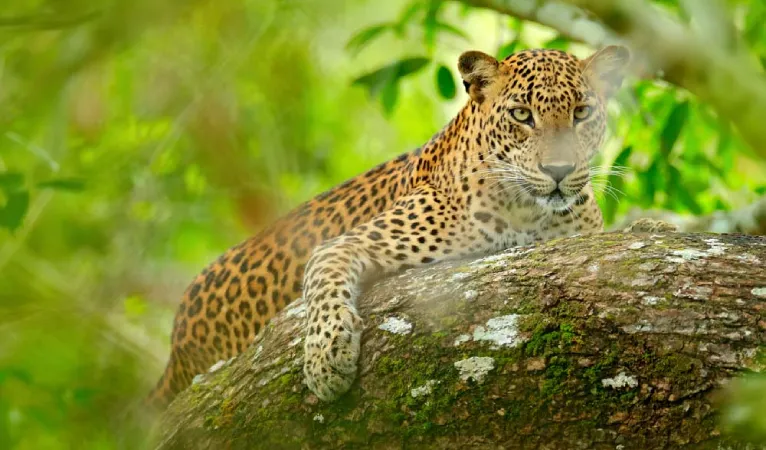
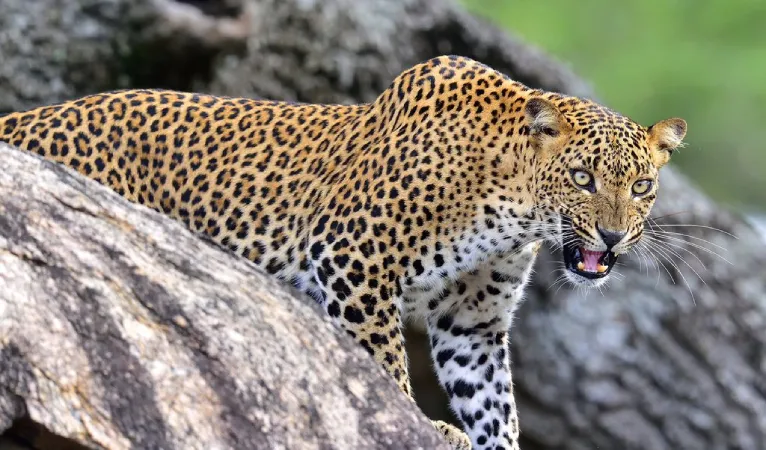
The Sri Lankan leopard is, quite simply, one of the most beautiful animals alive. Its coat ranges from pale straw-yellow in the dry lowlands to a deep, burnished amber in the wetter highland forests. Dark black spots cluster into rosettes, interlocking circular patterns that fracture the outline of the cat’s body, making it vanish against dappled forest light with extraordinary efficiency.
Compared to the Indian leopard (Panthera pardus fusca), the Sri Lankan subspecies displays smaller, more tightly arranged rosettes, giving the coat a finer, denser texture. The undersides of the body, throat, chest, belly, and inner limbs are white.
Size and weight vary significantly between sexes, one of the most pronounced sexual dimorphisms of any big cat:
- Females average approximately 29 kg (64 lb), with a head-to-body length of around 1.04 m (3 ft 5 in) and a tail measuring roughly 77 cm. The largest recorded female reached 1.14 m.
- Males average approximately 56 kg (124 lb), with a head-to-body length of around 1.27 m (4 ft 2 in) and a tail of 86 cm. Large males have been recorded at 77 kg (170 lb), and some accounts suggest exceptional individuals approaching 100 kg, though verified data at this end is scarce.
Males are at least 30% larger than females. Their heads are noticeably broader and more massive, giving dominant males a commanding, leonine presence.
Shoulder height ranges between 45 and 80 cm.
Tail: The tail exceeds half the total body length, a critical feature for balance during leaps and climbing.
One of the most remarkable physical traits is the scapular musculature: the muscles attached to the shoulder blades are exceptionally powerful, enabling the leopard to scale near-vertical tree trunks with ease and carry prey heavier than itself.
Why Is the Sri Lankan Leopard So Large?
The answer lies in ecological liberation. In most parts of the world, leopards exist in the shadow of lions, tigers, and hyenas, larger predators that steal their kills, monopolise large prey, and impose competitive restrictions. In Sri Lanka, there are no lions. There are no tigers. There are no large competing carnivores. The Sri Lankan leopard stands alone at the apex of the food chain, free to grow larger, hunt larger prey, and behave with a confidence rarely seen in leopards elsewhere. This evolutionary freedom, called competitive release, is why Sri Lanka’s leopards are among the largest in the world.
The Black Leopard: A Sri Lankan Rarity
Among the most extraordinary and least understood variations of Panthera pardus kotiya is the melanistic, or black, leopard. Melanism is caused by an excess of the pigment melanin, and in Sri Lanka, this form has been recorded primarily in the wet zone and montane regions at Mawuldeniya, Nallathanniya, and a handful of other locations.
In 2019, wildlife experts filmed a living black Sri Lankan leopard for the first time on camera. A year later, in 2020, a melanistic individual was found dead, caught in a snare set for wild boar in Nallathanniya, a tragedy that underscored both the rarity of the animal and the lethality of indiscriminate trapping.
Research published in 2023 in the journal PLOS ONE identified a unique single-nucleotide polymorphism (SNP) in the Agouti Signalling Protein (ASIP) gene as the cause of coat colour change to black in Sri Lankan leopards, a finding distinct from the melanistic mutations documented in other leopard subspecies, suggesting this is an island-specific genetic development.
Senses and Physical Adaptations
The leopard is engineered for stealth and explosive force. Its adaptations are a masterclass in evolutionary precision.
Vision: Highly dilatable pupils allow the leopard to shift seamlessly between bright daylight and near-total darkness. A reflective layer behind the retina, the tapetum lucidum amplifies available light at night, giving the leopard approximately sixfold better low-light vision than a human. Its eyes are positioned for binocular forward vision, providing the depth perception needed to judge leap distances.
Hearing: Large, mobile ears can rotate independently to triangulate sound. The leopard can detect frequencies from 20 Hz to 40 kHz, well above human range, allowing it to hear the scrape of a hoof or the rustle of a spotted deer long before the prey is visible.
Whiskers (vibrissae): Extraordinarily sensitive to air pressure changes and contact, whiskers allow the leopard to navigate dense vegetation in total darkness.
Retractable claws: Like all cats except the cheetah, the leopard sheaths its claws when walking to preserve their edge. The claws extend on demand during the sprint, the climb, and the kill, delivering maximum grip and penetrating power.
Coat patterning: The rosette pattern is not merely decorative; it is functional camouflage that disrupts the animal’s silhouette in dappled forest light and mimics the shadow patterns of grassland undergrowth.
Voice: The leopard’s call is a distinctive, rasping cough often likened to the sound of sawing wood, used to advertise territory. It also growls, snarls, and, uniquely among big cats, is capable of a low, rumbling purr.
Behaviour and Ecology
Solitary Nature
The Sri Lankan leopard is almost entirely solitary outside of mating and cub-rearing. Males and females come together briefly for mating but otherwise lead separate lives within overlapping territorial ranges. A study in Yala National Park confirmed that the Sri Lankan leopard is no more socially inclined than other subspecies despite having no competing apex predators. Its solitary nature is intrinsic, not a response to interspecific pressure.
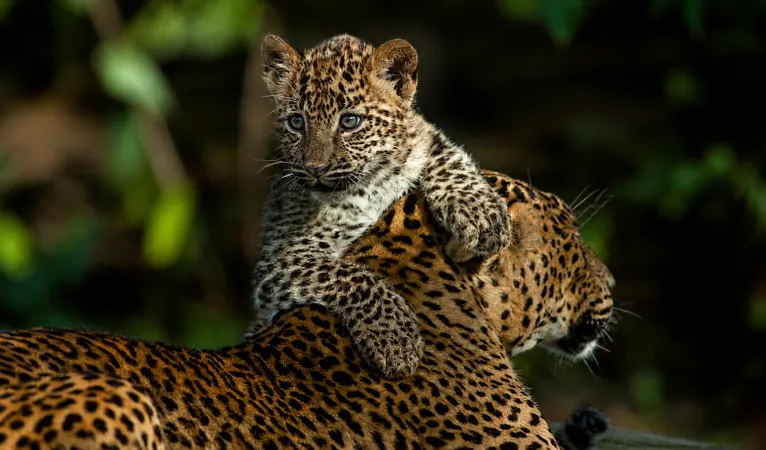
The sole consistent social unit is a female and her cubs, who remain together for 18 to 24 months before the cubs disperse.
Territory and Home Range
Territory size varies considerably based on prey density, vegetation type, and the presence of other leopards. In Yala’s Block I, one of the highest prey-density ecosystems on the island, adult male home ranges averaged approximately 22.5 km², overlapping the smaller ranges of multiple adult females and, partially, with neighbouring males.
Territorial boundaries are maintained through a sophisticated system of chemical communication: scent-marking with urine, faeces, and glandular secretions deposited on trees, rocks, and prominent landmarks. These olfactory messages convey identity, sex, reproductive status, and occupancy. Visual claw-raking on trees serves a secondary signalling function.
Notably, unlike most leopard populations globally, Sri Lankan leopards do not habitually cache kills in trees. This is attributed directly to the absence of scavengers large enough to threaten a ground-level carcass: no hyenas, no lions, no jackals of sufficient size to displace a leopard from its meal.
Hunting Strategy
The leopard is an ambush predator of extraordinary patience. Its hunting sequence follows a consistent architecture: locate, stalk, freeze, rush, kill.
After locating prey through sight or scent, the leopard enters a low crouch, using every fold of terrain, every shrub, every shadow to close the gap without detection. It can freeze mid-stride for minutes at a time, waiting for the prey animal’s attention to waver. When within striking distance, typically 5 to 10 metres, it unleashes an explosive burst of speed and pounces.
The kill is administered with a single bite to the throat, compressing the trachea and cutting off blood supply to the brain. Death is typically swift.
Sri Lankan leopards are largely nocturnal to crepuscular, most active between dusk and dawn, but daytime activity is well documented, particularly in cooler weather and in protected areas where human disturbance is lower.
Diet and Prey
The Sri Lankan leopard is an opportunistic carnivore, pragmatic in its diet across the full spectrum of available prey. Recorded prey species include:
Primary prey:
- Sri Lankan axis deer (Axis axis ceylonensis) – the dominant prey in dry zone habitats
- Sambar deer (Rusa unicolor) – particularly important in highland and wet zone habitats
- Wild boar (Sus scrofa)
- Barking deer/muntjac (Muntiacus muntjak)
Secondary and opportunistic prey:
- Toque macaque and grey langur (primates)
- Porcupine (especially in central highlands, where it ranks among the most significant prey items)
- Hare, mongoose, and rodents
- Peafowl, junglefowl, and other birds
- Monitors, crocodiles (juveniles), and other reptiles
- Occasionally, buffalo calves – larger than the leopard itself
The preferred prey weight range is broadly 10 to 40 kg, though Sri Lankan leopards regularly take animals at both extremes. Diet analysis from scat studies in the central highlands found no domestic livestock in samples, suggesting that well-fed, territory-holding leopards in areas of adequate wild prey do not typically resort to livestock predation.
Reproduction and Life Cycle
Sri Lankan leopards breed throughout the year without a defined seasonal peak. Their mating system is polygynandrous; both males and females mate with multiple partners across overlapping territories.
Courtship involves prolonged vocalisation between prospective mates, mutual scent-marking, and cautious approach-and-retreat sequences. A receptive female will rub against the male and display the lordosis posture to indicate readiness.
Gestation lasts approximately 90 to 105 days.
Litter size typically ranges from 2 to 4 cubs, though litters of 1 have been recorded.
Birth site: Females give birth in concealed, sheltered locations, such as rock crevices, hollow trees, dense thicket, or cave overhangs offering protection from predators and exposure.
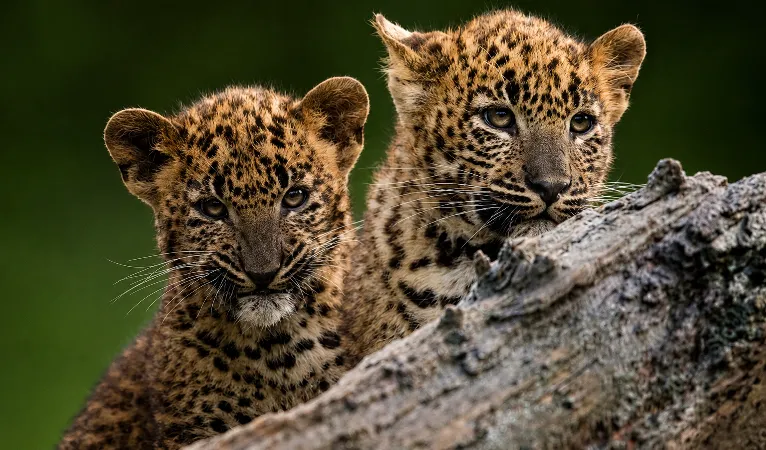
Cubs at birth are blind (eyes open 4 to 9 days after birth), helpless, and covered in a dense, grey-tinged woolly coat that provides camouflage in diffuse light. They weigh approximately 500 to 600 grams.
Dependency period: Cubs remain with their mother for 18 to 24 months, during which they learn to hunt through a gradual process of observation and increasingly independent practice. The mother makes no attempt to teach in any structured sense; rather, the cubs’ play instincts, chasing, pouncing, and wrestling, develop into hunting competence through exposure.
Dispersal: Adolescent leopards are driven out or drift away from the maternal territory at 18 to 24 months. Young males typically disperse further than females and face higher mortality during the vulnerable period before establishing a territory.
Lifespan: In the wild, Sri Lankan leopards live approximately 12 to 15 years. In captivity, individuals have been recorded reaching 20 years.
Habitat and Distribution
Island-Wide Presence
The Sri Lankan leopard is distributed across the entire island from sea-level coastal zones to montane forests above 2,000 m. It is found in protected areas and, to a diminishing extent, in unprotected forests, tea estates, rubber plantations, and human-settled landscapes.
Habitat modelling studies using 15 years of observational and survey data have established that forest cover and level of protection are the two strongest predictors of leopard presence at the landscape scale. Degraded, fragmented, or heavily human-modified landscapes dramatically reduce occupancy.
Ecological Zones
Sri Lankan leopards occupy all three of the island’s major climatic zones:
Dry Zone (annual rainfall below 1,000 mm): The semi-arid scrub forests, grassland patches, and tank-dotted savannahs of the south and north, including Yala, Wilpattu, and Kumana, support the highest recorded leopard densities in the country and the world. Axis deer abundance in these habitats sustains large, stable leopard populations.
Intermediate Zone (1,000–2,000 mm annual rainfall): Transition forests in areas such as Wasgamuwa support moderate leopard densities and represent a critical buffer between protected zones.
Wet Zone and Central Highlands (above 2,000 mm): The misty montane forests of Horton Plains, Peak Wilderness, and surrounding highlands host a distinct highland population with a notably different ecological profile, denser vegetation, reduced prey density, higher sambar and porcupine dependence, and the presence of melanistic individuals.
Where to See Leopards in Sri Lanka
1. Yala National Park – The Leopard Capital of the World
Location: Southeastern Sri Lanka, Hambantota and Monaragala Districts Size: Approximately 979 km² (Block I: 141 km²) Best time to visit: May to September (dry season)
Yala is the undisputed premier destination for leopard watching anywhere on the planet. It’s Block I, the zone open to tourist vehicles, that holds one of the highest confirmed leopard densities ever recorded globally. In 2024, an estimated 60 to 70 leopards inhabited Yala’s 979 km² expanse. Adult leopard density in Block I has been recorded at 21.7 individuals per 100 km², with resident adult density at 12.1 per 100 km².
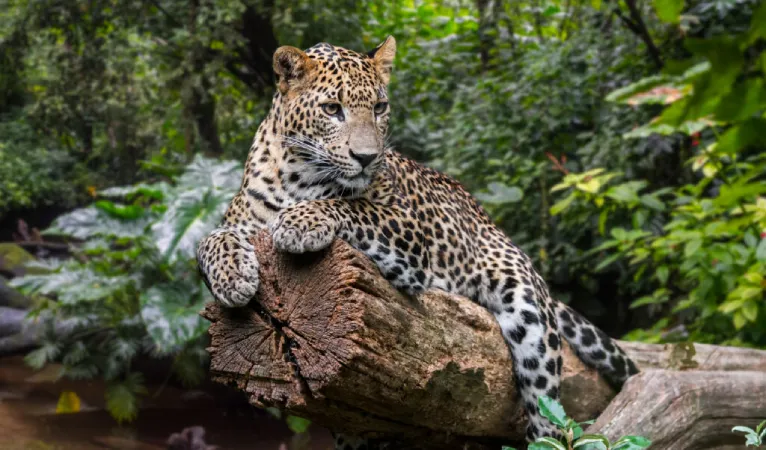
Yala’s leopards are relatively habituated to safari vehicles, allowing extended and close observation without triggering the flight response typical of leopards in less-visited areas. Encounters here are often lingering: a cat stretched across a horizontal branch overhead, or a female with cubs moving unhurried through open grassland, or a large male watching your jeep from a rock with princely indifference.
The park’s terrain is diverse: coastal lagoons, open grasslands, dense dry-monsoon forest, rocky outcroppings, and scrublands. Leopards use all of it, but sightings are most frequent near the Sithulpawwa ruins, Palatupana salt flats, and the scrub around the main circuit road in the early morning and late afternoon.
The Yala Leopard Diary project, running since 2013, has individually identified 152 leopards in Block I using rosette pattern recognition, with 77 confirmed as active in 2024, giving researchers and guides an encyclopaedic knowledge of individual animals, their ranges, and their personalities.
Drawback: Yala is popular, and during peak season (December to March), the density of safari vehicles at a single sighting can be distressing. Book with guides who respect the animals’ space and observe distance protocols.
2. Wilpattu National Park – The Solitary Wilderness
Location: Northwestern Sri Lanka, Puttalam District Size: Approximately 1,317 km² (Sri Lanka’s largest national park)Best time to visit: February to October
Wilpattu derives its name from the Sinhala for “Land of Lakes,” willus, or natural, water-filled depressions that dot the landscape and serve as the ecological heart of the park. These ancient wetlands support a richly varied habitat of dense forest, open grassland, and scrubland, ideal leopard country.
Leopard sightings in Wilpattu are less predictable than in Yala, owing to the park’s dense vegetation and enormous size. But the experience is qualitatively different, quieter, more immersive, and with far fewer vehicles. A sighting in Wilpattu carries a rawness that crowded Yala cannot always provide.
Maradanmaduwa is considered one of the best zones within Wilpattu for leopard encounters, where the forest-grassland edge offers open visibility, and leopards regularly move at dawn. Wilpattu is also exceptional for sloth bears and aquatic birds, making the drive rewarding even on days the leopard does not show itself.
The park was effectively closed for decades during Sri Lanka’s civil conflict. Its wildlife, including the leopard population, survived, and Wilpattu has re-emerged as one of the island’s premier wildlife destinations, with conservation and tourism operations growing steadily since the early 2010s.
3. Kumana National Park – The Eastern Stronghold
Location: Eastern Sri Lanka, Ampara District (adjacent to Yala) Size: Approximately 357 km² Best time to visit: April to September
Kumana is less visited than Yala but ecologically exceptional. A 2025 scientific study published in the Journal of Asia-Pacific Biodiversity confirmed that the eastern region of Kumana holds one of the highest recorded leopard densities globally, approximately 41 leopards per 100 km², based on spatially explicit capture-recapture and random encounter model analyses.
This extraordinary density is driven by the park’s high prey availability (wild buffalo, spotted deer, sambar) and the habitat variability provided by water bodies and rocky terrain, where leopards are most concentrated. The study found higher leopard concentrations around wetland edges and rock formations offering both shelter and ambush opportunities.
Kumana is also a major bird sanctuary. The Kumana tank hosts tens of thousands of migratory and resident waterbirds, making it a destination of layered wildlife value.
4. Horton Plains National Park – The Highland Leopard
Location: Central Highlands, Nuwara Eliya District Elevation: 2,100–2,300 m above sea level Best time to visit: Year-round (dry months: January–April, July–August)
Horton Plains offers a radically different leopard experience. At over 2,000 metres, the park is cold, misty, and montane, a plateau of rolling grassland, cloud forest, and remarkable geological formations, including World’s End, a sheer escarpment dropping 870 metres.
The leopards of Horton Plains represent a highland population with distinct ecological adaptations. Research confirms they prefer grassland habitats (highest Jacob’s Index: 0.9963) over pine plantations (avoided: Jacob’s Index: -0.9867), with porcupines and sambar deer forming significant proportions of their diet.
Sightings here are infrequent and require patience, but the park’s dramatic landscape and the charismatic uniqueness of its leopard population make it a worthwhile destination. Horton Plains is also where melanistic leopards have been documented, including the black individual filmed for the first time in 2019.
The park sits at the centre of Sri Lanka’s highest biodiversity concentration, and the leopard here acts as an umbrella species for an entire montane ecosystem of conservation significance.
5. Udawalawe National Park – The Elephant Country Bonus
Location: Sabaragamuwa and Uva Provinces Size: 308 km² Best time to visit: May to September
Udawalawe is internationally celebrated for its enormous herds of elephants roaming open grasslands around the reservoir with remarkable consistency. Leopard sightings are secondary and unpredictable, but they occur. The park’s open terrain improves visibility, and guides report a steady increase in leopard encounters over recent years as the population stabilises.
Leopards in Udawalawe tend to prey on smaller animals, such as hares, peafowl, and barking deer, along grassland edges and forest margins. For visitors whose primary objective is elephants, Udawalawe offers the genuine possibility of a leopard encounter as an extraordinary bonus.
6. Wasgamuwa National Park – The Forgotten Reserve
Location: Central Province, North Central Province boundary. Size: 369 km². Best time to visit: June to September
Wasgamuwa lies in the intermediate zone, bridging the dry and wet ecological worlds. It receives considerably fewer visitors than Yala or Wilpattu, and its leopard population is less studied, but the animals are present, and community-run safari operations from surrounding villages provide an immersive, low-crowd experience.
Wasgamuwa is also a critical wildlife corridor, connecting forest blocks that allow leopard movement between the dry and wet zones. Its conservation significance extends beyond its park boundaries.
7. Gal Oya National Park – Remote and Rewarding
Location: Eastern Sri Lanka, Ampara District Size: 629 km² Best time to visit: April to September
Gal Oya is one of Sri Lanka’s most remote and least visited parks. Leopards are present throughout, but are rarely seen. The dense forest and minimal vehicle presence make encounters exceptional events. For serious wildlife enthusiasts seeking solitude and a genuine wilderness experience, Gal Oya rewards patience.
Safari Essentials
Best Time of Year
The dry season from May to September is broadly considered optimal across most lowland parks. Water sources contract, drawing wildlife to predictable locations, and vegetation thins to improve visibility. Yala’s Block I typically peaks between June and September.
Yala sees a secondary tourist influx from December to March, the northern hemisphere winter, which can mean crowded sightings. The park has five blocks, however, and blocks II through V (accessible with special permits) offer significantly quieter experiences.
Wilpattu is best visited February to October, with the Wilpattu dry season offering its finest viewing windows.
Horton Plains is accessible year-round, with January to April and July to August offering the clearest mornings before mist moves in.
Best Times of Day
Leopards are crepuscular and nocturnal by preference. The two optimal windows for sightings are:
- Dawn drives (6:00 AM to 9:00 AM): The most productive window. Leopards are returning from nocturnal hunts, still active, and the morning light is perfect for photography.
- Late afternoon drives (3:30 PM to 6:00 PM): As the temperature drops, leopards stir from midday resting spots and begin to move again.
Most national parks in Sri Lanka operate from 6:00 AM to 6:00 PM, limiting night drives. This means your best strategy is to be at the park gate at opening time every day.
Choosing a Guide
In Sri Lanka’s wildlife parks, the quality of your guide is the single most determinative factor in the success of your safari. A skilled guide knows individual animals by sight, understands territorial ranges and seasonal movements, reads animal behaviour to anticipate sightings before they happen, and critically maintains respectful distances that do not distress the leopard.
Ask guides about their experience, specifically with leopards. Seek recommendations from conservation organisations and reputable tour operators. A good guide will add narrative depth to the encounter that transforms a wildlife sighting into genuine ecological education.
Responsible Wildlife Tourism
Sri Lanka’s leopard population is fragile. The intensity of tourism at parks like Yala creates measurable pressure on animal behaviour. Disturbing a leopard from a kill, encircling an animal with multiple vehicles, or approaching too closely can alter feeding behaviour, increase stress hormones, and, for a nursing female, cause her to abandon cubs.
Follow these principles:
- Maintain distance. Never approach closer than the guide recommends.
- Do not encircle. Leave the animal an escape route at all times.
- Switch off engines when stationary near a leopard.
- No flash photography. Night vision disruption and stress response are real.
- Do not replicate or incentivise irresponsible behaviour. If another vehicle is crowding an animal, move away; do not join.
- Book with certified operators who contribute to conservation revenue.
In 2023, ecotourism contributed approximately LKR 2 billion (USD 6.6 million) to the Department of Wildlife Conservation’s budget. Responsible tourism is one of conservation’s most powerful tools, but only when practised responsibly.
Conservation
Population Status
The Sri Lankan leopard is listed as Vulnerable on the IUCN Red List since 2020, with the population estimated at fewer than 800 mature individuals and likely declining. Earlier in the century the population was considered more precarious, and local conservation organisations still commonly refer to the species as endangered, a reflection of the continued uncertainty and the severity of ongoing threats.
Since the early 20th century, the population has fallen from several thousand to its present level.
Threats
1. Habitat Loss and Fragmentation The primary structural threat. Conversion of forest to tea estates, rubber plantations, agricultural smallholdings, and urban expansion has eliminated and fragmented leopard habitat across the island. Approximately 70% of suitable habitat has been lost or degraded since the mid-20th century. Fragmentation is particularly damaging because it creates isolated sub-populations unable to exchange genes, reducing long-term viability.
2. Snaring: The leading direct cause of leopard death. An analysis of 100 recorded leopard deaths between 2001 and 2023 found that snares primarily set for wild boar or deer by subsistence hunters accounted for 77% of all fatalities. Leopards blunder into these indiscriminate traps with fatal consequences. The Nallathanniya black leopard, found dead in 2020, was a victim of exactly this.
3. Human-Wildlife Conflict As forest cover shrinks, leopards increasingly encounter human settlements, livestock, and agricultural areas. Between 2010 and 2020, the Department of Wildlife Conservation recorded an average of 15 leopard deaths per year from snares, poisoning, and retaliatory killings by farmers protecting livestock. In 2022, 22 leopards were killed, a 46% increase from the previous decade’s average. Livestock depredation accounts for approximately 60% of human-leopard conflict incidents.
4. Poisoning Accounting for approximately 8% of recorded deaths, poisoning is used both indiscriminately (as pest control) and increasingly as a deliberate response to livestock attacks.
5. Poaching for Trade Leopard skins, canines, and body parts are traded illegally within Sri Lanka and internationally. Canines are worn as talismans; certain body parts are used in traditional medicine. While targeted poaching at scale has not been definitively confirmed, conservationists have raised the alarm about what may be a growing pattern. Vehicle strikes on roads bisecting wildlife habitat constitute an additional mortality source.
Conservation Efforts
Department of Wildlife Conservation (DWC): The government agency responsible for managing national parks and enforcing wildlife protection law. The Wildlife and Flora Protection Ordinance provides legal protection for leopards and their habitats.
Wilderness and Wildlife Conservation Trust (WWCT): The country’s leading leopard research organisation, running the Leopard Project, the most comprehensive long-term study of Panthera pardus kotiya ecology, ranging, diet, and behaviour. WWCT’s work in the central highlands has helped reduce human-wildlife conflict incidents through community engagement and habitat mapping.
Yala Leopard Diary (YLD): A citizen-science and monitoring initiative running since 2013, which has individually identified 152 leopards in Yala’s Block I through photographic analysis of rosette patterns. The project engages tourists in naming and tracking individual animals, building an extensive observational database.
WWCT Leopard Spotter App: A crowdsourced reporting platform allowing tourists and local residents to log leopard sightings and snare locations, helping map movements outside protected areas. In 2024, the app recorded over 1,500 sightings.
Sri Lanka Leopard Day: Since 2021, Sri Lanka observes August 1 as Leopard Day, a proposal by the Wildlife and Nature Protection Society (WNPS) to raise public awareness and institutional focus on the species.
Corridor Restoration: Conservation groups are working with government agencies and private landowners to identify and protect wildlife corridors linking fragmented habitat blocks, enabling genetic exchange between isolated sub-populations.
Community Engagement: WWF and partner organisations have trialled electric fencing around vulnerable farms and conducted community training programmes on conflict mitigation. Community-run safari lodges in areas like Wasgamuwa employ local residents as guides and rangers, creating economic incentive to protect, rather than retaliate against, leopards.
The Leopard in Sri Lankan Culture
The leopard (kotiya) is woven into the cultural and historical fabric of Sri Lanka in ways that run far deeper than ecotourism. In Sinhala language, kotiya is synonymous with power, speed, and ferocity. It appears in poetry, folklore, and classical literature.
Historically, the leopard was both feared and revered. Its skin symbolised royal power and was associated with warrior lineages. In certain rural communities, the leopard’s canine teeth were and in some areas remain worn as amulets believed to confer protection and strength. This cultural belief has unfortunately contributed to demand for poached body parts.
The leopard also features in the traditional folk narratives of the Veddha people, Sri Lanka’s indigenous community, as a fellow creature of the deep forest, sharing space in the cosmology of a people who lived in intimate relationship with the island’s wildlife for millennia.
Today, the leopard serves a new cultural function: as the icon of Sri Lanka’s wildlife tourism identity. It appears in hotel logos, conservation campaign imagery, and national park branding. The challenge is converting this iconographic status into the sustained political and public will needed to protect the animal in practice.
Conclusion: A Privilege, Not a Guarantee
The Sri Lankan leopard is one of evolution’s masterpieces, a large, powerful, exquisitely adapted predator living its singular life in a shrinking world. That it remains visible in Sri Lanka’s wild places is a cause for immense gratitude. That it does so while facing mounting pressure from habitat loss, indiscriminate trapping, and human conflict is a cause for urgency.
Go to Yala. Go to Wilpattu. Wake before dawn, sit in the back of a jeep, and let your eyes adjust to the possibility of the forest. When the leopard appears, and there is a real chance, it will let the weight of that encounter sit with you. Let it remind you that the wild world is not a backdrop for human recreation. It is a living system of extraordinary complexity, and the leopard is its custodian.
Seeing a Sri Lankan leopard is a privilege. Protecting its future is a responsibility.
All national parks in Sri Lanka open at 6:00 AM and close at 6:00 PM. Park entrance permits can be purchased at the gate or booked in advance through the Department of Wildlife Conservation’s online eService portal.
For conservation donations and research support: Wilderness and Wildlife Conservation Trust (WWCT) – wwct.org | Wildlife and Nature Protection Society (WNPS) – wnpssl.org