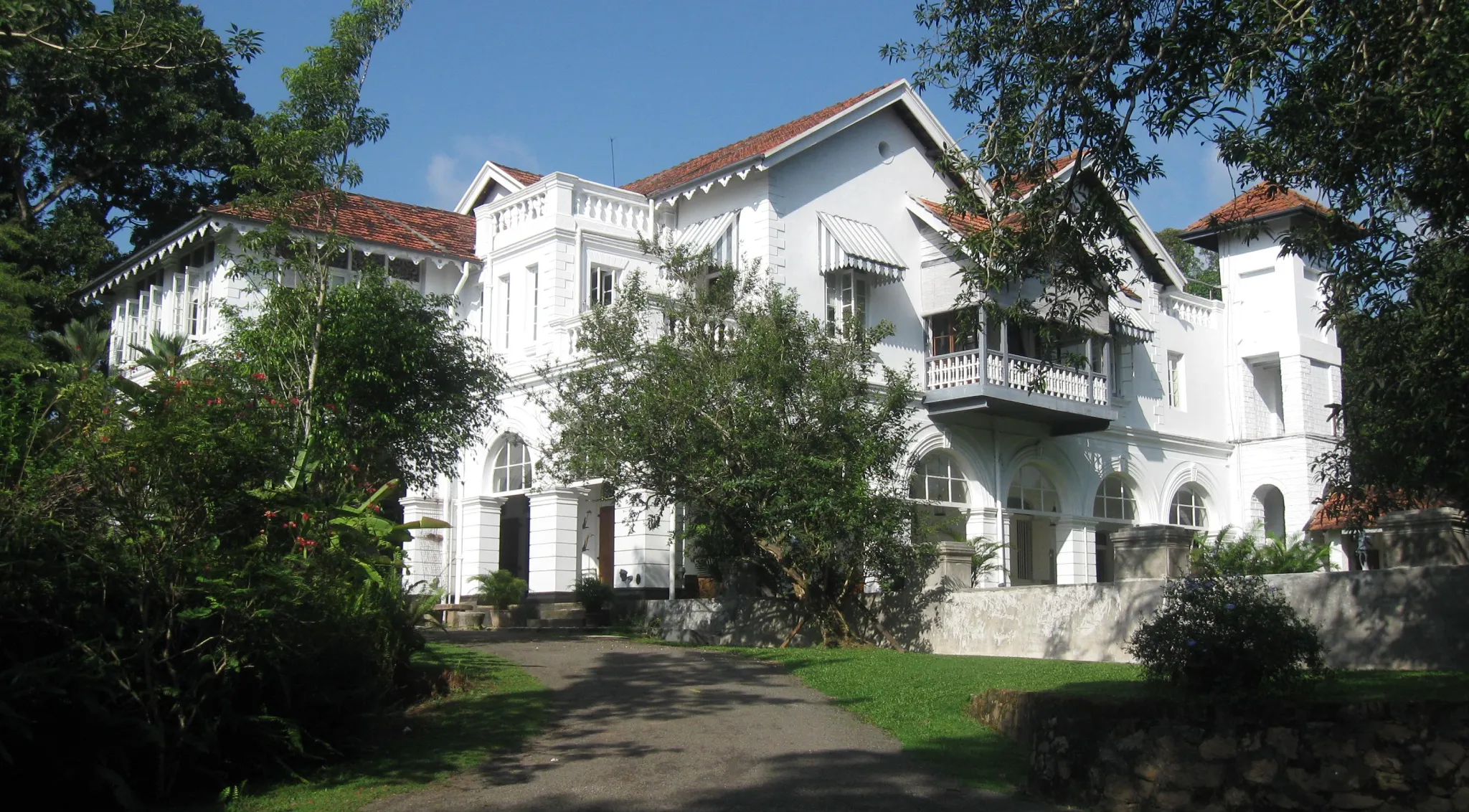
Drive along the Colombo–Kandy road and, just past Nittambuwa, you pass a stately white mansion set back behind iron gates, with a landscaped memorial on one side of the road and a hilltop tomb on the other. This is Horagolla Walawwa (හොරගොල්ල වලව්ව), the family seat of the Bandaranaikes.
Few private homes anywhere have seen as much political history. Horagolla was home to Sir Solomon Dias Bandaranaike, the most powerful Ceylonese official under British rule, and to his son S.W.R.D. Bandaranaike, Ceylon’s fourth prime minister.
His widow, Sirimavo Bandaranaike, became the world’s first woman prime minister, and their daughter, Chandrika Bandaranaike Kumaratunga, became President of Sri Lanka. Sir Solomon, S.W.R.D. and Sirimavo are all buried at Horagolla.
Unlike the Kandyan walawwas in our other articles, Horagolla is a low-country walawwa, built by a family that rose to power under British rule rather than at the court of the Kandyan kings. In this article, I go through how the family acquired the land, the two walawwas that stand on it, the people who lived there and what you can see today.
Horagolla Walawwa at a Glance
| Sinhala name | හොරගොල්ල වලව්ව |
| Location | Horagolla, Atthanagalla, near Nittambuwa, Gampaha District, about 40 km from Colombo on the Colombo–Kandy road |
| Old walawwa | Built around 1820 by Don Solomon Dias Bandaranaike; now Horagolla Stables, the home of Sunethra Bandaranaike |
| Present walawwa | Built at the turn of the 20th century by Sir Solomon Dias Bandaranaike |
| Floors | Two (present walawwa) |
| Famous residents | Sir Solomon Dias Bandaranaike, S.W.R.D. Bandaranaike, Sirimavo Bandaranaike, Anura Bandaranaike, Chandrika Bandaranaike Kumaratunga |
| Owner | Anura Bandaranaike Foundation |
| In the grounds | Horagolla Bandaranaike Samadhi, the mausoleum of S.W.R.D. and Sirimavo Bandaranaike |
| Open to the public | The walawwa is a private home; the Samadhi can be visited |
The Bandaranaike Family
The Bandaranaikes were one of the great families of the low country, the coastal provinces that were ruled by the Portuguese, the Dutch and then the British long before the fall of Kandy. Under colonial rule, families like theirs served as native headmen, holding titles such as Mudaliyar, and were rewarded with land and influence for their loyalty to the government. Their homes, like those of the Kandyan nobility, were known as walawwas.
The family’s link to the area around Gampaha, the old Siyane Korale, is said to go back seven or eight centuries.
How the family came to Horagolla
The story of Horagolla begins with Don Solomon Dias Bandaranaike (born 1780), Mudaliyar of Siyane Korale East. When the British began building the Colombo–Kandy road in the early 19th century, Don Solomon helped by supplying granite and gravel, especially for the section between Colombo and Veyangoda. Around 1820, the British government rewarded him with a grant of 175 acres of land at Horagolla.
According to a family story, Don Solomon found a turtle (kiri ibba) on his new land one day. He took it as a good omen and decided to build his house on that very spot. That house was the first Horagolla Walawwa.
Three generations to a fortune
The old walawwa passed from Don Solomon to his son, Gate Mudaliyar Don Christoffel Henricus Dias Abeywickrema Jayatilake Seneviratne Bandaranaike, and then to his grandson, Solomon Dias Bandaranaike. Over those three generations, the family’s land grew enormously, to more than 3,000 acres by one account, and some sources put Sir Solomon’s holdings as high as 25,000 acres.
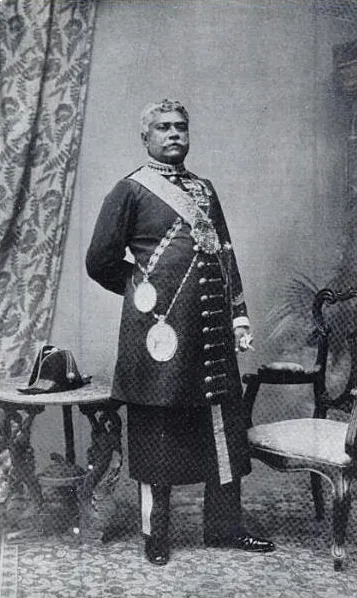
Sir Solomon Dias Bandaranaike
Solomon Dias Bandaranaike was born on 22 May 1862. He was made Muhandiram of the Governor’s Gate, an honorary title, in 1882, and at just 33 he was appointed Maha Mudaliyar, the chief of the native headmen, by Governor Sir Arthur Havelock. He was later knighted.
Sir Solomon married Lady Daisy Acelyn Obeyesekere, and their son, Solomon West Ridgeway Dias Bandaranaike, was born on 8 January 1899. Sir Solomon died in July 1946.
Two Walawwas on One Estate
One thing that surprises many people is that there are two Horagolla Walawwas. The original house built by Don Solomon around 1820 still stands, close behind the grand mansion that most people picture when they hear the name.
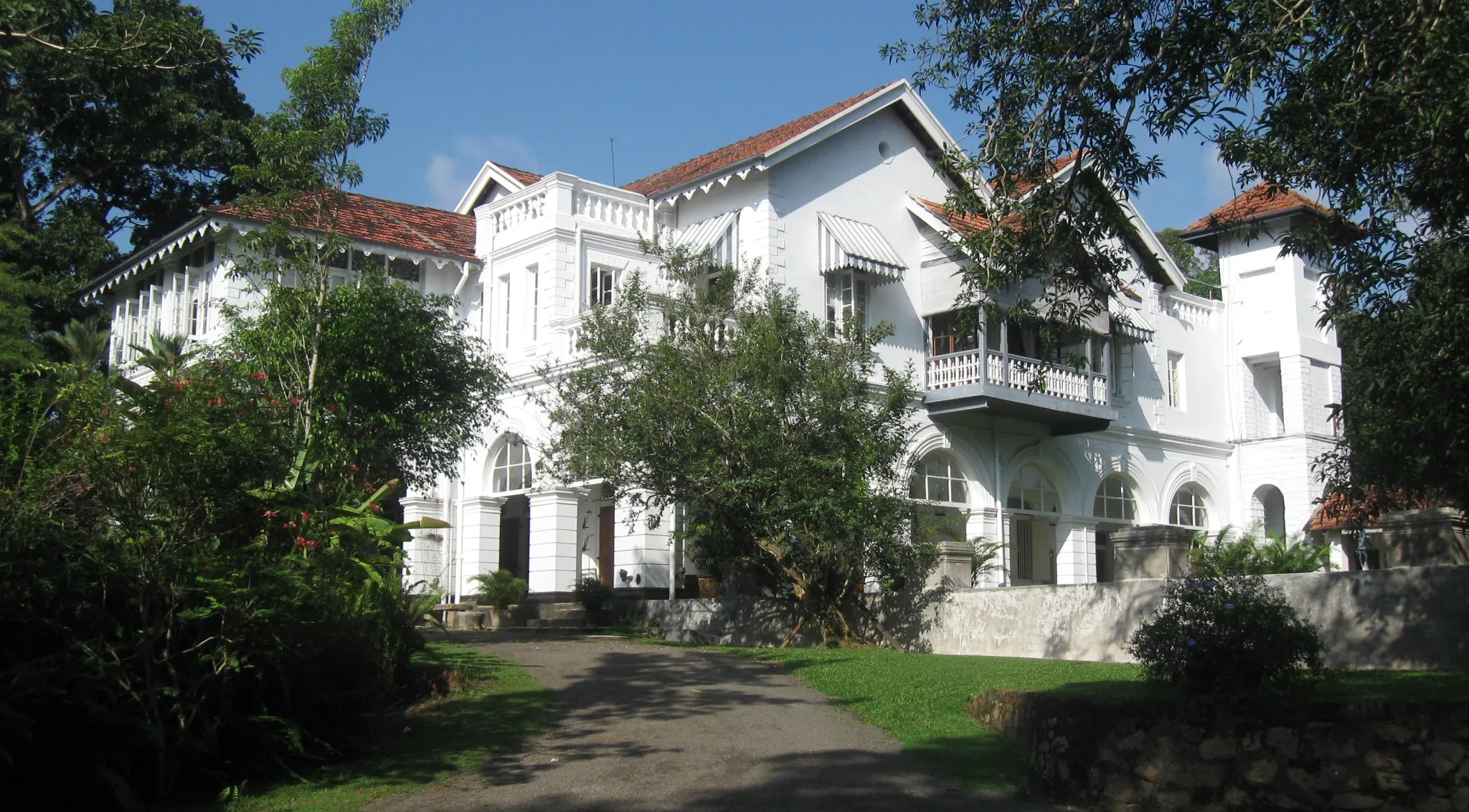
The present Horagolla Walawwa
After he became Maha Mudaliyar, Sir Solomon decided he no longer wanted to live in his grandfather’s house, and he built a new one on an adjoining plot, completed around the turn of the 20th century.
He spared no expense. Architects were brought from England, builders were hired both locally and from India, and wood, ceramics, glass panes, copper and other materials were imported from around the world, especially from Europe.
The result is a two-storey mansion with an imposing, airy porch and a large hall big enough to host a party of visitors. The family’s bedrooms are on the upper floor, and in a detail that was remarkable at the time, Sir Solomon made sure every bedroom had its own attached bathroom, when many Ceylonese homes had no proper sanitation at all.
The entrance is through a metal gate set between two strong pillars, and in front of the house stand statues inspired by Roman and Greek sculpture, surrounded by fountains. Inside, the rooms are filled with mementos, photographs, paintings and small treasures collected over more than a century of the family’s public life.
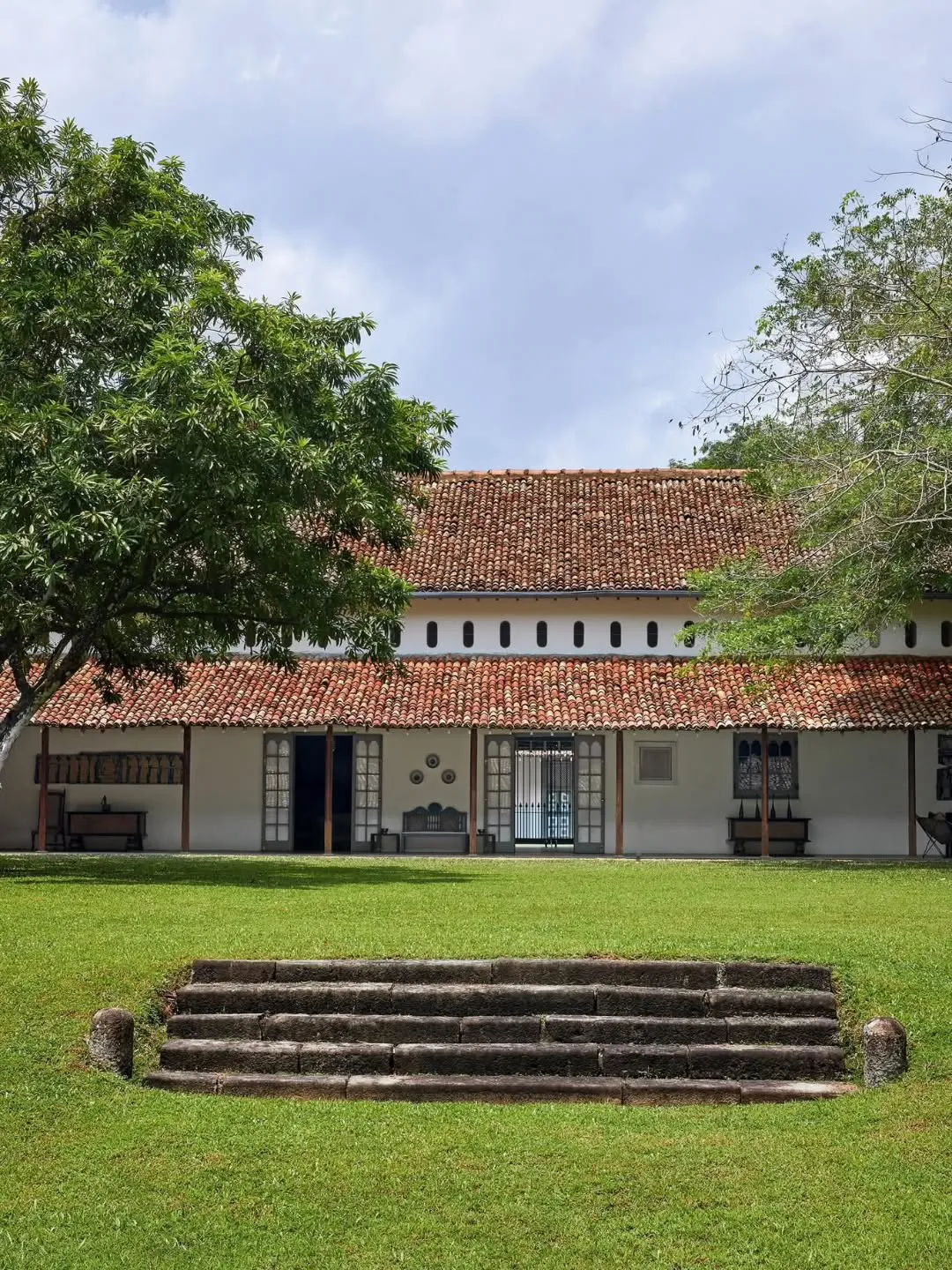
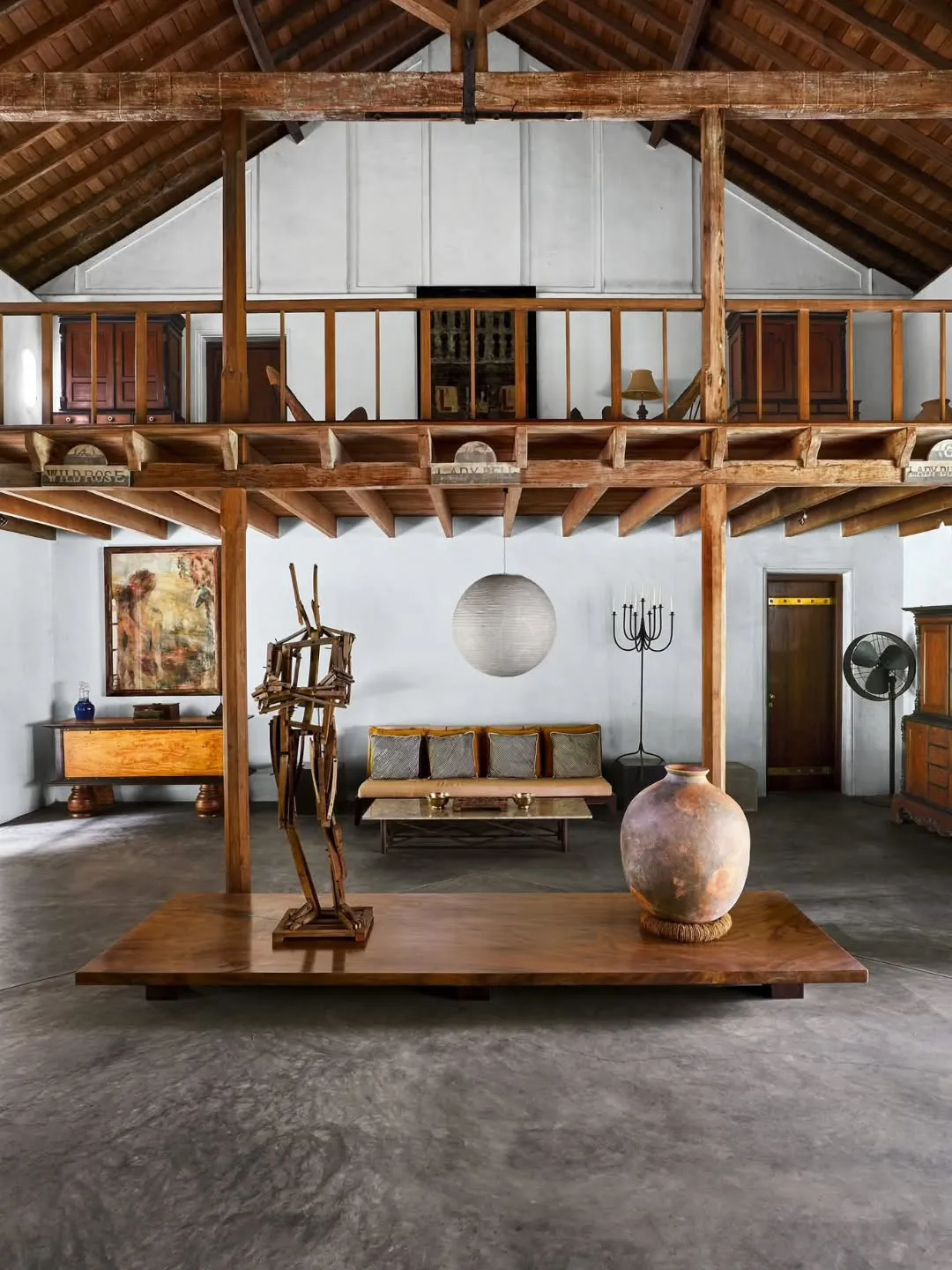
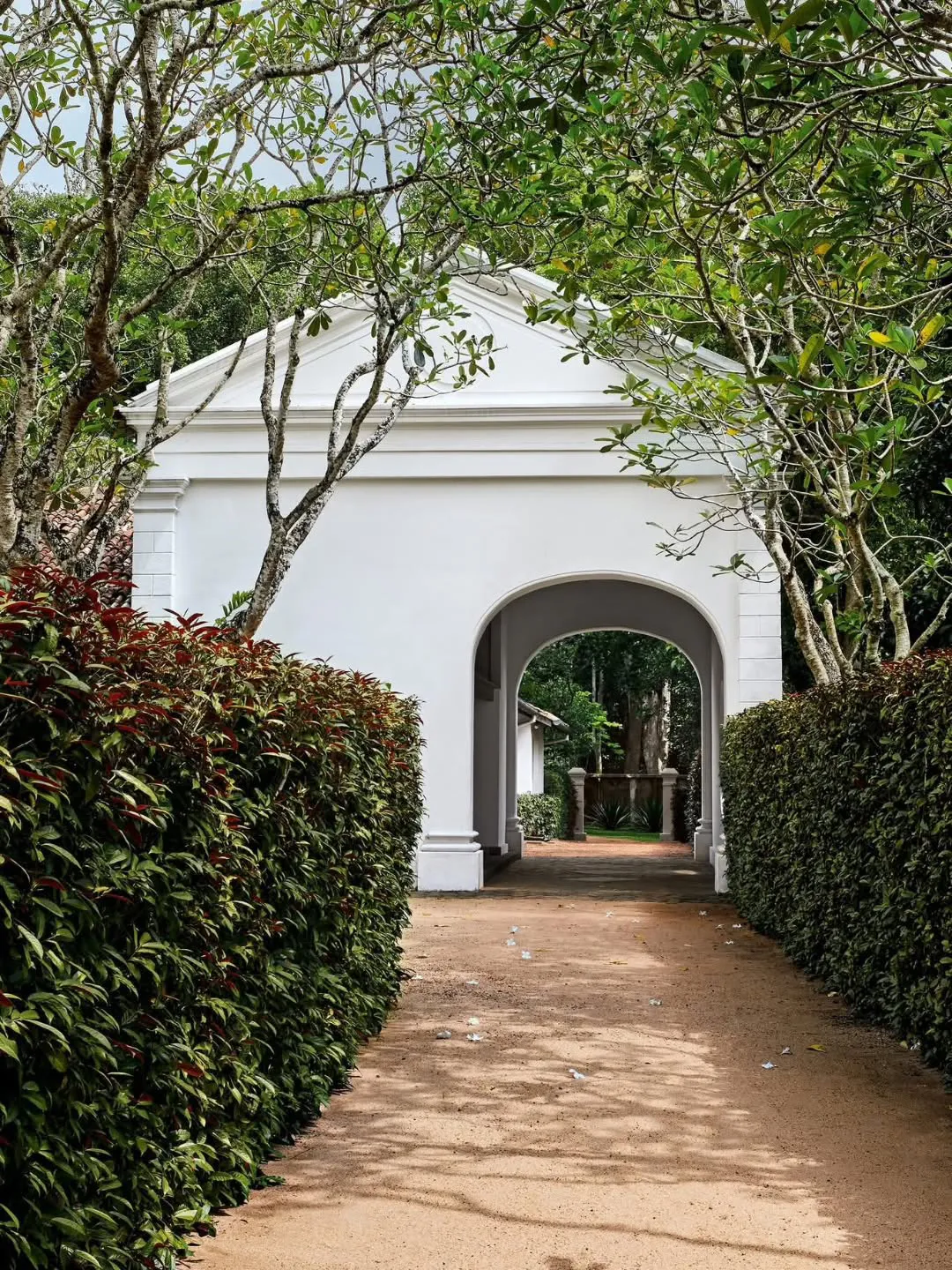
The old walawwa: Horagolla Stables
Sir Solomon was a passionate horse breeder, and once his new house was finished, he turned his grandfather’s walawwa into a stable for his horses. After his death in July 1946, the stables were abandoned and the old house slowly fell into ruin.
Around 1980, Sir Solomon’s granddaughter Sunethra Bandaranaike, the eldest daughter of S.W.R.D. and Sirimavo, decided to make the derelict stables her home. She was a friend of Sri Lanka’s most famous architect, Geoffrey Bawa, and asked him to restore it.
Bawa was reluctant at first, but he agreed, and with help from an Indian architect, he turned the ruin into a home.
The old walawwa is a single-storey house with Dutch and British features, but inside there’s a wooden upper floor. It has a traditional Sinhala tiled roof, a porch on one side and two rooms projecting on either side, with wooden doors and windows throughout.
Bawa added a new wing without harming the old building and kept the house as open to its surroundings as possible, with very little furniture. Sunethra planted hora and kohomba trees around the house and filled it with antiques, statues and an old-fashioned kitchen.
She moved in during the late 1980s, and it’s said that the statues are still kept exactly where Bawa placed them.
Today the house is known as Horagolla Stables or the Sunethra Bandaranaike House.
The People of Horagolla
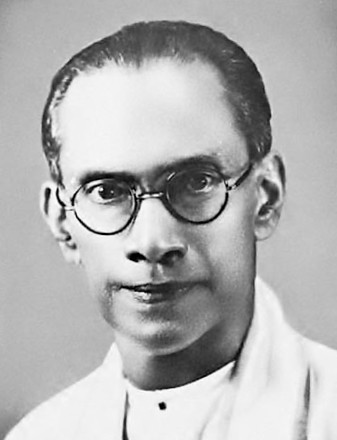
S.W.R.D. Bandaranaike
S.W.R.D. Bandaranaike grew up at Horagolla amid every comfort his father’s wealth could provide. Sources disagree on where exactly he was born: some say at the walawwa itself, others in Colombo. He inherited most of the family’s property, including Horagolla Walawwa, and it became his country seat.
In 1940 he married Sirimavo Ratwatte, from the Kandyan Ratwatte family. The couple first lived in a rented house in Colombo, and his father then bought and gave them Rosmead House (also called Tintagel) at Rosmead Place in Colombo 7. From then on, the family divided its time between Rosmead House and Horagolla.
Bandaranaike became Ceylon’s fourth prime minister in 1956. On 25 September 1959, he was shot at his Rosmead Place home and died the next day. Thousands came to pay their respects, and on the third day his body was taken to Horagolla, where his funeral was held amid a sea of mourners.
He was laid to rest in a specially built mausoleum in the grounds of the walawwa.
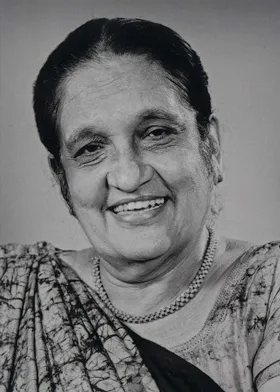
Sirimavo Bandaranaike
After her husband’s death, Sirimavo Bandaranaike entered politics and in 1960 became the world’s first woman prime minister. She led the country three times and lived at Horagolla and Rosmead House until her death on 10 October 2000.
Two stories from her years at Horagolla stand out. While she was prime minister, her country home was reportedly not even guarded by the police. And it was her own government’s Land Reform Act of 1972 that cut the vast Horagolla estate down to just a few acres.
The next generation
After Sirimavo’s death, the walawwa passed to her son, Anura Bandaranaike, a former government minister and Speaker of Parliament. When he died without heirs, it was transferred to the Anura Bandaranaike Foundation.
Their daughter, Chandrika Bandaranaike Kumaratunga, who became prime minister and then President of Sri Lanka, has also lived at the walawwa. Their eldest daughter, Sunethra Bandaranaike, lives in the old walawwa, Horagolla Stables.
Every year on 26 September, the anniversary of S.W.R.D. Bandaranaike’s death, a commemoration is held at the Samadhi, where members of the family lay wreaths.
Horagolla Today
The walawwa
Horagolla Walawwa is still a private home, owned by the Anura Bandaranaike Foundation, so it isn’t open to visitors. You can see the front of the house, its gates and its statues from the road. The estate that once ran to thousands of acres is now limited to a few acres around the house and the memorial.
The Horagolla Bandaranaike Samadhi
The Samadhi, the mausoleum of S.W.R.D. Bandaranaike, stands in the grounds east of the walawwa, facing the Colombo–Kandy road near the 24th mile post. Work on it began in 1959, within days of his funeral, and it was designed to occupy an area of two and a half acres. Sirimavo Bandaranaike was later laid to rest here beside her husband.
The memorial is set in landscaped gardens and is open to the public. It’s busiest on 26 September each year, when the anniversary of S.W.R.D. Bandaranaike’s death is commemorated.
Sir Solomon’s mausoleum
Across the Colombo–Kandy road, on top of a small hill, is the mausoleum of Sir Solomon Dias Bandaranaike, the builder of the present walawwa.
Horagolla National Park
Just outside Nittambuwa is Horagolla National Park, a small patch of lowland evergreen forest named after its many hora trees (Dipterocarpus zeylanicus). The land was gifted to the government by the Bandaranaike family and was declared a wildlife sanctuary on 5 September 1973.
It was upgraded to a national park in 2004, making it the smallest national park in Sri Lanka and the only one in the Gampaha District.
The park is managed by the Department of Wildlife Conservation. To get there, turn off the Colombo–Kandy road at Nittambuwa towards Veyangoda, continue to Pinnagolla junction, and follow the road to the park office.
Visiting Horagolla
Location: Horagolla, Atthanagalla, just past Nittambuwa on the Colombo–Kandy road (A1), about 40 km from Colombo
Getting there: Intercity buses on the Colombo–Kandy route stop at Nittambuwa. From there, it’s a short tuk-tuk ride to Horagolla. If you’re driving between Colombo and Kandy, it’s an easy stop on the way.
What you can see: the Samadhi and its gardens (open to the public), the walawwa from outside, and Sir Solomon’s hilltop mausoleum across the road.
Tips
- Respect the family’s privacy. Both walawwas are private homes, so don’t enter the grounds or photograph over the walls without permission.
- Dress modestly at the Samadhi. It’s a memorial and a grave, and many Sri Lankans visit it to pay their respects.
- Avoid 26 September if you want a quiet visit, or go on that day if you’d like to see the annual commemoration.
- Break the drive to Kandy. Horagolla is roughly a third of the way from Colombo to Kandy, so it’s a good place to stop.
Nearby
- Horagolla National Park: a short drive away, for a walk through a pocket of lowland forest.
- Attanagalla Raja Maha Viharaya: one of the oldest Buddhist temples in the Gampaha District.
- Kandy’s walawwas: if you’re heading up to the hill country, read our article about Ehelepola Walawwa.
Final Thoughts
Horagolla Walawwa began with a gift of land for helping to build a road, and a turtle that seemed like a good omen. Over the next two centuries, that small estate became the starting point of one of Sri Lanka’s best-known political families, with two prime ministers, a president and a Speaker of Parliament.
You can’t go inside the house, but standing at the Samadhi with the white mansion behind you, it’s easy to feel how much of modern Sri Lankan history passed through these gates.
Location Map
Nearby Atractions
- Pinnawala Elephant Orphanage - 37.9 km
- Bathalegala (Bible Rock) A Simple Hike - 38.7 km
- Sudagala Ella & Beyond - A Jungle Glamping Escape in Kuruwita - 51.4 km
- Nelligala International Buddhist Centre, Kandy: A Complete Visitor's Guide - 55.3 km
- Galaha – A Quiet Tea Country Escape Near Kandy - 59.9 km
- Monara Gala Mountain (Peacock Hill) - 60.4 km
- Loolkandura Tea Estate – Sri Lanka’s First Tea Plantation by James Taylor - 60.6 km
- Bahirawakanda Temple Kandy - 62.5 km
- Pekoe Trail Stage 2 – Galaha to Loolkandura Scenic Hiking Guide - 62.9 km
- Ehelepola Walawwa - (Wax Museum kandy) - 63.3 km