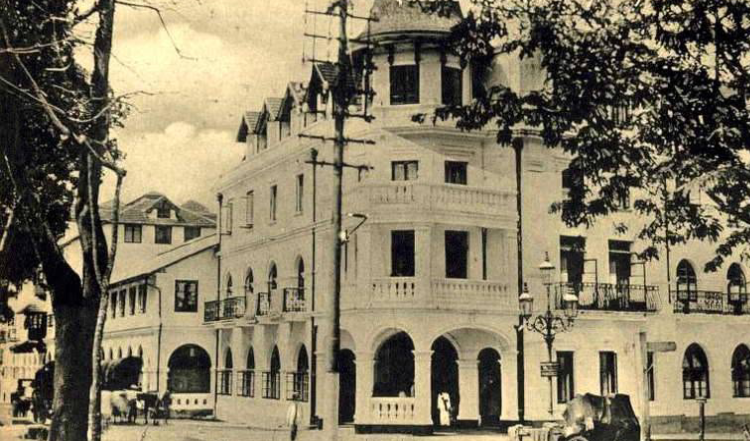
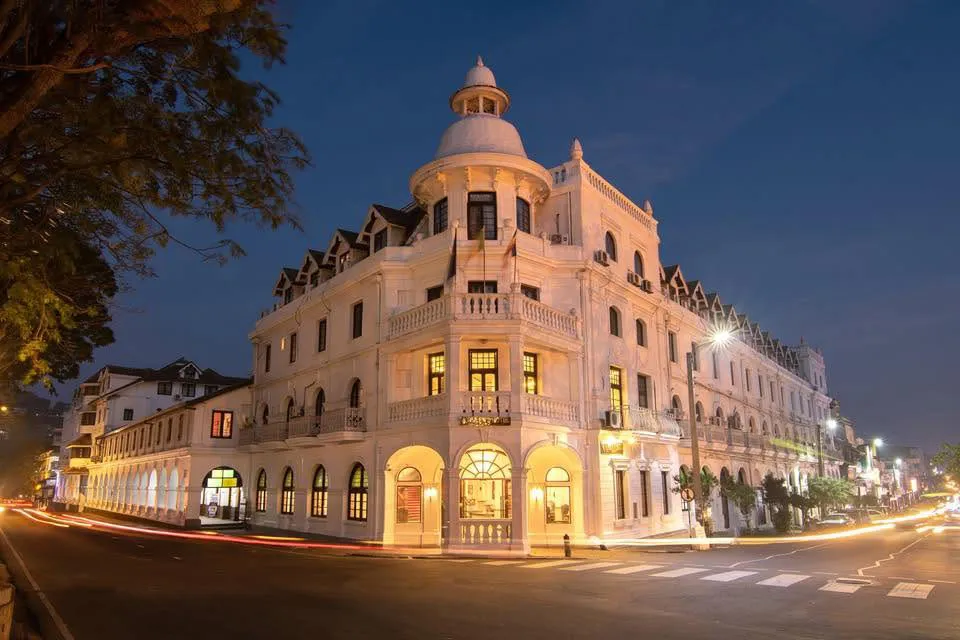
The big white building facing Kandy Lake at the end of Dalada Veediya is one of the most photographed in the city. For more than 150 years it has been Queen’s Hotel, where planters met, Lord Mountbatten drank, and crowds still gather on the balconies to watch the Esala Perahera go by. But long before it was a hotel, it was a walawwa.
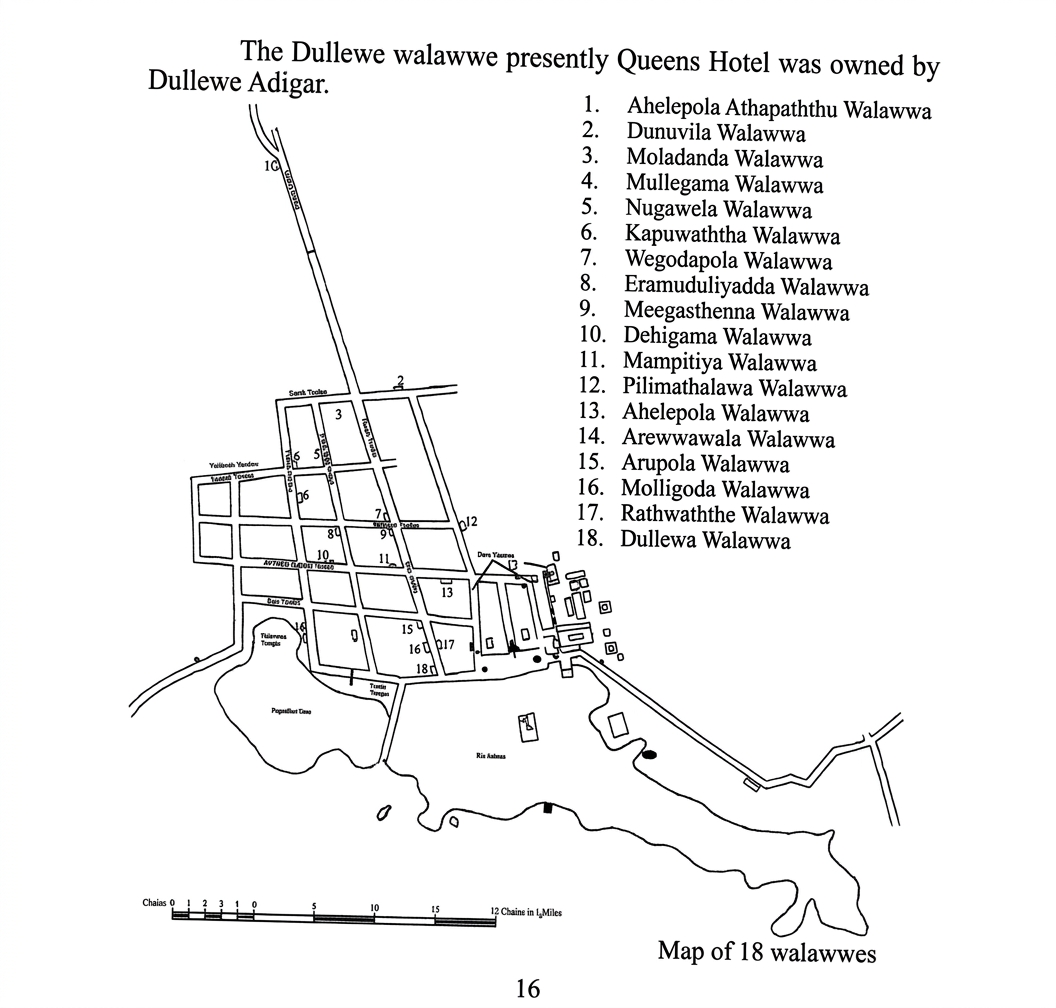
This was Dullewa Walawwa (දුල්ලෑව වලව්ව), the Kandy home of the Dullewe family, one of the noble houses of the last Kandyan kingdom. The head of the family in 1815, Dullewe Disawa, was one of the Kandyan chiefs who signed the Kandyan Convention that handed the kingdom to the British, and the map of the 18 walawwas of the Kandy grid city records that “the Dullewe walawwe presently Queens Hotel was owned by Dullewe Adigar”.
In this article, I go through the history of the Dullewe family, how their walawwa became the residence of the British Governor and then one of Sri Lanka’s oldest hotels, and the family’s ancestral walawwa in Matale, where a future President of Sri Lanka was born.
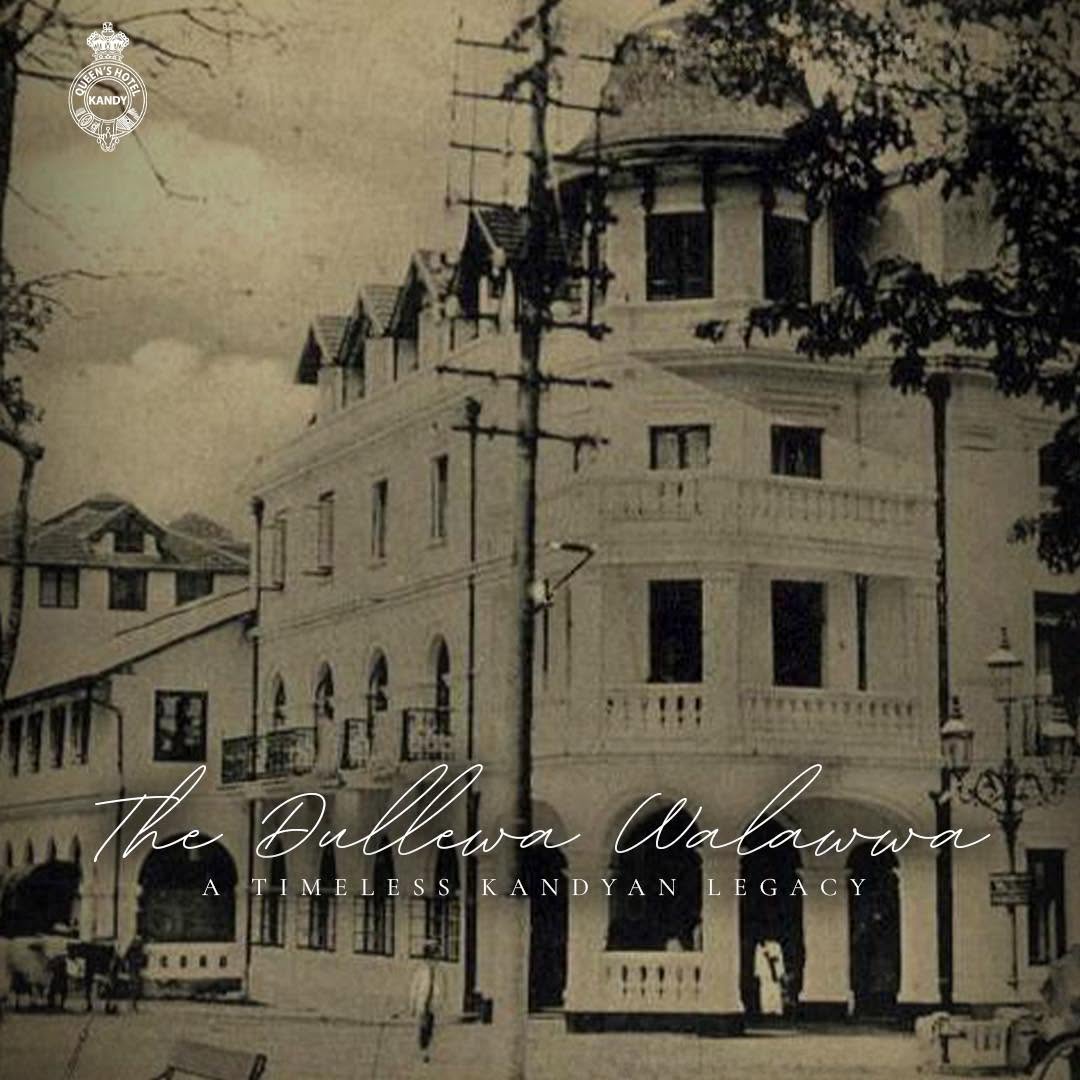
Dullewa Walawwa at a Glance
| Sinhala name | දුල්ලෑව වලව්ව |
| Also spelled | Dullewe, Dullawe, Dulewe Walawwa |
| Location (Kandy) | Dalada Veediya, opposite the Temple of the Tooth, facing Kandy Lake |
| Family | Dullewe, a Kandyan noble family from Dullewa, Matale |
| Best-known member | Dullewe Disawa of Walapane, a signatory of the Kandyan Convention (1815), later 2nd Adigar and Diyawadana Nilame |
| Today (Kandy) | Queen’s Hotel |
| Ancestral home | Dullewe Maha Walauwa, Dullewa, near Aluvihare, Matale |
| Number on the map of the 18 walawwas | 18 |
The Dullewe Family
The Dullewes were a radala family from the village of Dullewa, near Aluvihare in the Matale district. Like many Kandyan noble families, they took their name from their home village, and they served the kings of Kandy for well over a century. Family genealogies record a Dullewe as Maha Disawa (governor) of Matale sometime between 1638 and 1709, in the decades after King Rajasinghe II drove the Portuguese from the coast. Another, described as Dullewe alias Kobbekaduwa Siyapattuwe Adikaram, held office in 1811, in the last years of the kingdom.
Dullewe Disawa: Signatory of the Kandyan Convention
The best-known member of the family is the Dullewe chief who held office in 1815, as the kingdom fell.
1815
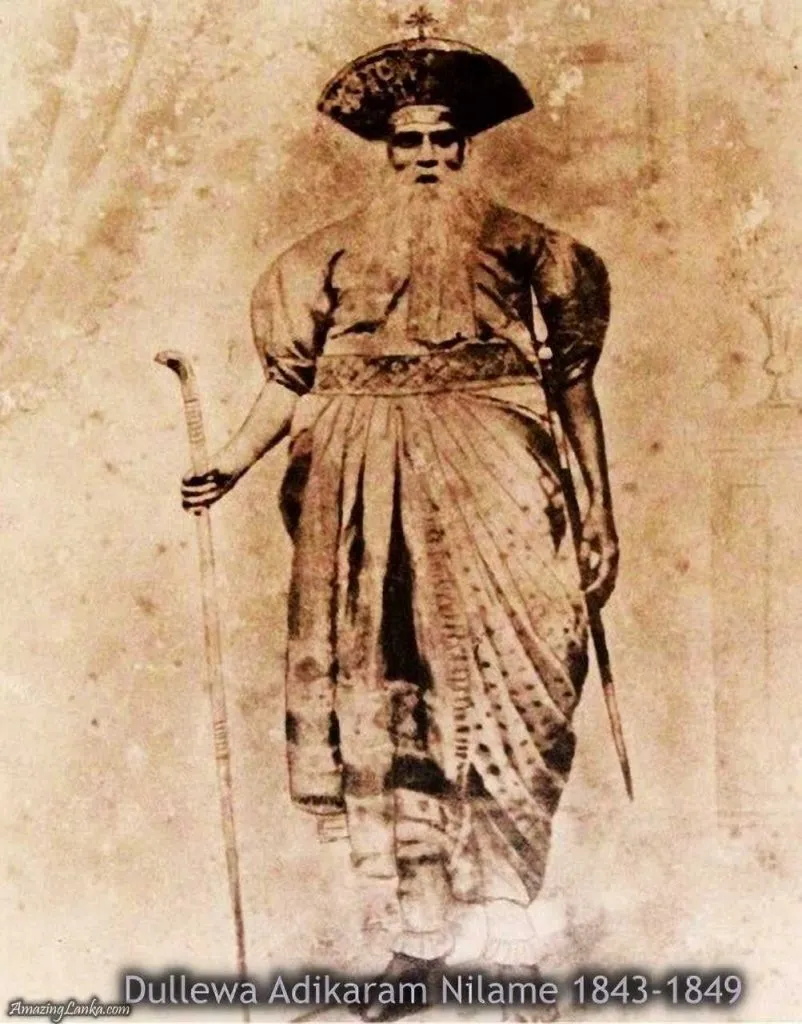
When the British marched on Kandy in early 1815 with the support of Ehelepola and other chiefs, Dullewe was Disawa of Walapane, a province in the hills south-east of Kandy. On 2 March 1815, the Kandyan chiefs met Governor Robert Brownrigg in the Audience Hall of the palace and agreed the Kandyan Convention, which handed the kingdom to the British Crown. Dullewe, Disawa of Walapane, is one of the chiefs named as signatories, alongside Molligoda, the two Pilimatalawes, Monarawila (Keppetipola), Ratwatte, Millawa, Galagama and Galagoda.
Under the British
Unlike Ehelepola, Keppetipola and many others, Dullewe kept his place under the new rulers for a time. According to family genealogies, he became 2nd Adigar in 1829 and was appointed Diyawadana Nilame of the Temple of the Tooth in July 1839. This is probably why later sources call him Dullewe Adigar, and why the map of the 18 walawwas names the Kandy house as the walawwa of Dullewe Adigar.
The 1848 rebellion
His career ended in suspicion. When the Matale Rebellion broke out in 1848, a peasant uprising against British taxes, centred on the Dullewe family’s own home district, the old chief was suspected of involvement. He was imprisoned and stripped of his office, and he died on 1 June 1849.
Later generations
The family’s ties with the other great Kandyan houses ran deep. A grandson of Dullewe Disawa, known as Dullewe Loku Banda, was adopted into the Ehelepola family line. He later took the name Dullewe Wickramasinha Samarakoon Jayatilleke Panditha Mudiyanse, also known as William Abraham Dullewe of Beligomuwa, held the honorary rank of Dullewe Adikaram by 1887, and inherited lands at Ehelepola and elsewhere in Matale under the old royal grants of 1722 and 1745.
In the 20th century, the family’s best-known relative was William Gopallawa, the last Governor-General of Ceylon and the first President of Sri Lanka, whose mother was Tikiri Kumarihamy Dullewe. You’ll find his story below, in the section on the ancestral walawwa.
The Walawwa in Kandy
The Dullewe family’s main home was always in Dullewa. But the great chiefs had to attend the royal court, so, according to the Sunday Observer, Dullewe built a second residence in the capital for the convenience of his official duties.
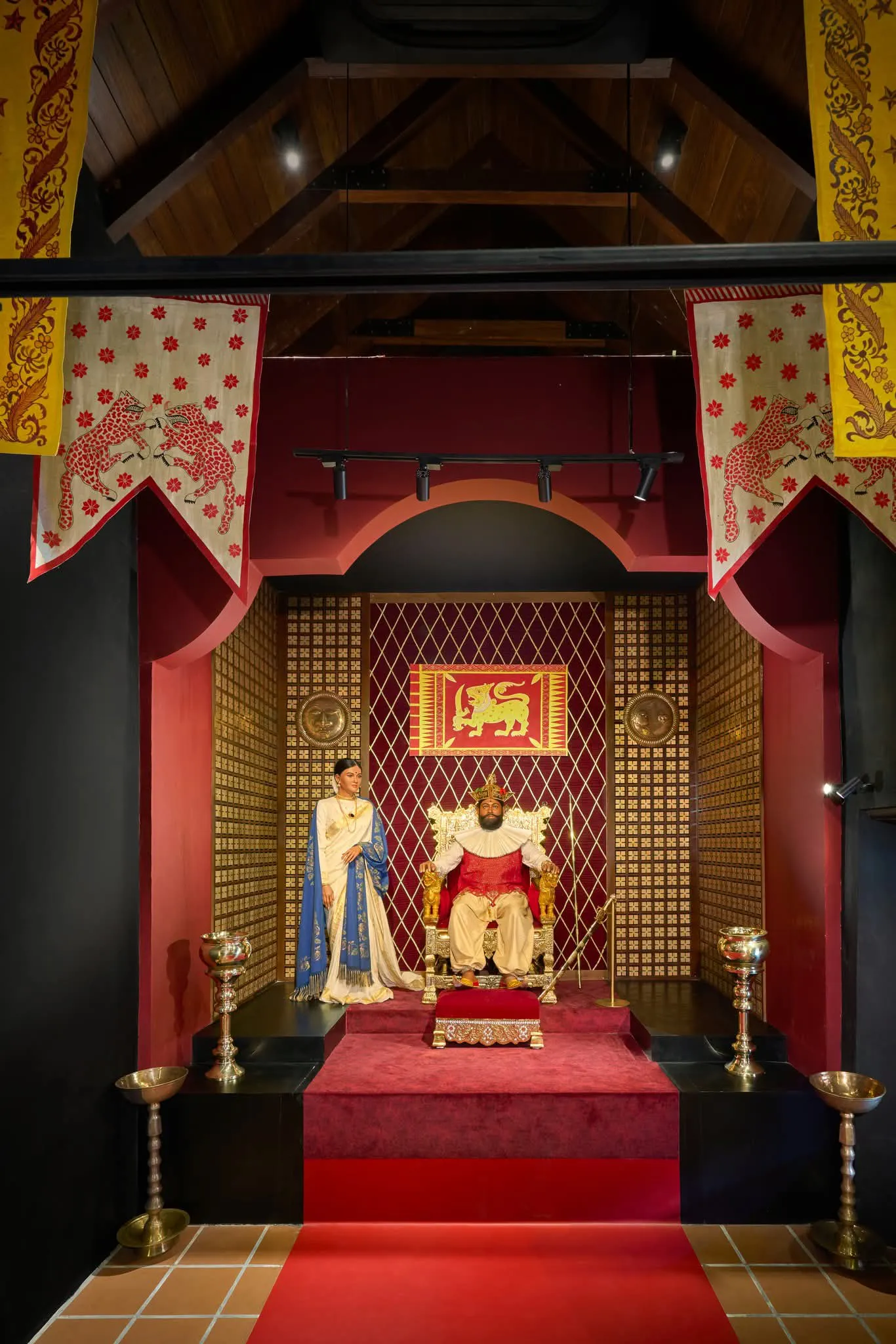
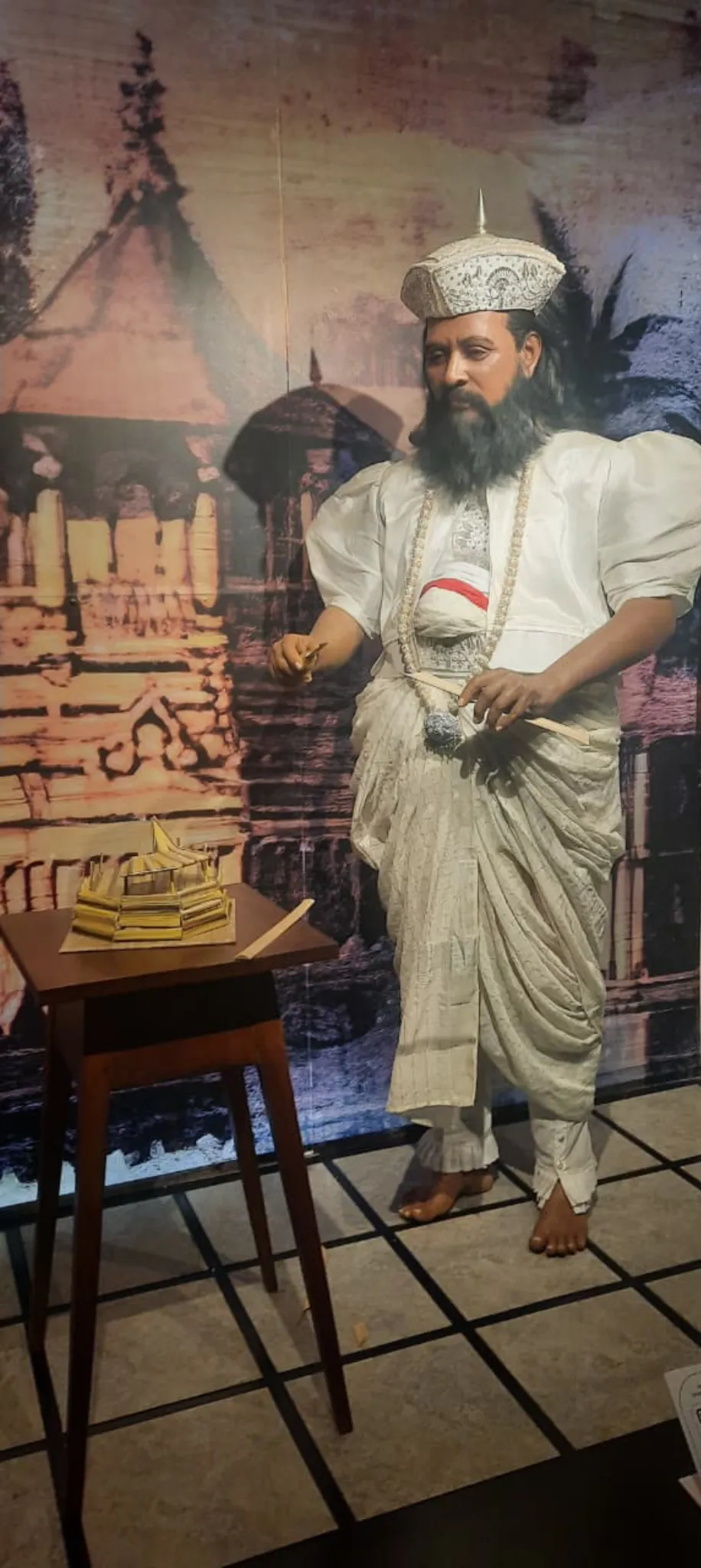
He chose one of the best sites in the city: the end of the main street, directly in front of the Temple of the Tooth and beside the lake. The walawwa is said to have been designed by Devendra Mulachariya, the royal architect of the last king, on the instructions of King Sri Wickrama Rajasinghe himself. If that’s right, it was one of the last noble houses built in the Kandyan Kingdom.
On the historical map of the 18 walawwas of the Kandy grid city, published by the Kandy Municipal Council’s World Heritage Advisory Committee and later reproduced by JICA, Dullewa Walawwa is No. 18. The booklet the map comes from is even called The Growth of Queens Hotel from the Dullewa Walawwa, and the JICA report names Queen’s Hotel as one of only two buildings in the city believed to have grown out of a former walawwa.
Very little is recorded about what the walawwa looked like. As one of the houses of the highest nobility, it would have had the tiled roof, clay floors and painted walls that only the king’s top officials were allowed. But the British soon changed it beyond recognition.
From Governor’s Mansion to Queen’s Hotel
After the British took over in 1815, Dullewe is said to have returned to his village, and the British moved into his city house, as they did with many of the chiefs’ homes. The British pulled down some of the original buildings and rebuilt them with changes, which is why so little of the walawwa survives.
The Governor’s residence
In 1818, according to the Sunday Observer, Dullewe Walawwa became the official residence of the British Governor in Kandy. John D’Oyly, the British Resident in Kandy who had drafted the Kandyan Convention, is considered the first British officer to have lived there. Extra buildings were added next to it to house British troops.
Barracks, hostel and hospital
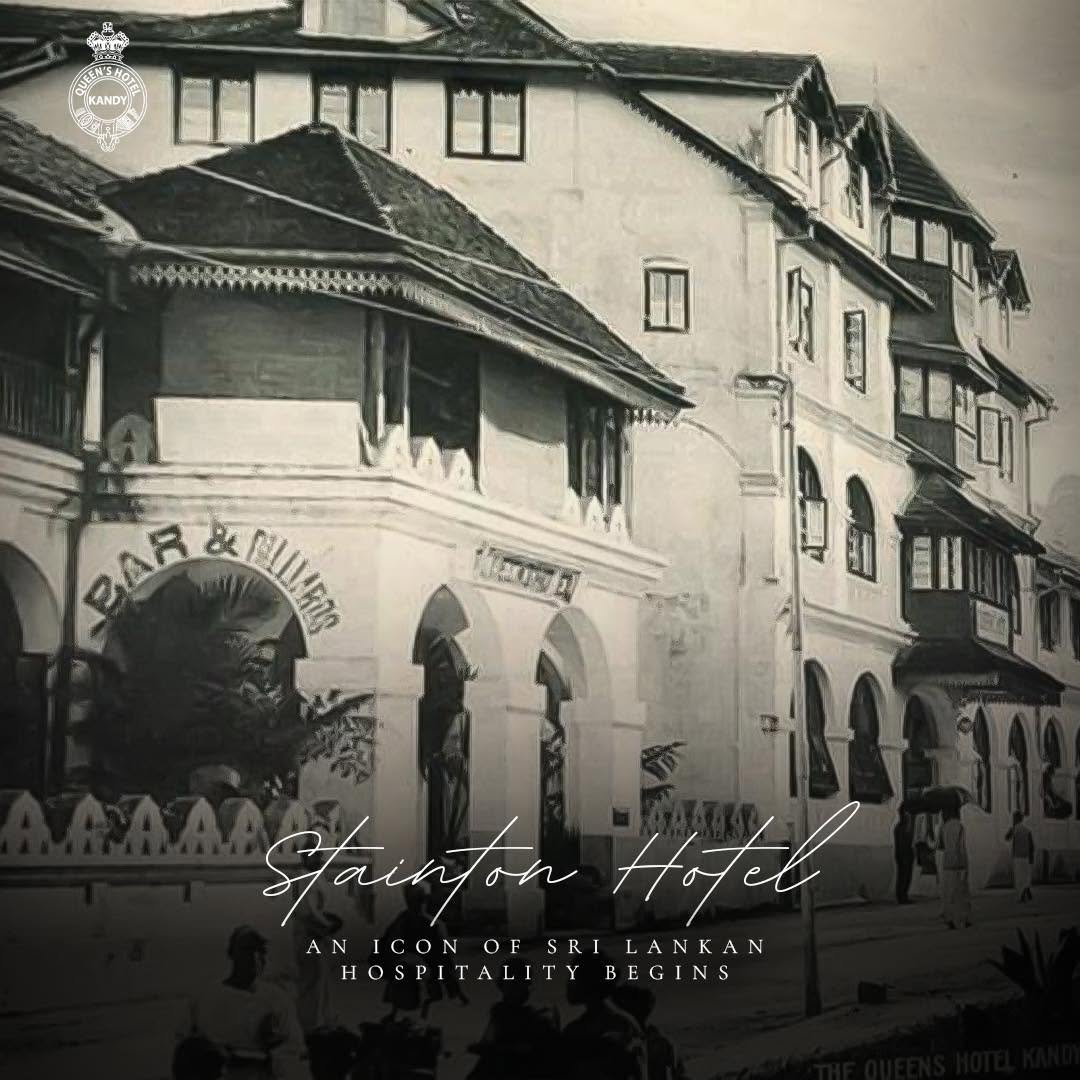
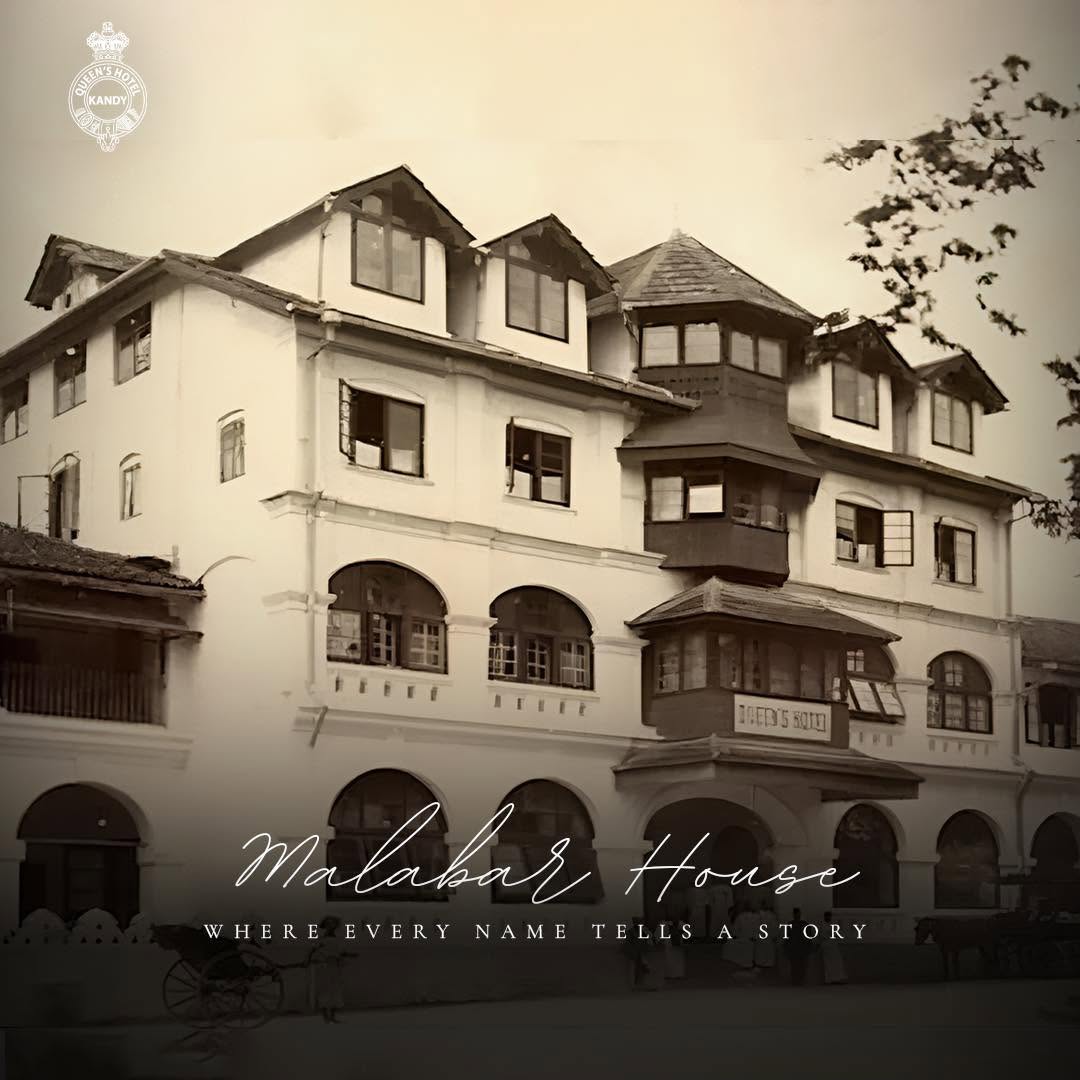
The building was later used as barracks for the Ceylon Rifle Regiment, the British army’s regiment of Malay soldiers in Ceylon. By around 1840 it was known as Malabar House, after the street it stood on, Malabar Street (today D.S. Senanayake Veediya), and it was also used as an army hospital. By then coffee plantations were spreading across the hills around Kandy, and the British needed somewhere to stay when they came to town.
Becoming a hotel
The two main accounts of how the house became a hotel differ in their details.
- The Wikipedia account, based on Ismeth Raheem and Percy Colin-Thomé’s Images of British Ceylon: in the 1840s the building became a boarding house, the Stainton Hotel, run by James Stainton. After his death in 1863, his widow ran it until 1869, when it was taken over by the Queens Hotel Company and renamed the Queens Hotel.
- The Sunday Observer account: an English businesswoman ran a small café and lodging in part of the old walawwa. In 1879 she sold it to Elizabeth Piashaw, the daughter of an army officer, who rebuilt it in a British style and called it Piashaw Cottage. It was later renamed Queen’s Hotel in honour of Queen Victoria.
Both accounts agree on what happened next. In 1895 the hotel was bought by Kandy Hotels Company Limited, which enlarged it into a first-class hotel. According to the Sunday Observer, more wings were added to the east and west ends between 1900 and 1908. In 1911 the Colombo Commercial Company bought it and built a ballroom.
The 20th century
By the end of the 19th century, Queen’s Hotel was the only hotel in Kandy with rooms, meeting space for planters and room for conferences, and it was famous well beyond Ceylon. During the Second World War, Lord Mountbatten, Supreme Allied Commander of South East Asia Command, which was based in Kandy, was a regular guest, and the hotel’s Lord Mountbatten Lounge Bar is named after him.
In 1970 the hotel was taken over by the government and run by the Ceylon Hotels Corporation. Today it’s a four-storey hotel with around 90 rooms, including five suites, the Queen of Hearts restaurant, the Royal Ball Room, the Pub Royal, an outdoor pool and a colonial-era atmosphere that still draws visitors. It’s also a protected archaeological monument.
The Ancestral Walawwa in Dullewa, Matale
The family’s true home was always the Dullewe Maha Walauwa in the village of Dullewa, near Aluvihare, just north of Matale town. According to the Sunday Observer, it was a massive house of about half an acre, built around seven inner courtyards. Seven courtyards would make it one of the grandest walawwas in the Matale district.
The birthplace of a President
On 17 September 1896, William Gopallawa was born at the Dullewe Maha Walauwa. (Some sources give the year as 1897.) His mother was Tikiri Kumarihamy Dullewe, from the family of Dullewe Disawa, and his father, Tikiri Bandara Gopallawa, died when William was only three, so he grew up within his mother’s family.
Gopallawa went on to become the last Governor-General of Ceylon and, when the country became a republic in 1972, the first President of Sri Lanka. In a curious twist, the Kandy residence he used as head of state, the Governor’s Pavilion, later the President’s Pavilion, stands on the site of another of the 18 walawwas, the Pilimathalawa Walawwa, a few minutes’ walk from his ancestors’ old house that had become Queen’s Hotel.
The walawwa today
I couldn’t find a recent published account of the Dullewe Maha Walauwa’s condition or whether family members still live there. If you’re in Matale, it’s worth asking locally, but remember that it’s likely to be a private home.
Visiting Dullewa Walawwa (Queen’s Hotel)
Location: No. 45, Dalada Veediya, Kandy, opposite the Temple of the Tooth and facing Kandy Lake
What you can see: the hotel’s lobby, restaurants, bars and public areas are open to visitors; rooms are for hotel guests
Tips
- Stop for a drink or a meal. The easiest way to see inside is to have tea, lunch or a drink at the Pub Royal or the Lord Mountbatten Lounge Bar.
- Watch the Perahera from here. During the Esala Perahera in July or August, Queen’s Hotel is one of the best places to watch the procession. Seats and rooms with a view book up early.
- Look for the history. Most of what you see today dates from the hotel’s enlargements after 1895, so the walawwa itself is hidden inside later buildings. Knowing the story is half the experience.
- Visiting Matale? The family’s ancestral walawwa at Dullewa, near Aluvihare, is likely a private home. Ask locally before visiting, and don’t enter without permission.
Nearby
- Temple of the Tooth: directly across the road.
- Ehelepola Walawwa: on Raja Veediya, about 300 m away, now Sri Lanka’s first wax museum.
- Royal Bar & Hotel: the old Mampitiya Walawwa, also on Raja Veediya. It’s on our list of the best spots to grab a cold beer in Kandy.
- President’s Pavilion: the site of the Pilimathalawa Walawwa, a short walk away. It’s an official residence, so view it from outside.
Final Thoughts
Few walawwas have had as many lives as Dullewa Walawwa: a chief’s town house, the Governor’s residence, an army barracks and hospital, a boarding house, and for more than 150 years one of Sri Lanka’s best-known hotels. Its owner signed away the Kandyan Kingdom in 1815, and fell under suspicion in the rebellion of 1848. A century later, a man born in his family’s ancestral walawwa became the country’s first President.
The next time you watch the Perahera from a balcony at Queen’s Hotel, remember that you’re standing in what was once the home of a Kandyan chief.