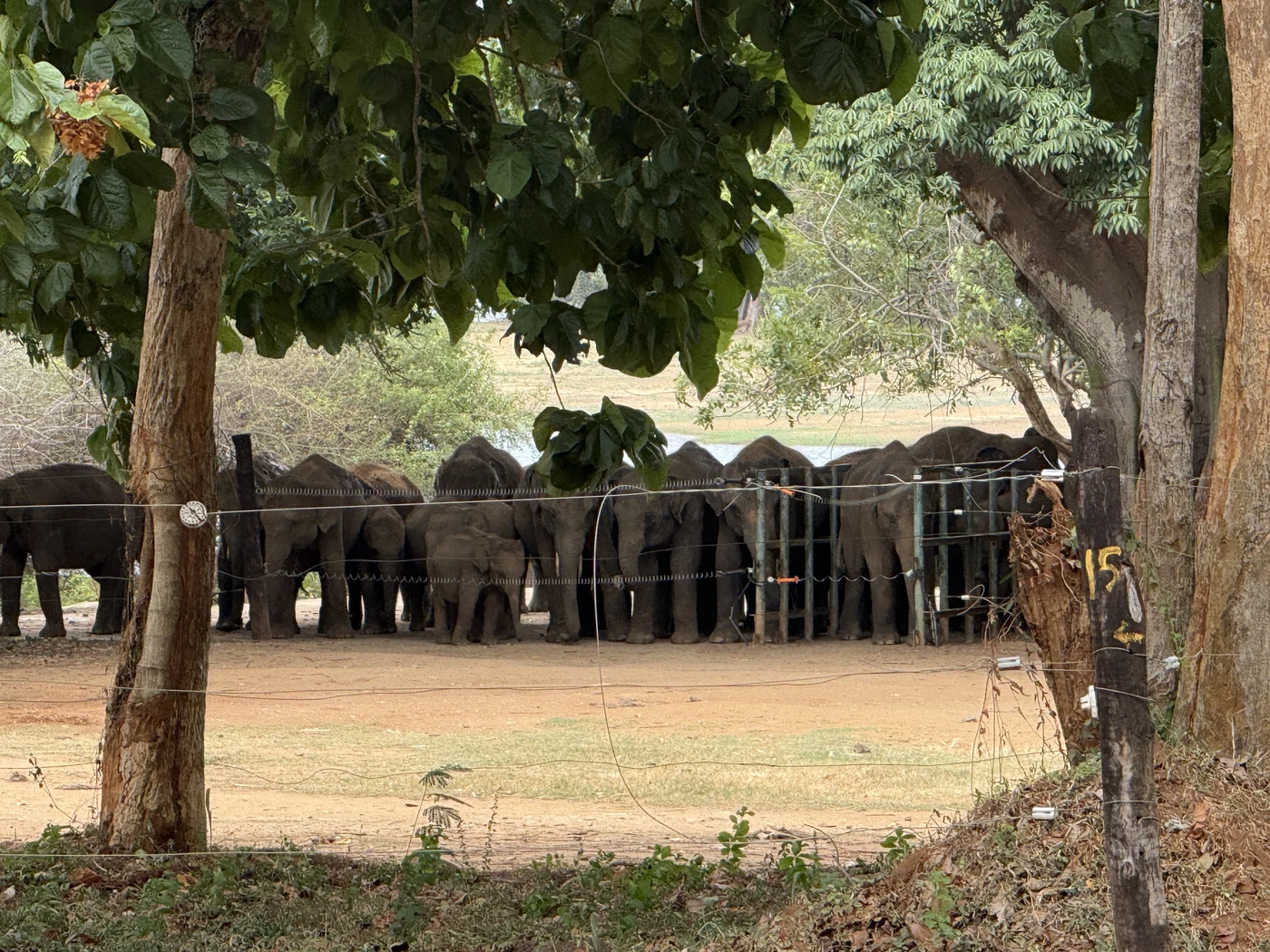
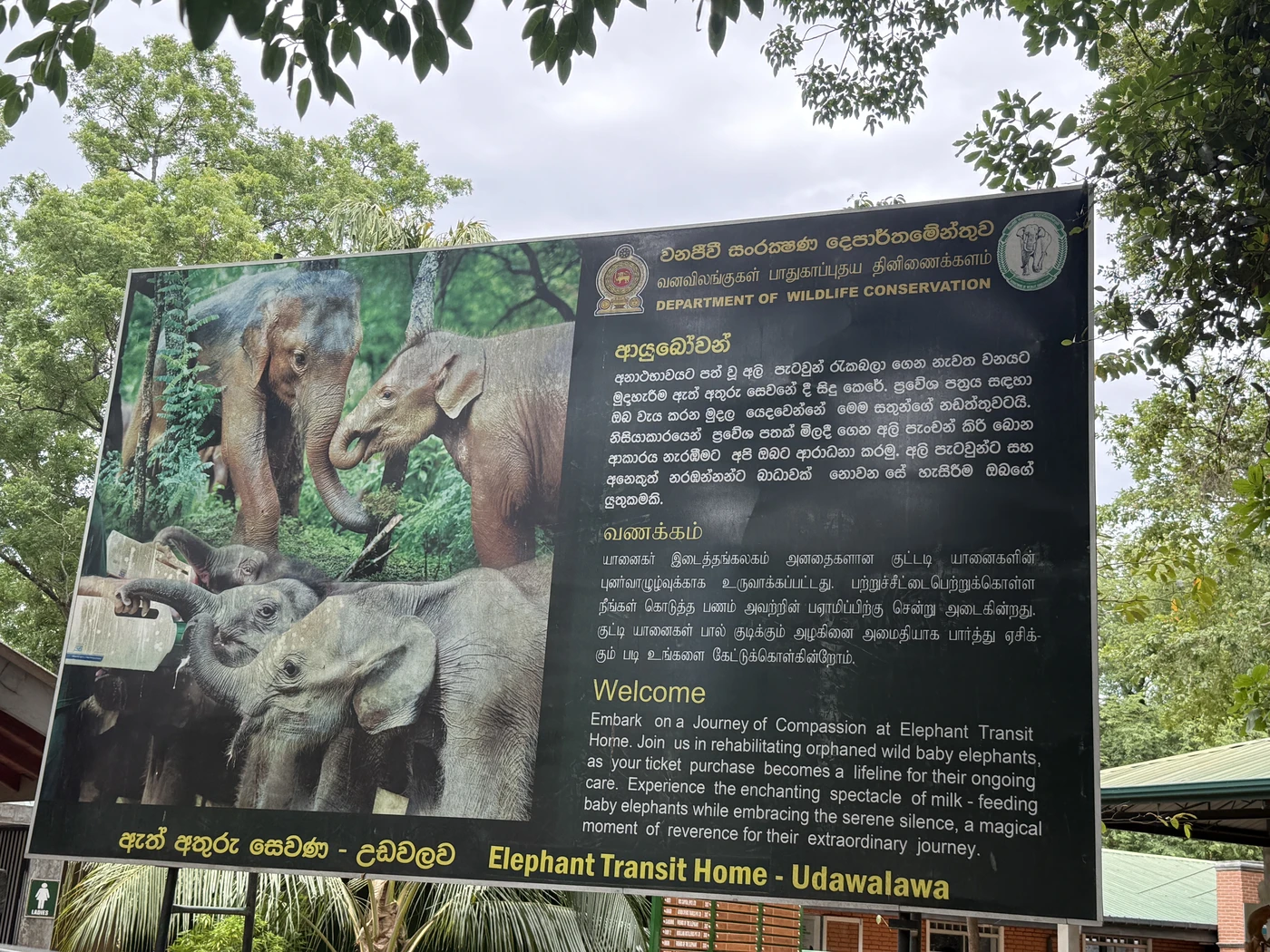
The Udawalawe Ath Athuru Sevana (ඇත් අතුරු සෙවණ), known in English as the Udawalawe Elephant Transit Home, is where orphaned wild elephant calves are raised and returned to the wild. It is run by the Department of Wildlife Conservation, sits beside Udawalawe National Park, and lets visitors watch the calves come in for their milk three times a day.
Quick facts before you go
- What it is: A government-run rescue and rehabilitation centre for orphaned wild elephant calves, run by the Department of Wildlife Conservation. In Sinhala it is called Ath Athuru Sevana.
- Where: Beside Udawalawe National Park, on the western side near the Udawalawe Reservoir, in the south of Sri Lanka.
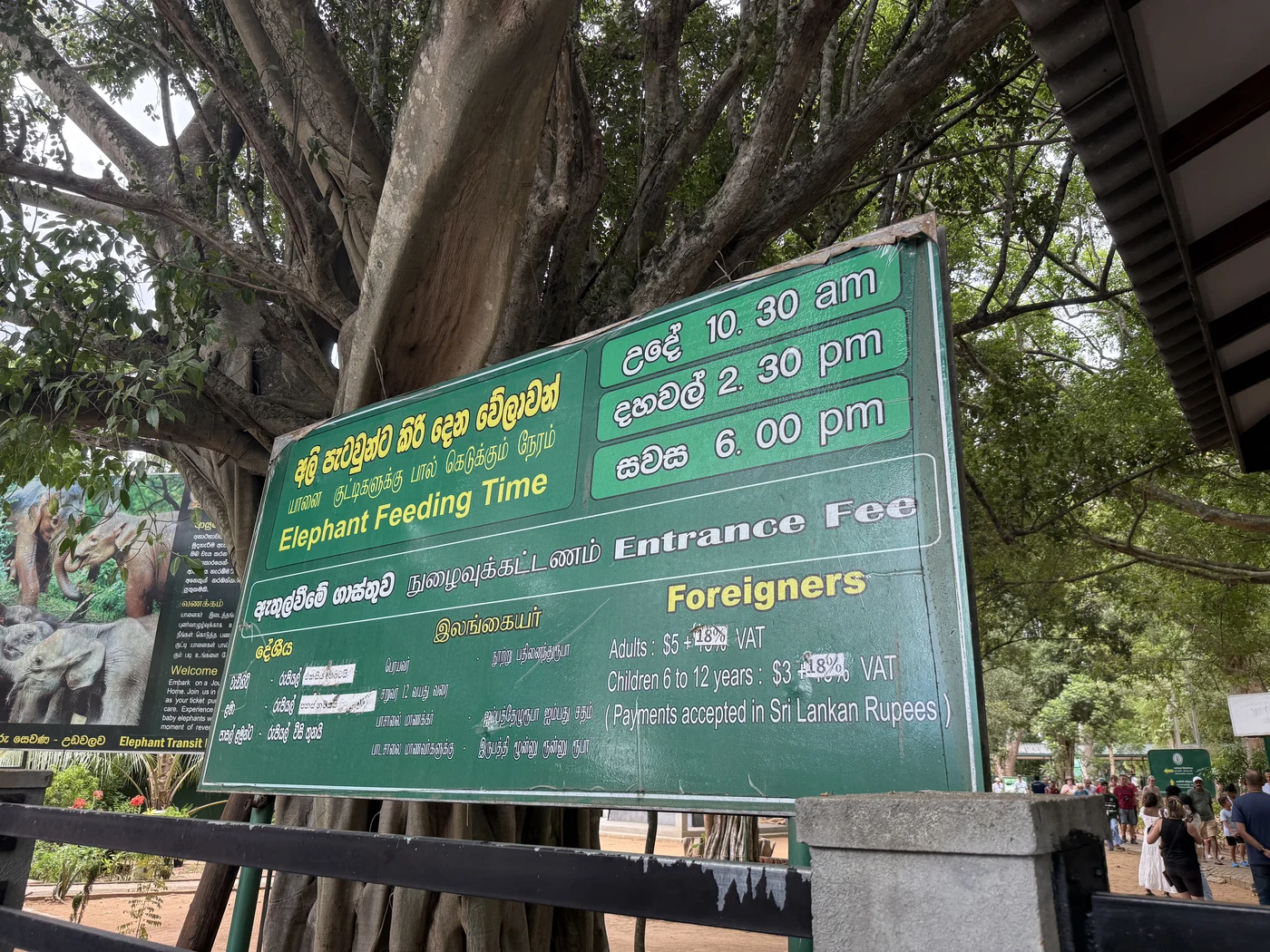
- Public feeding times: 10:30 am, 2:30 pm and 6:00 pm (as shown on the entrance signboard).
- Foreign visitors: USD 5 per adult and USD 3 per child aged 6 to 12, plus 18% VAT, payable in Sri Lankan rupees.
- Local visitors: A lower rate applies. The local prices were covered over on the board when we visited, so confirm at the counter.
- Cash: There was no ATM on site, so bring enough rupees with you.
- Parking and food: There is a well-managed parking area, with food and snack stalls nearby.
- Touching the calves: Not allowed. You watch from a viewing area.
- Arrive early: Plan to be there 30 to 40 minutes before a session. The museum alone can take 15 to 20 minutes.
Why Udawalawe Elephant Transit Home is different
Many travellers in Sri Lanka know the elephant orphanage at Rambukkana (Pinnawala, in Kegalle district), which opened in 1975 and keeps a large captive herd that bathes in the Maha Oya river. The Udawalawe Ath Athuru Sevana works on a different principle. As the name suggests, it is a stopover, not a permanent home. Calves come in, grow up with as little human contact as possible, and are released back into the wild.
Our family visited on the second day of our Udawalawe trip. Day one was just arriving and settling into a hotel. Day two began with a morning safari in Udawalawe National Park (see our Udawalawe National Park safari guide), followed by a visit to the Sri Sankapala temple (see our Sri Sankapala Rajamaha Viharaya article), and then the transit home in the afternoon. If you are staying in Udawalawe, this is an easy way to round out a day, and I would call it one of the best experiences of our whole trip.
A short history
The transit home was set up in 1995 by the Department of Wildlife Conservation at Udawalawe National Park. It is often described as the first facility of its kind in the world dedicated to rehabilitating orphaned Asian elephant calves for release. Accounts of its first calf mention a one-year-old female named Komali, found alone in the Meegalawa area of Anuradhapura district.
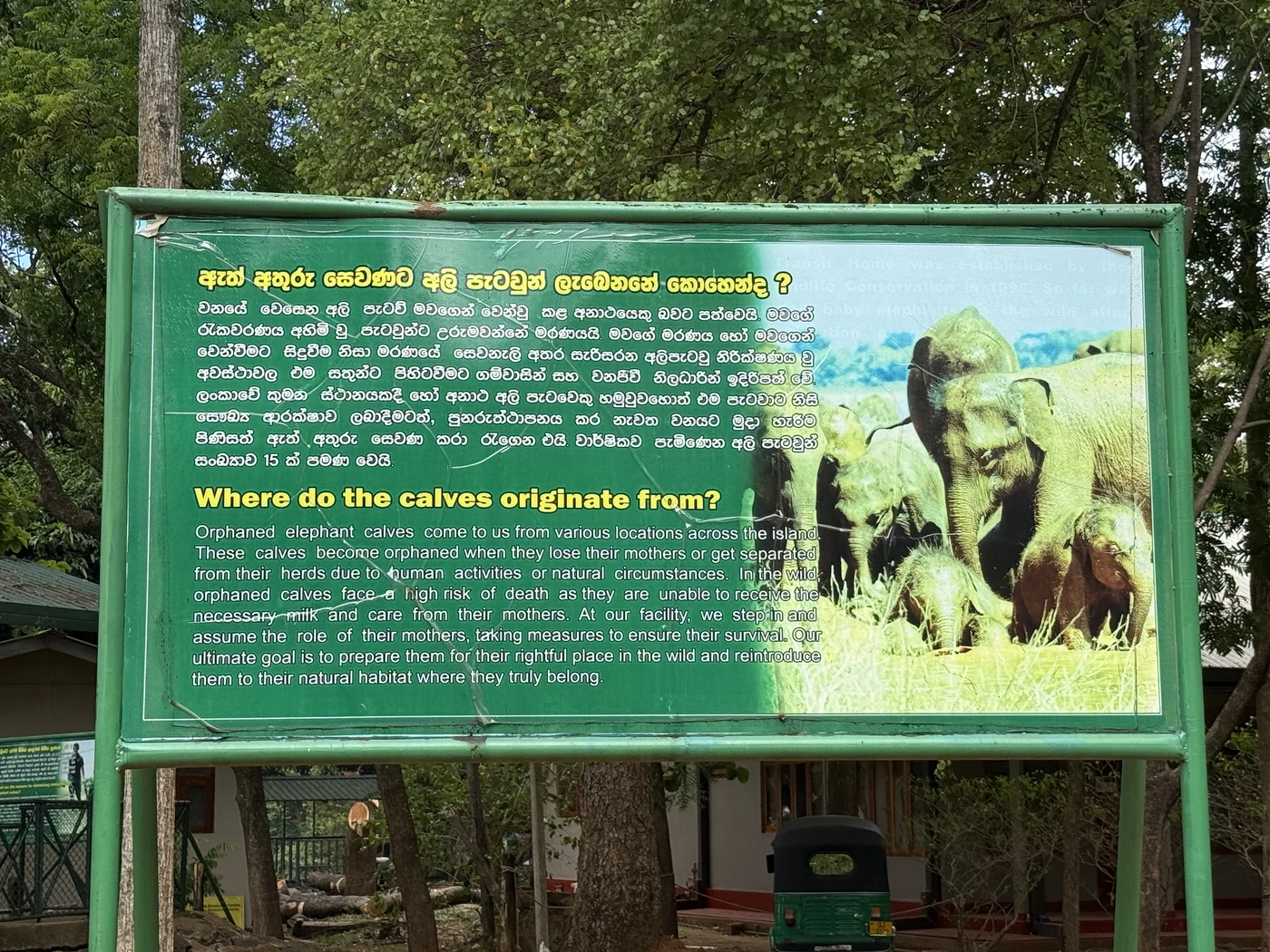
The first group was released in 1998. Since then, sources give different totals for calves admitted and calves released, but the number of released elephants is well over 100. These figures change as new calves arrive and others are released, so treat any single number with some care. Calves arrive from all over the island. According to the signboard at the entrance, roughly 15 orphaned calves come in each year.
Why calves end up here
The signboards inside explain it simply. Calves become orphaned when they lose their mothers or get separated from their herds, often because of human activity or natural causes. A young calf in the wild cannot survive without its mother’s milk and care, and the centre steps in to play that role. The stated goal is to prepare each calf for its place in the wild and return it to its natural habitat.
For context, Sri Lanka’s 2024 national survey counted at least 7,451 wild elephants, up from 5,879 in 2011. Human-elephant conflict is a serious problem across the country, which is part of why calves are orphaned. Udawalawe National Park itself, which covers about 30,821 hectares and was declared in 1972, is home to a permanent herd that is commonly put at around 250 elephants, though counts vary by season and source.
How the rehabilitation works
Based on the signboards and published accounts, the process runs in stages.
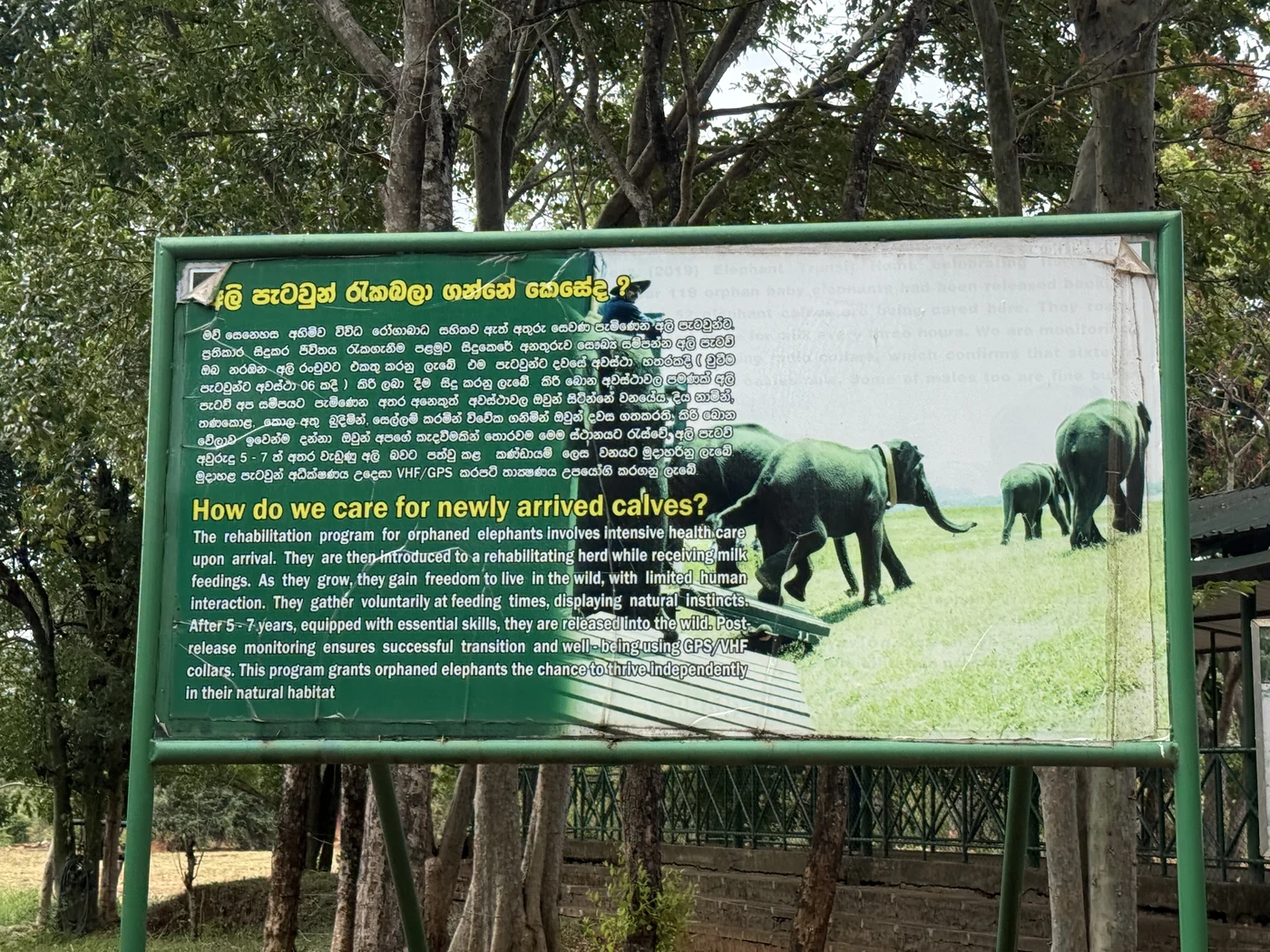
Arrival and health care. New calves get intensive veterinary care, including treatment for injuries, dehydration, and malnutrition. Introducing a very young calf to milk formula can be difficult and risky, and newborns are fed around the clock.
Joining a rehabilitating herd. Once stable, calves are introduced to a herd of other orphans and continue to receive milk. As they grow, they get more freedom, with human contact kept limited. The signboard notes that calves gather voluntarily at feeding times, which is exactly what we saw.
Release. According to the board, calves are released after about five to seven years, once they have the skills to cope. Other sources describe release at four to five years. Calves are released in small groups, not one by one, because a group gives them a much better chance of adapting. Released elephants are monitored with GPS and VHF collars, and they may head to Udawalawe, Lunugamvehera, Maduru Oya or other protected areas.
Our experience
We went as a family of four. At the entrance, you buy tickets, and foreign visitors pay more than locals.
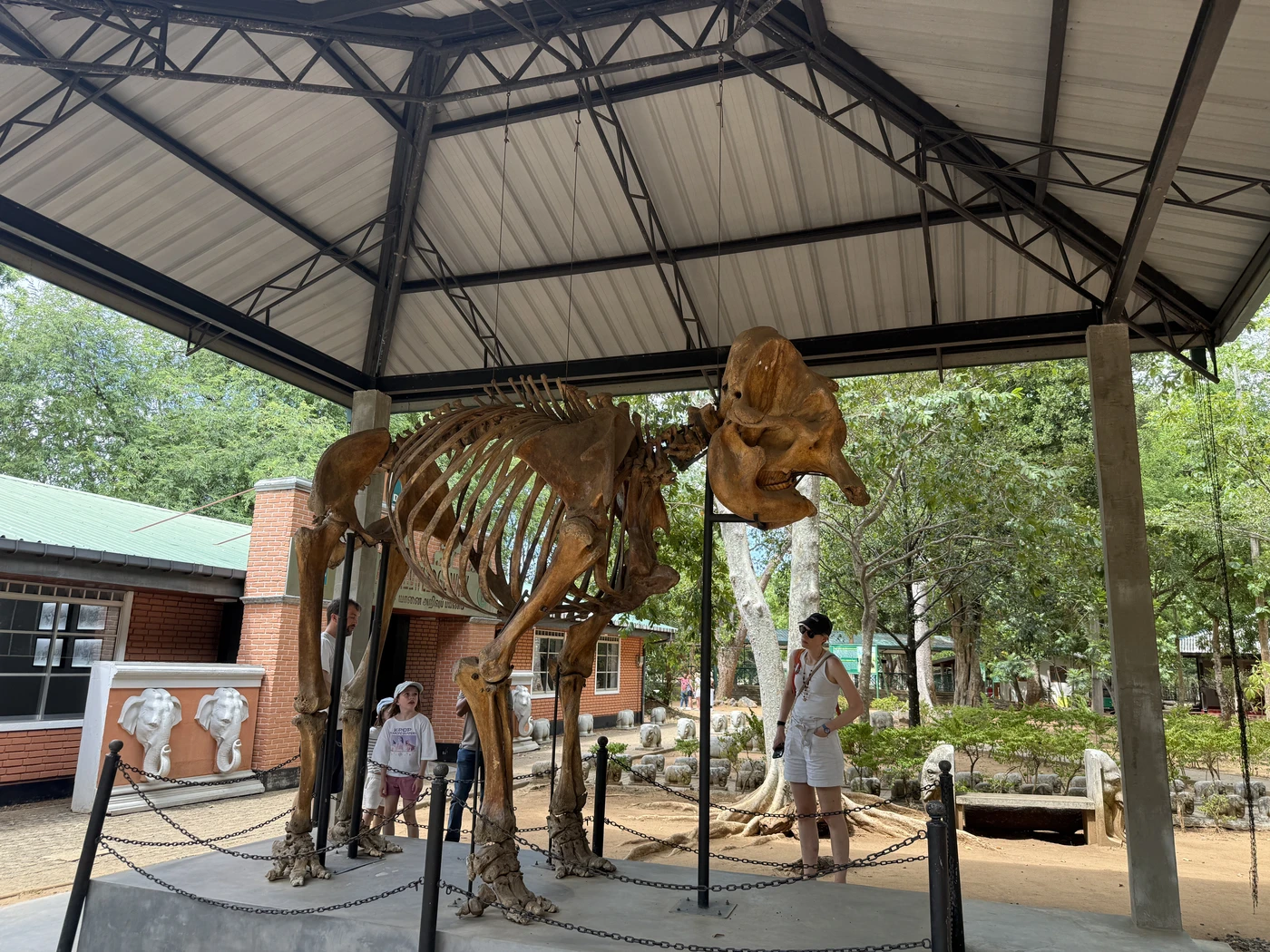
Just inside, a huge elephant skeleton stands under a roof, which is a striking first sight, especially for kids.
The museum (Elephant Knowledge Walk)
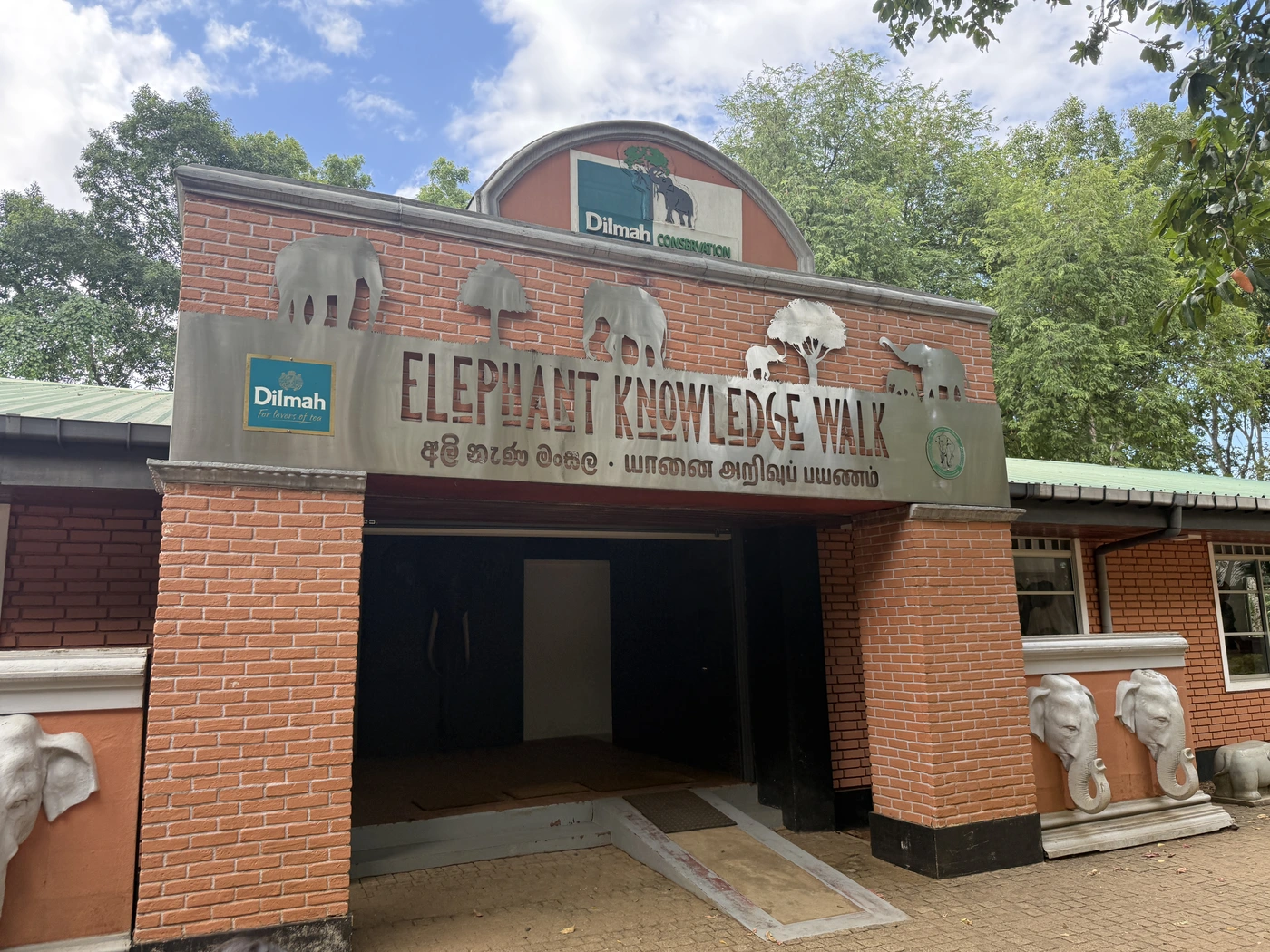
Next to the skeleton is the Elephant Knowledge Walk, a small museum with panels in English, Sinhala, and Tamil.
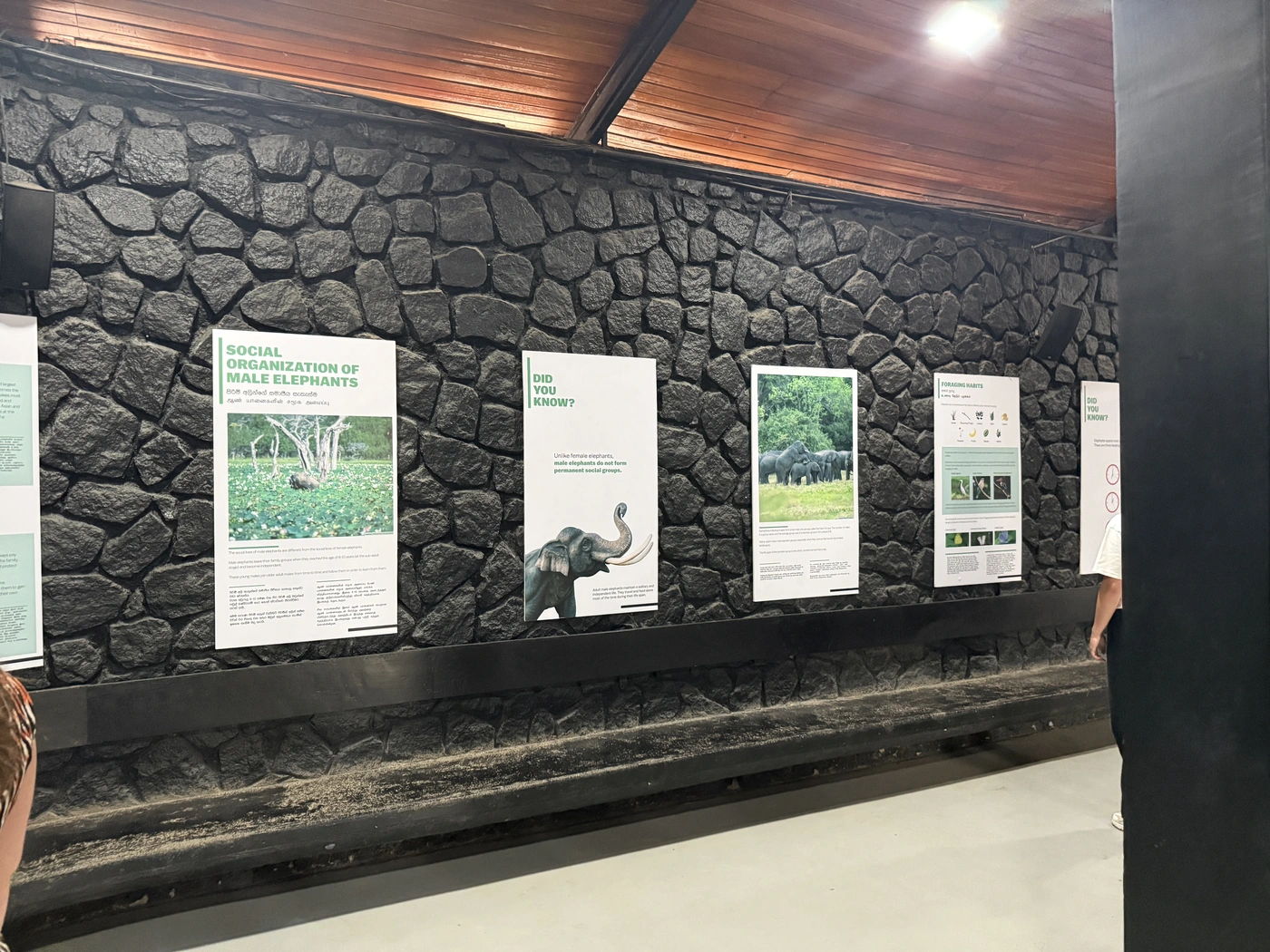
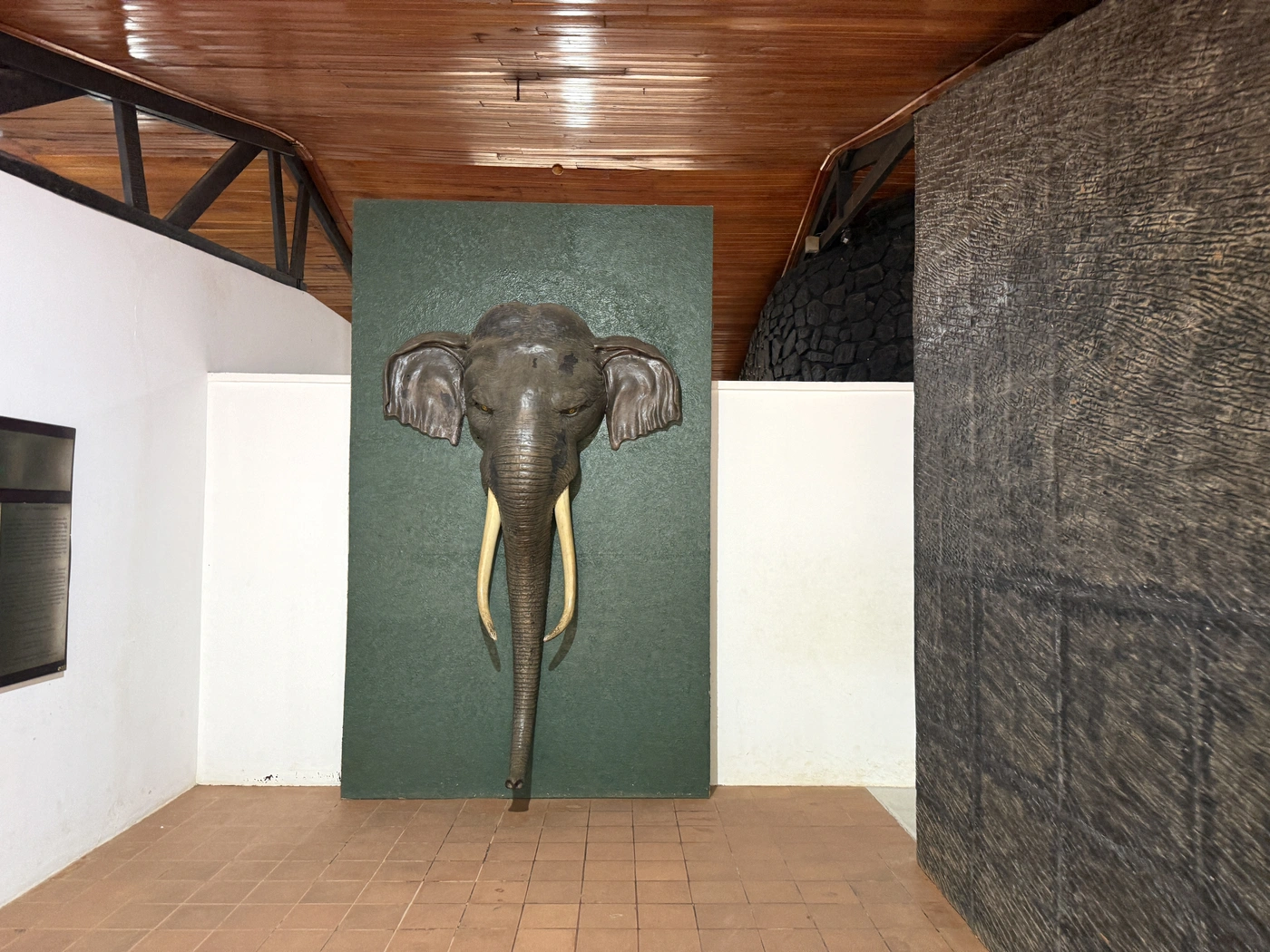
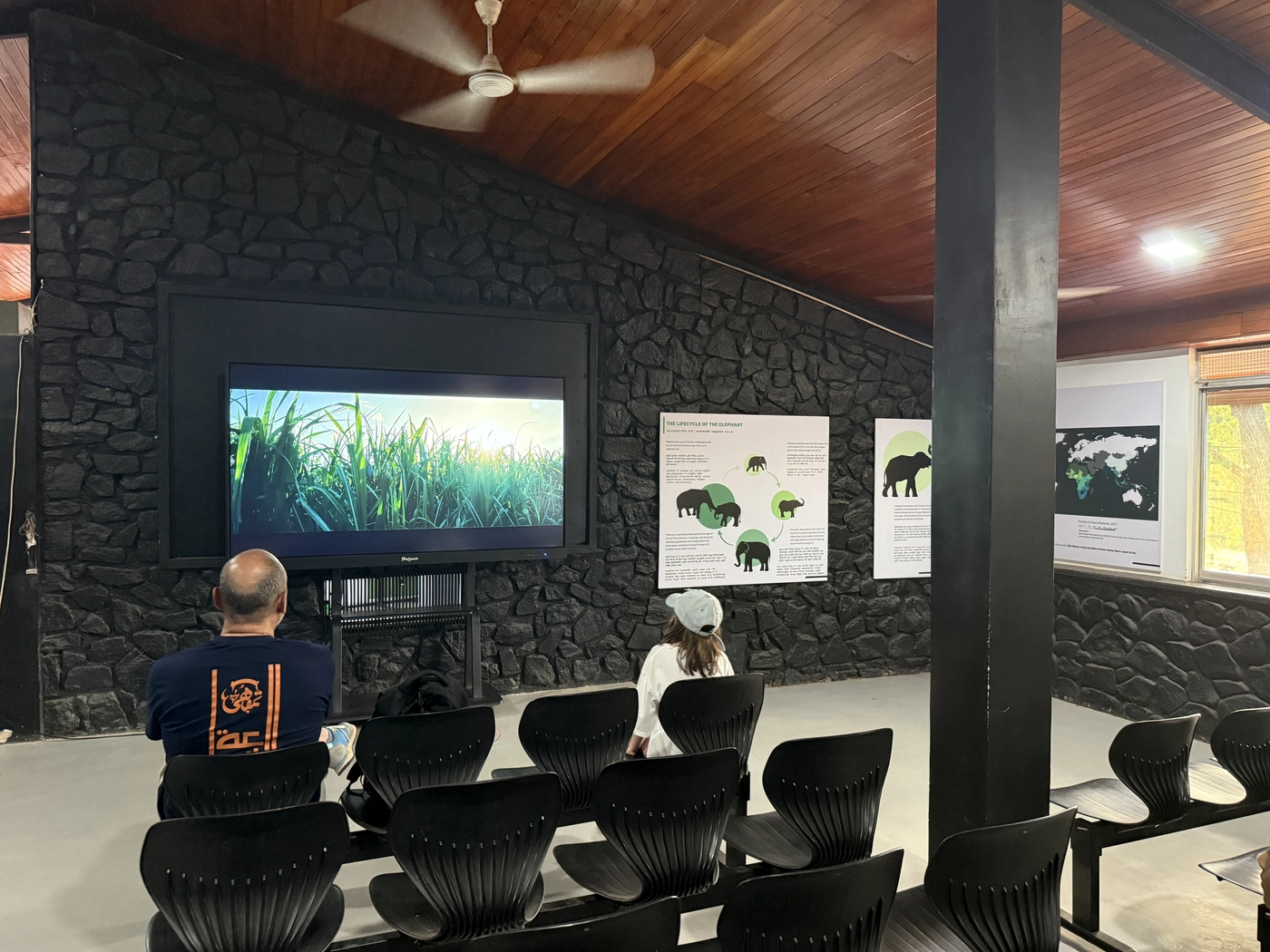
Inside, a life-size elephant head greets you, and the panels cover the history of elephants and their ancient relatives, then compare African forest and bush elephants with Asian and Sri Lankan elephants. There are sections on social structure, foraging habits, and the elephant life cycle.
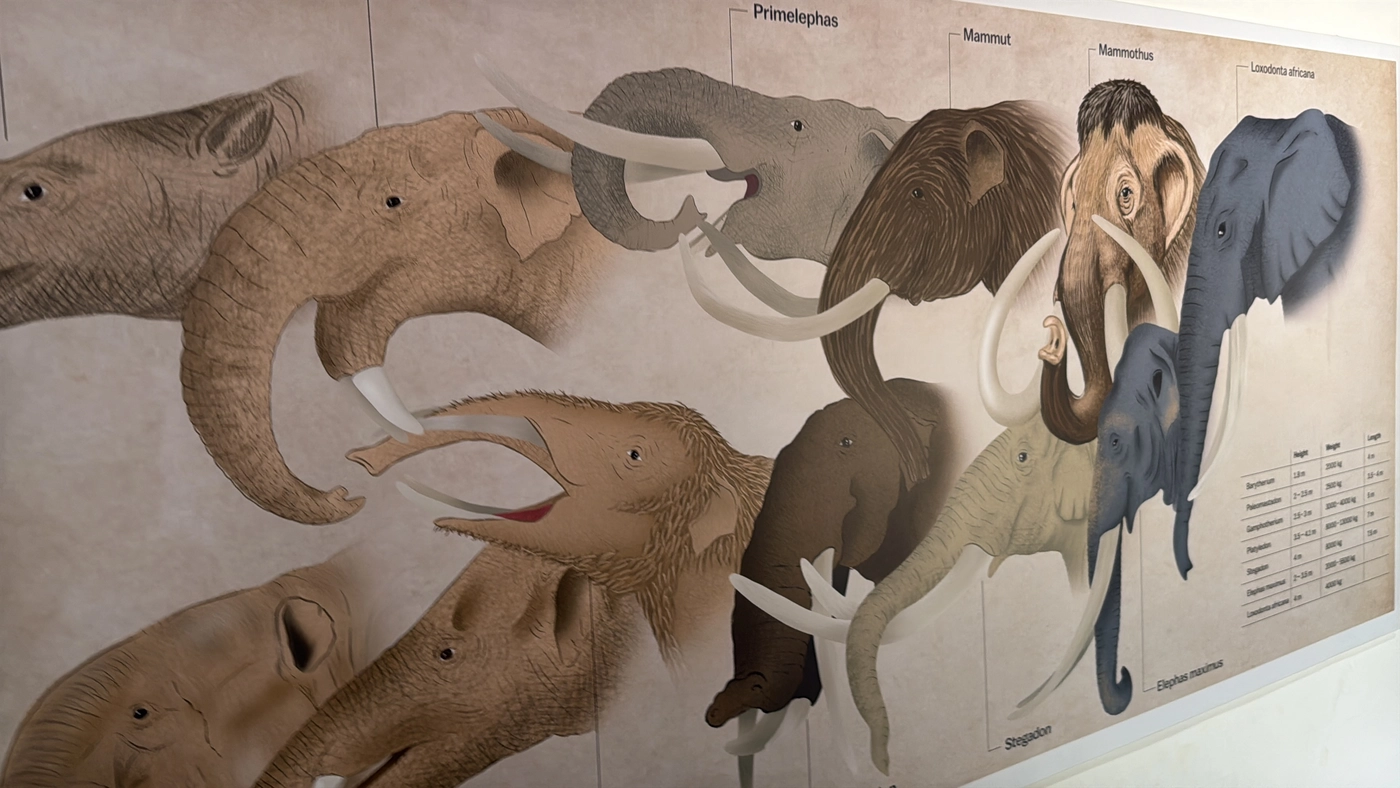
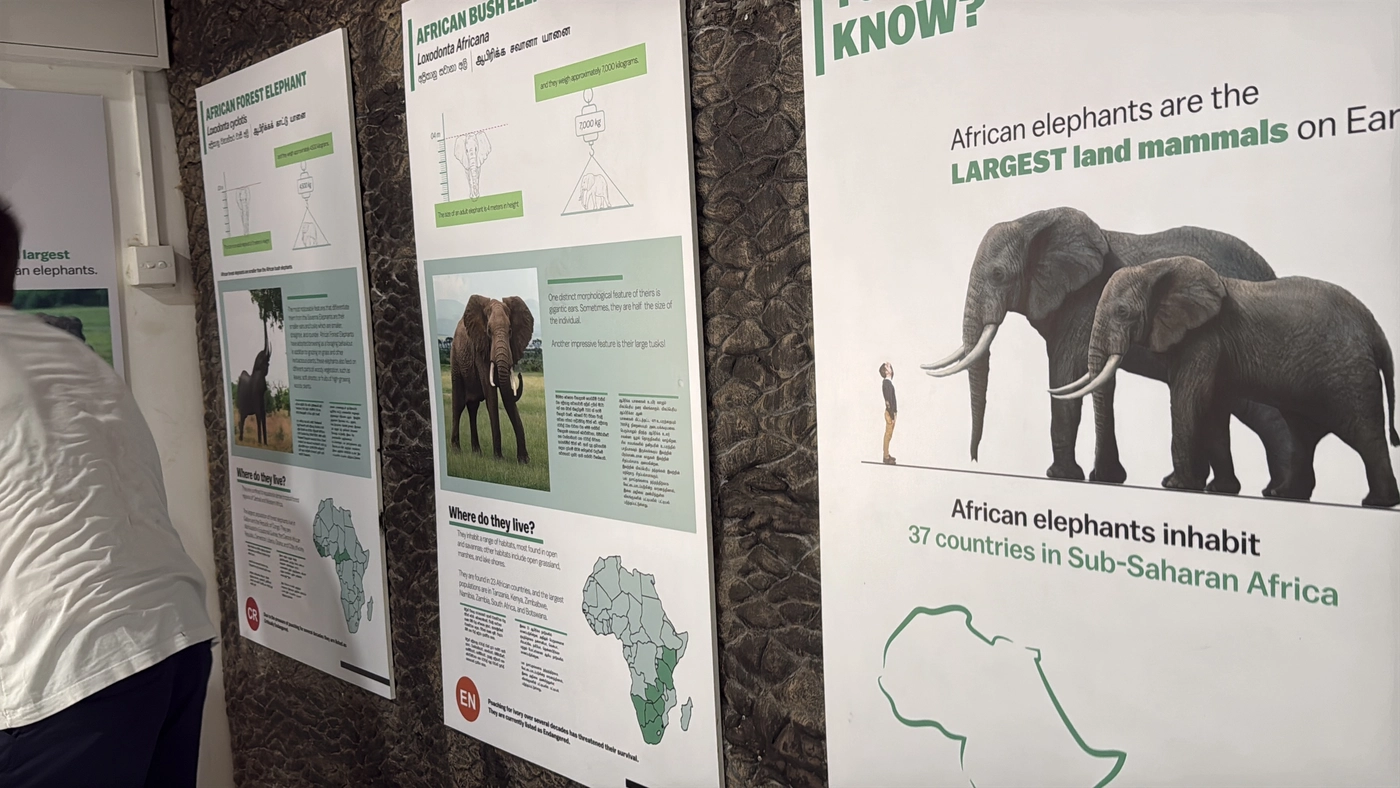
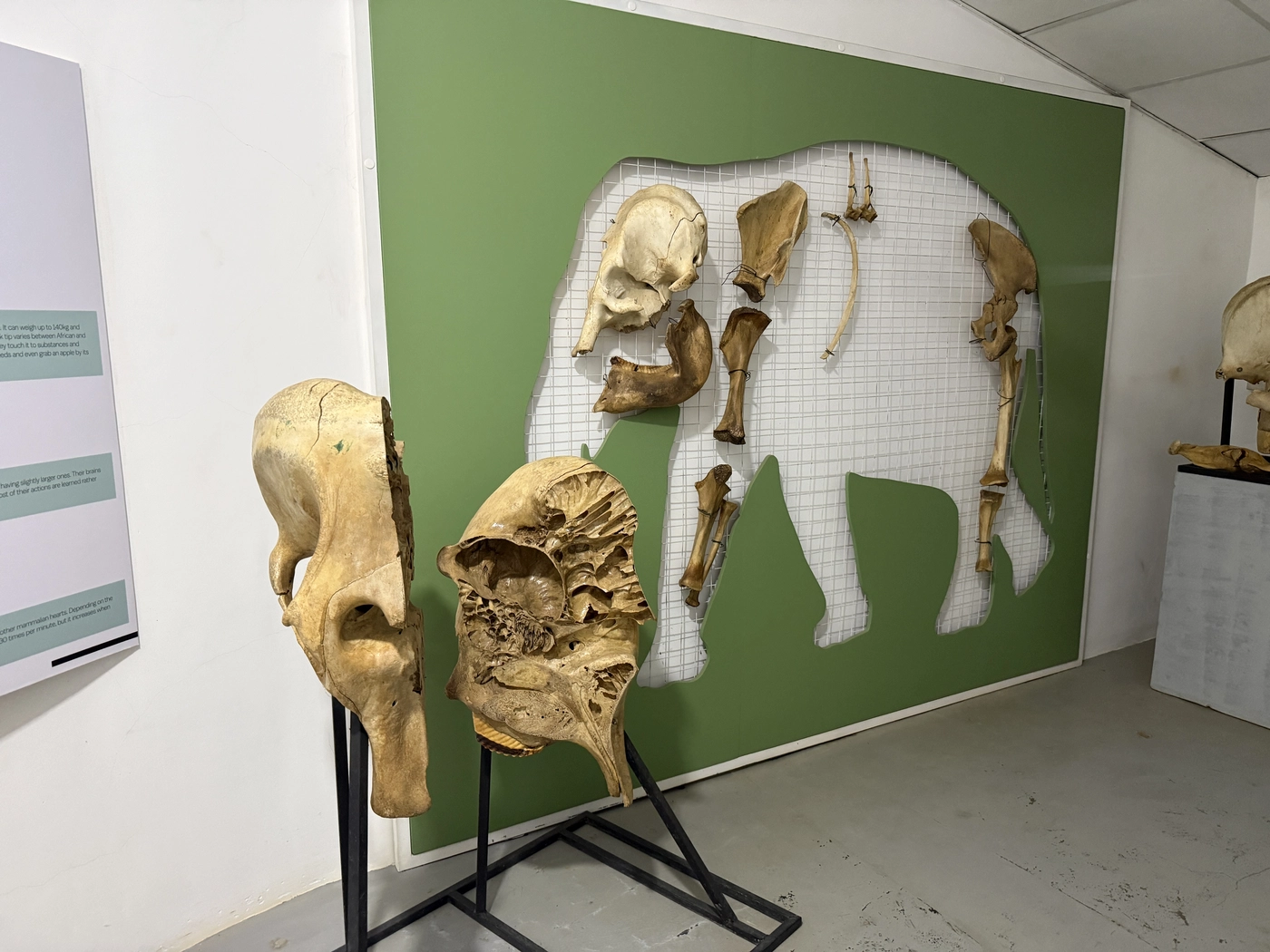
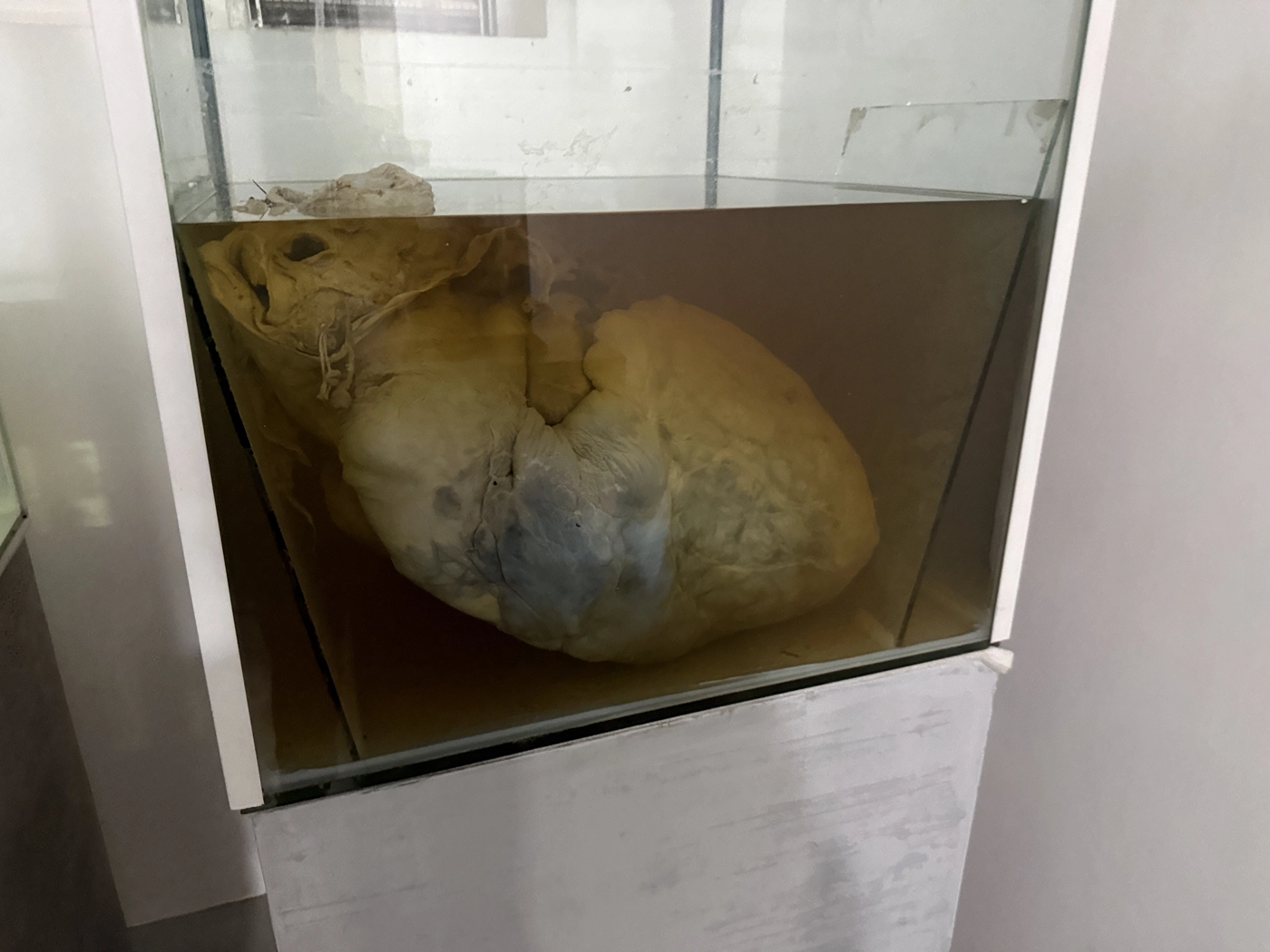
The part that stayed with me was the physical exhibits: skeletons and partial skeletons, skulls, preserved organs including a large heart, and a preserved baby elephant.
There is also a seating area where short videos play.
We also saw the crutch used by an elephant that had lost a leg, and it was a quiet reminder of how much work the wildlife staff put in.
My advice is to see the museum first. When we came out after about 15 to 20 minutes, the feeding was about to start, and the viewing area had filled up.
The feeding session at Ath Athuru Sevana
The viewing area has only about four tiered steps of seating, and it fills up quickly. If you are short, you may struggle to see the calves, so get a seat early.
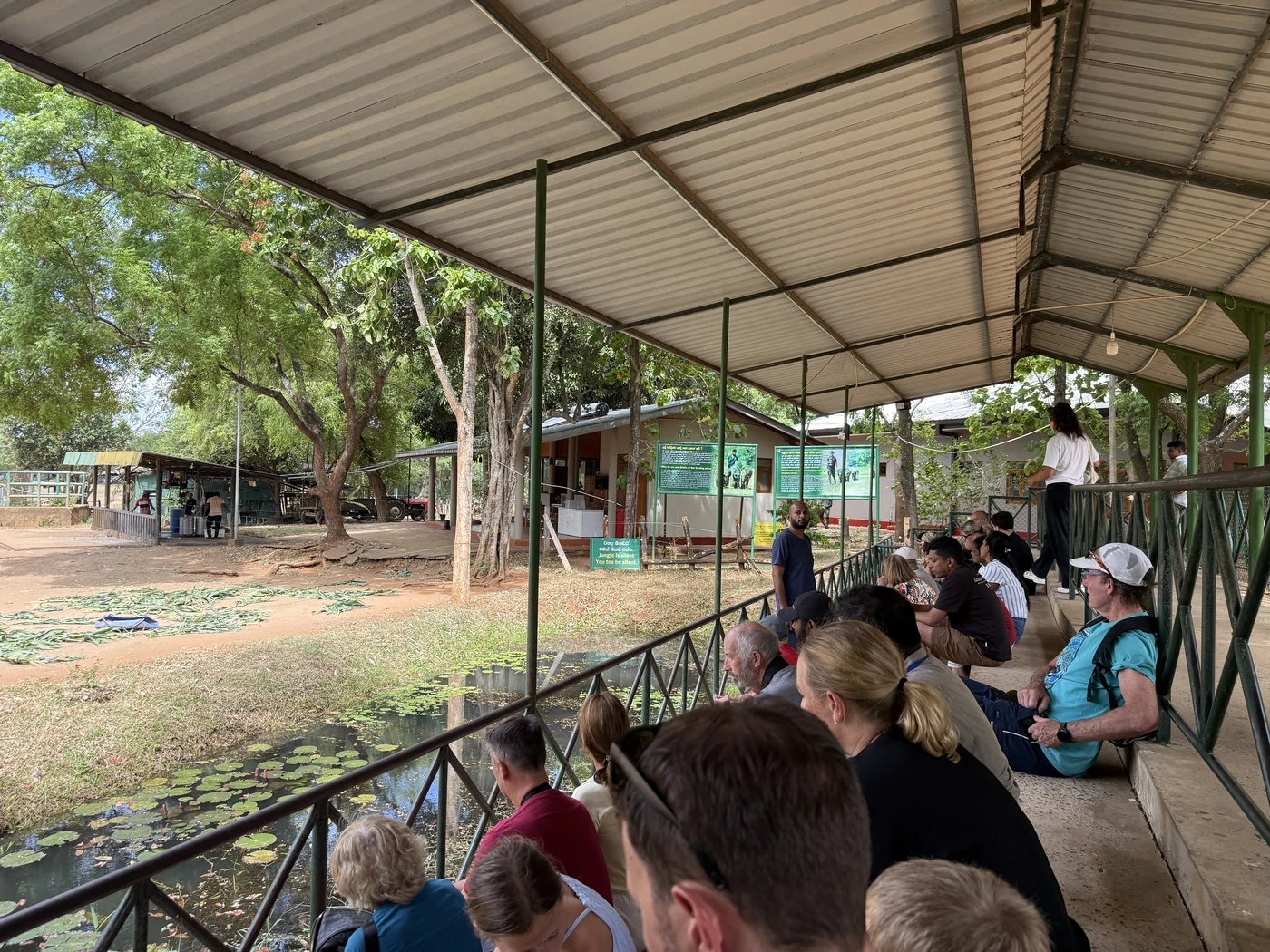
What happens next is the highlight. There is no bell and no announcement, but the calves seem to know the time. As it approaches, the whole group, around 30 to 40 calves, gathers at a small gate by themselves and starts calling out. They crowd up against it, clearly very hungry, yet they wait patiently, a bit like good children. At 2:30, a keeper opened the gate for three calves at a time. They did not queue politely. They pushed and raced each other to the milk, trunks swinging.
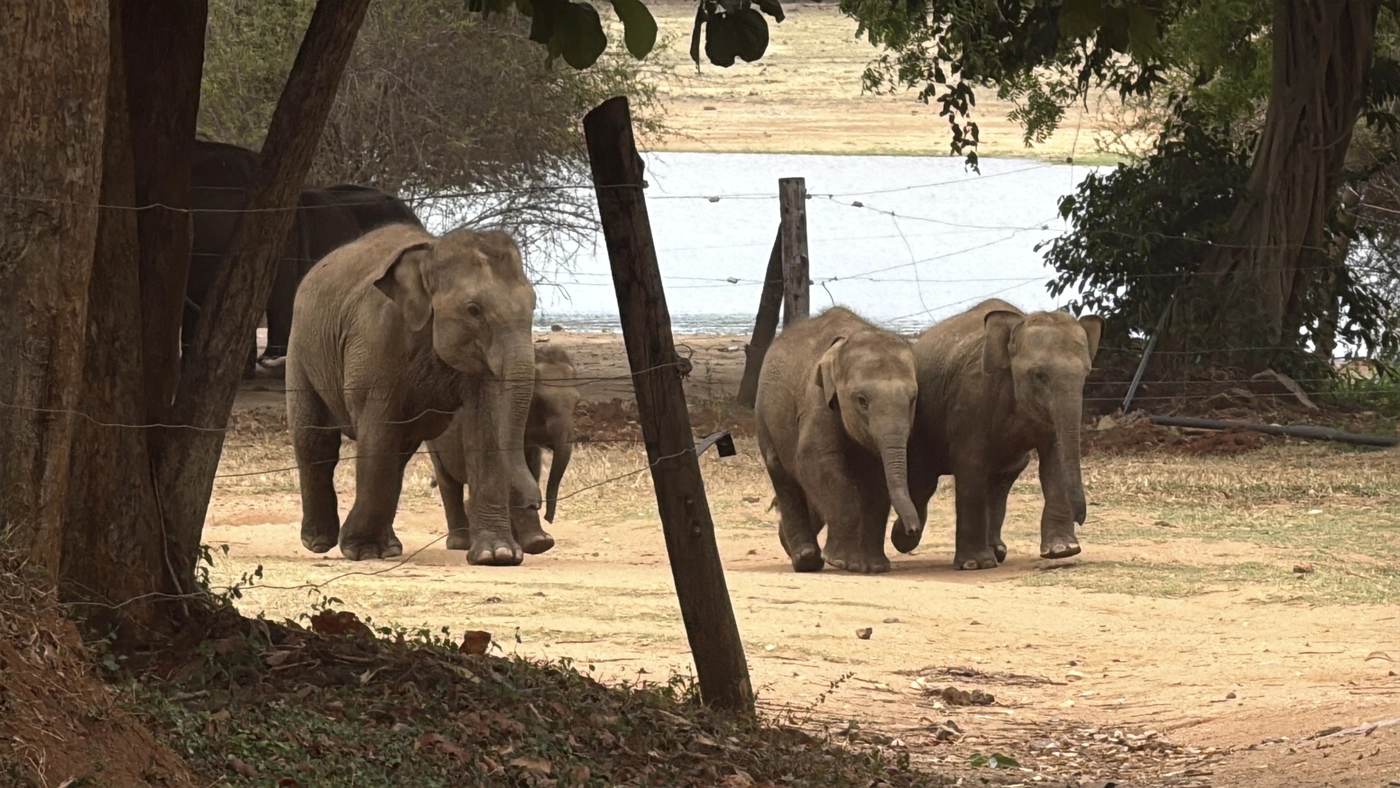
Milk is given through funnels and bottles, and only two or three calves can drink at once. When their turn is done, they move aside to eat grass and leaves, so the next group can drink. Some calves were tiny, while others were noticeably bigger and still shouting for more.
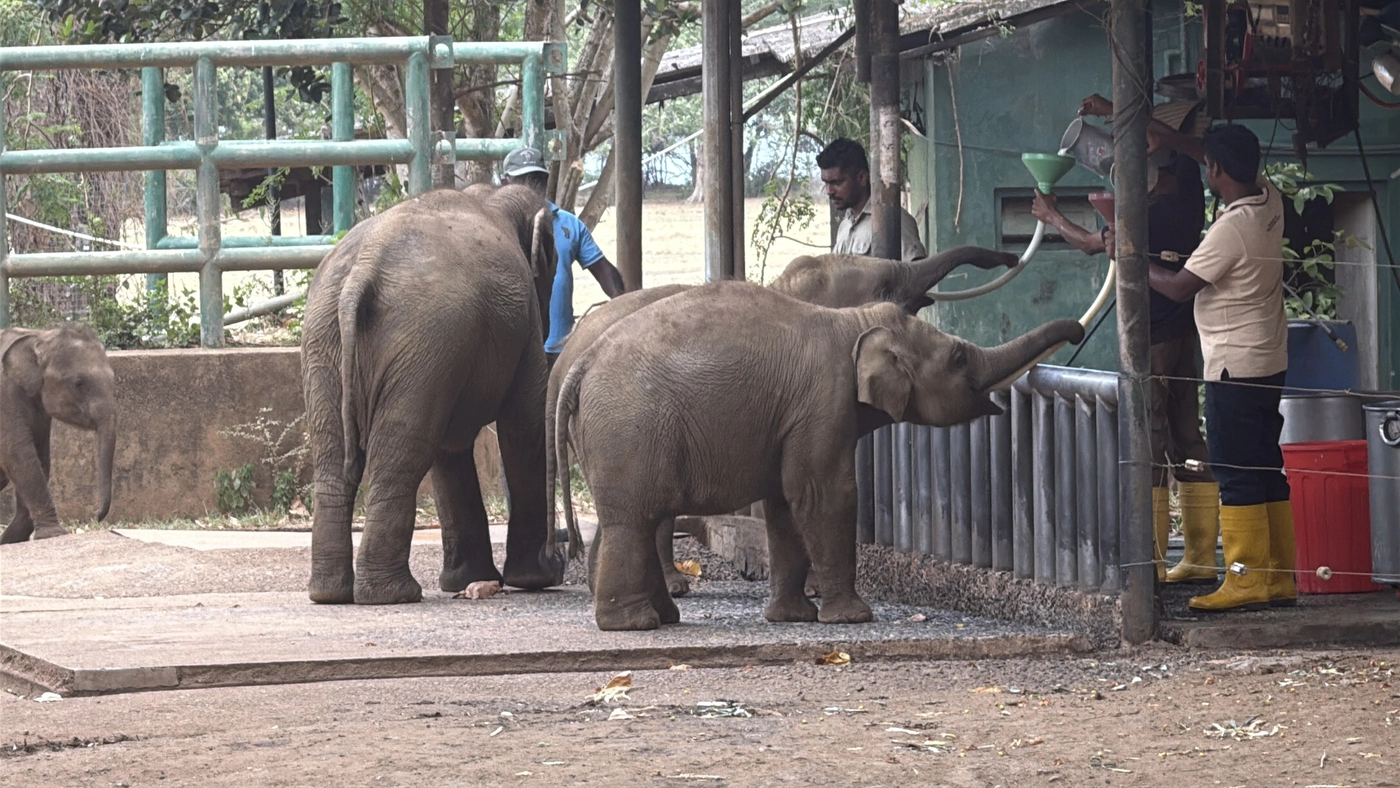
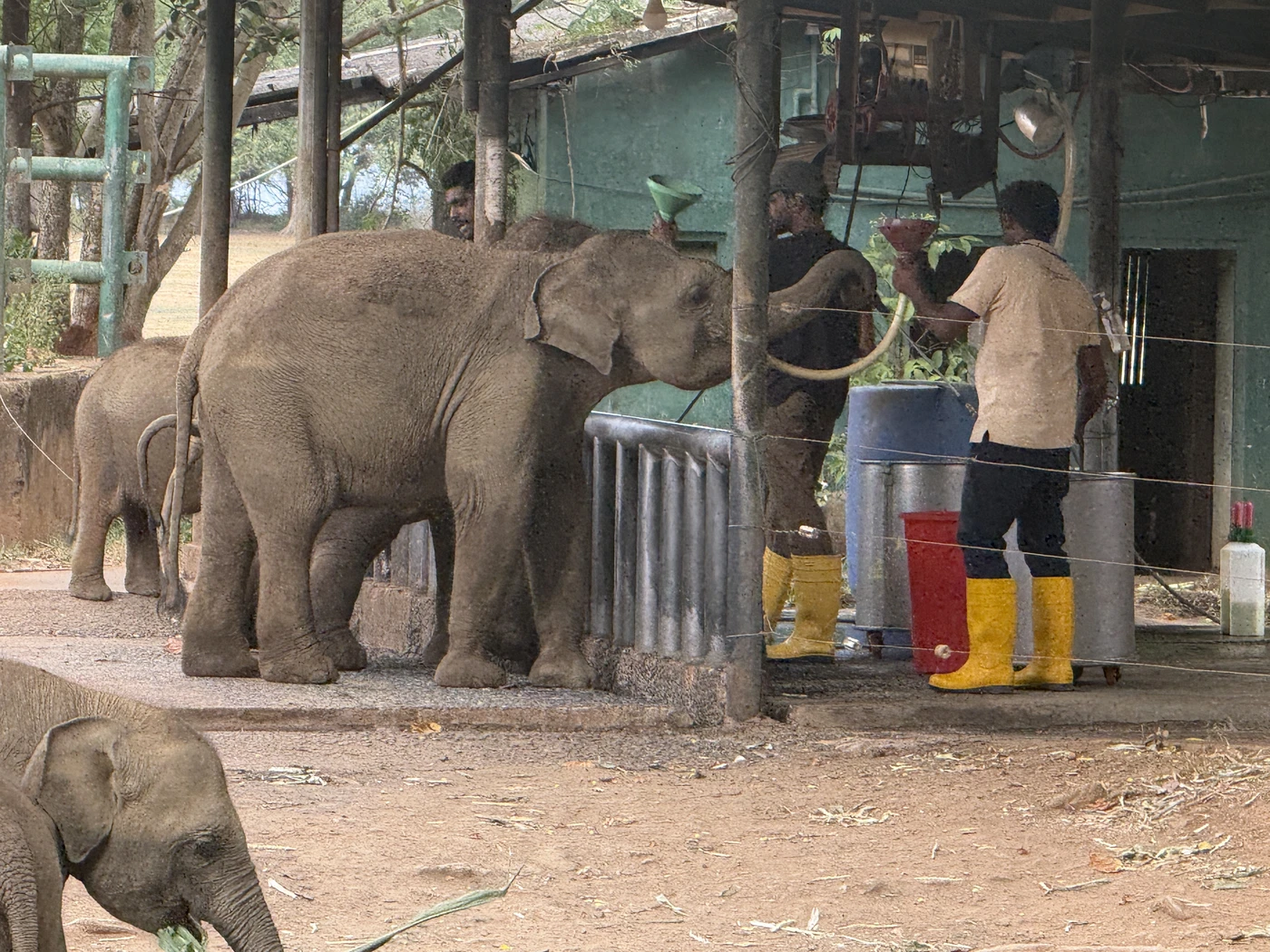
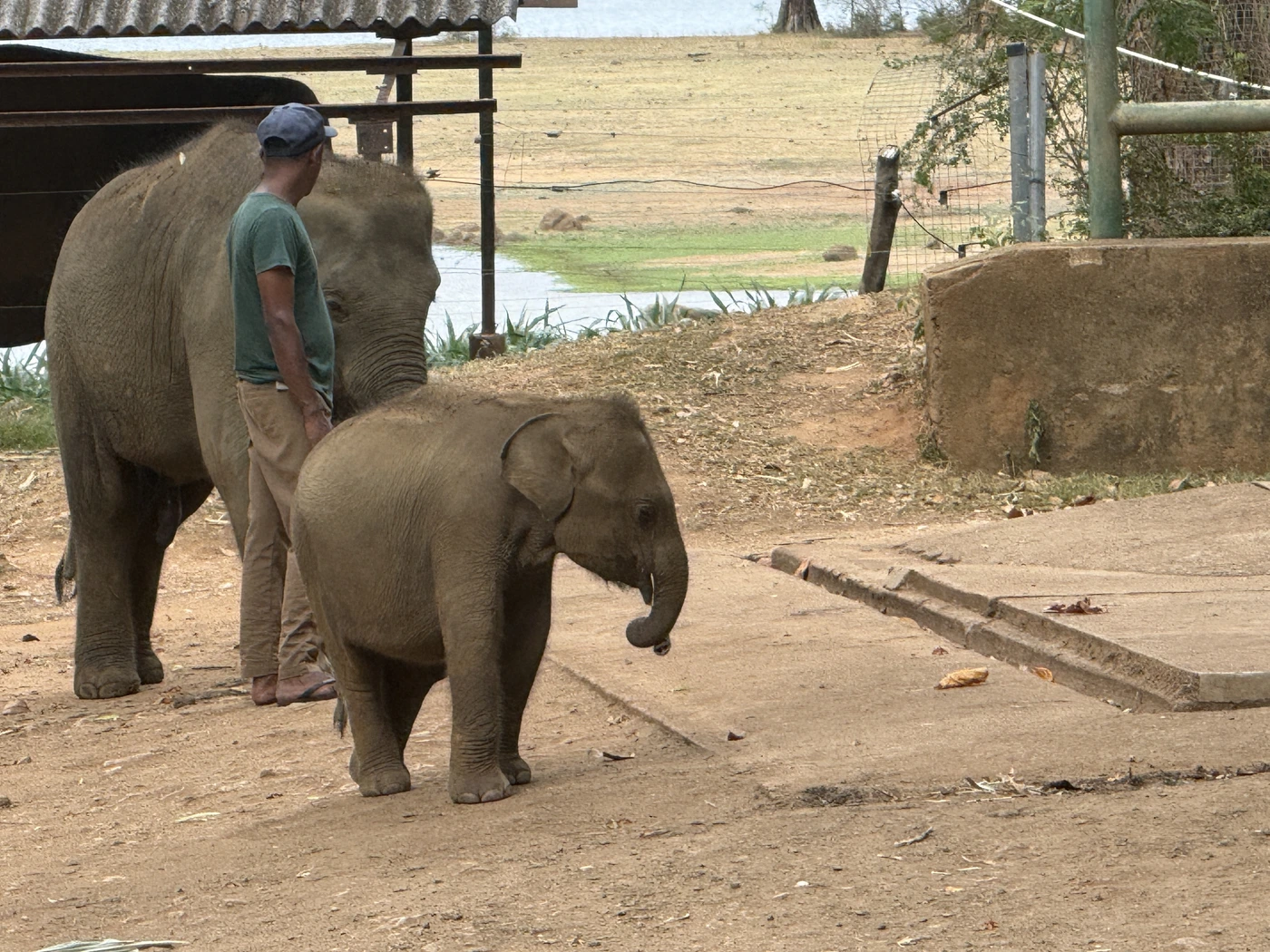
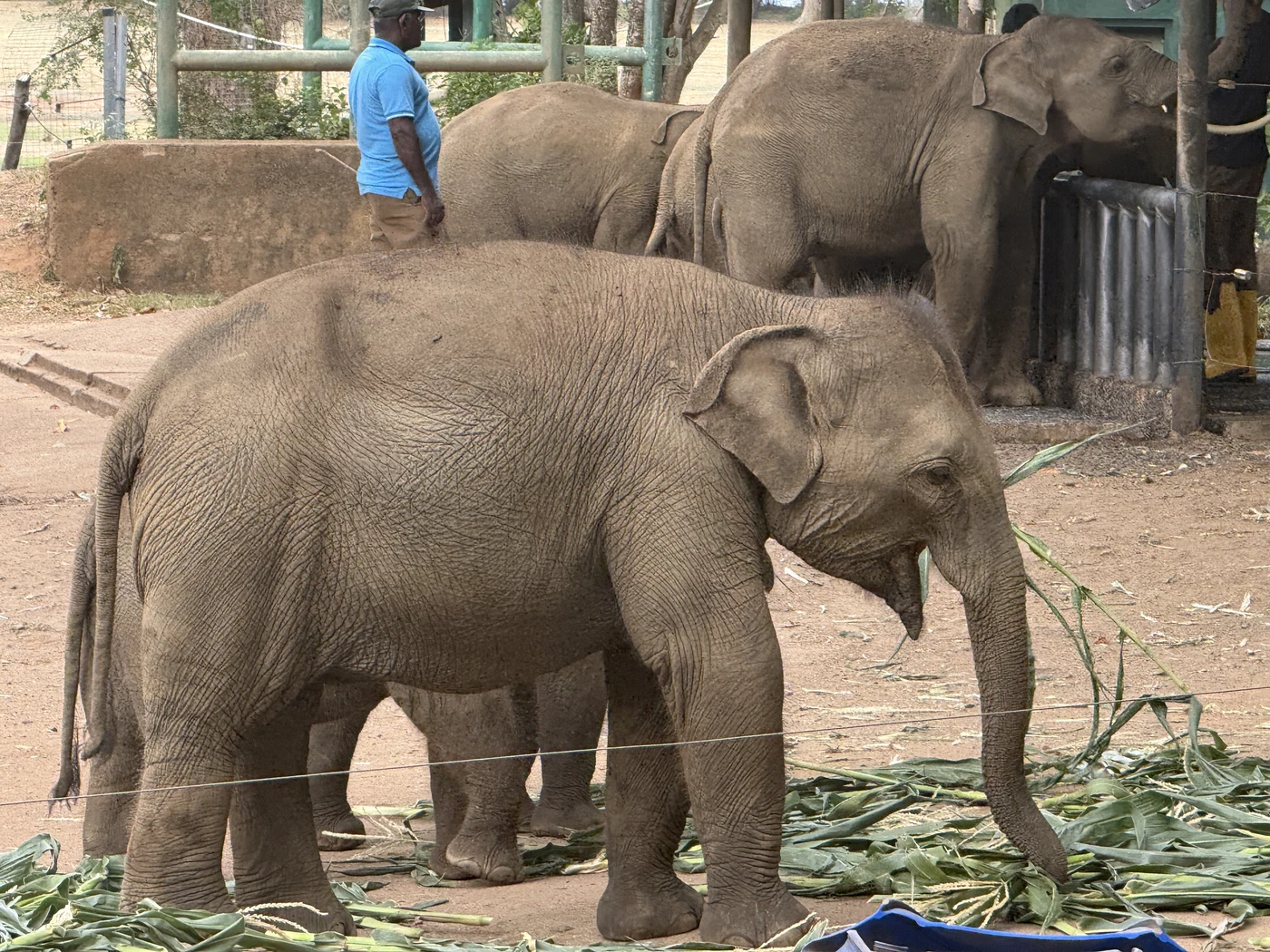
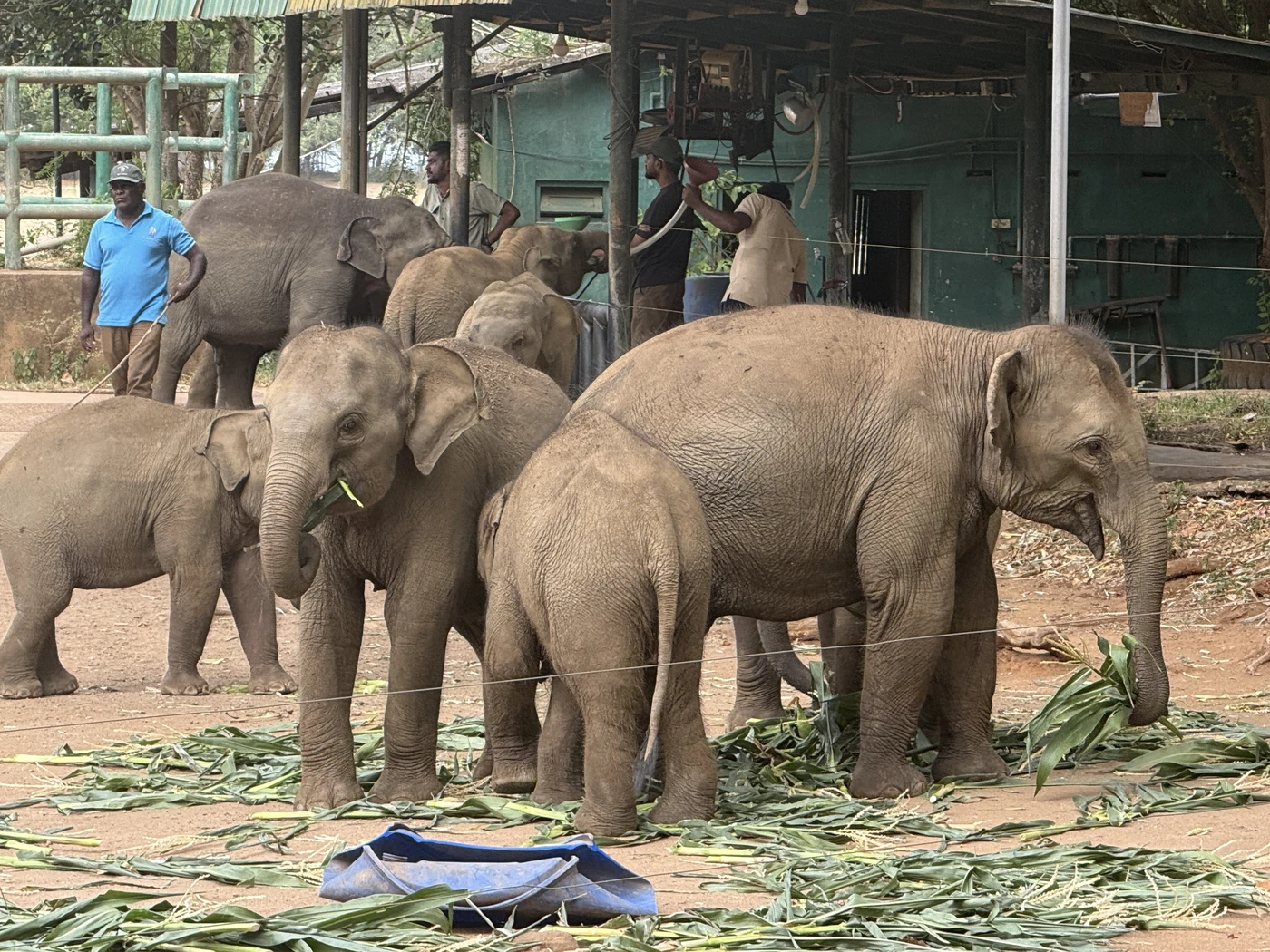
Altogether, seeing 30 to 40 calves in one place is, in our experience, something you will not find anywhere else in Sri Lanka, and nothing like the calf numbers we saw at Rambukkana.
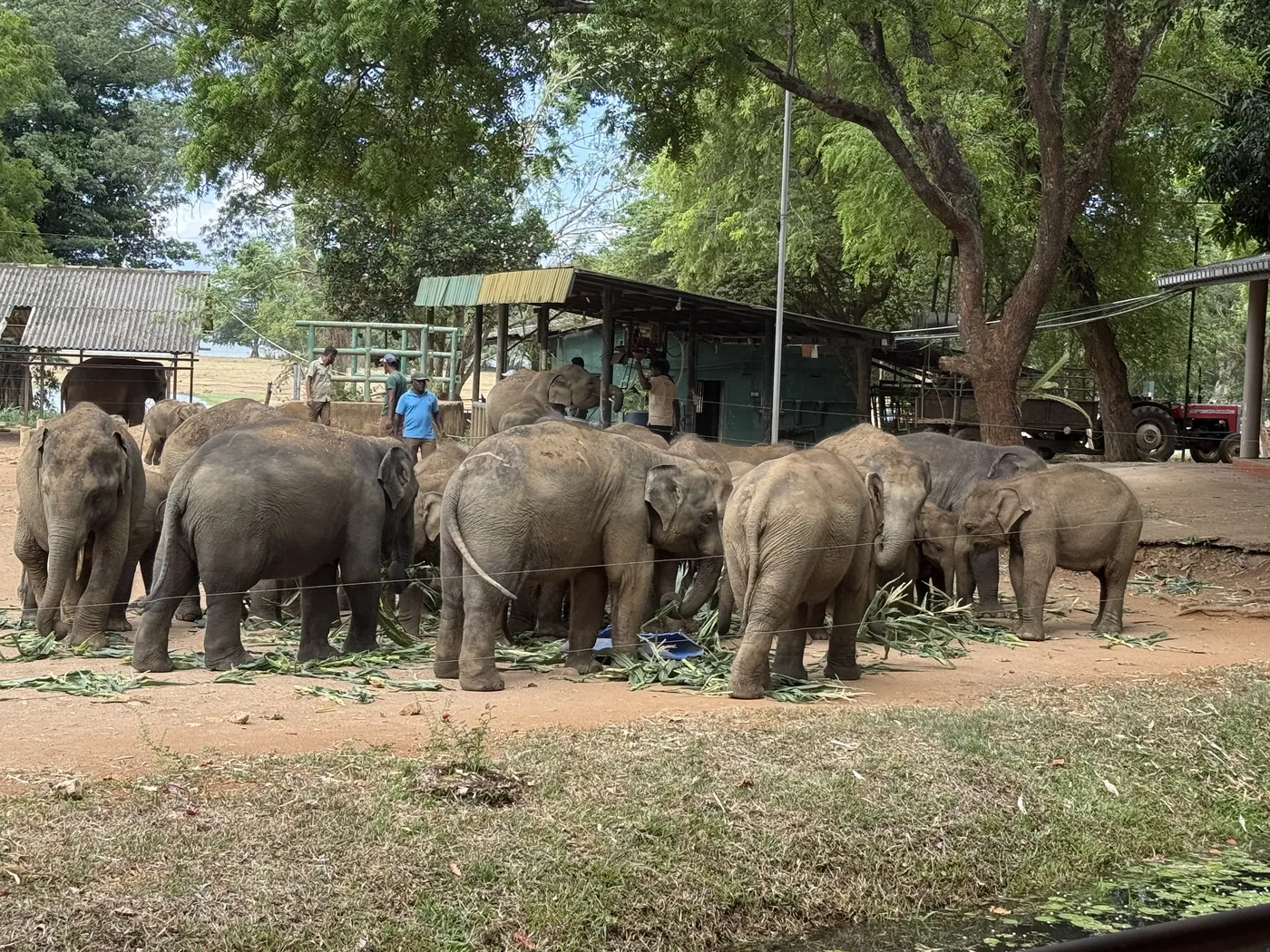
It is hard to explain how emotional it is. It is a bit like watching puppies, except these are elephants, and every one of them has a story that began with losing its mother. You watch from a distance, and that is how it should be.
Sponsoring a calf or donating milk
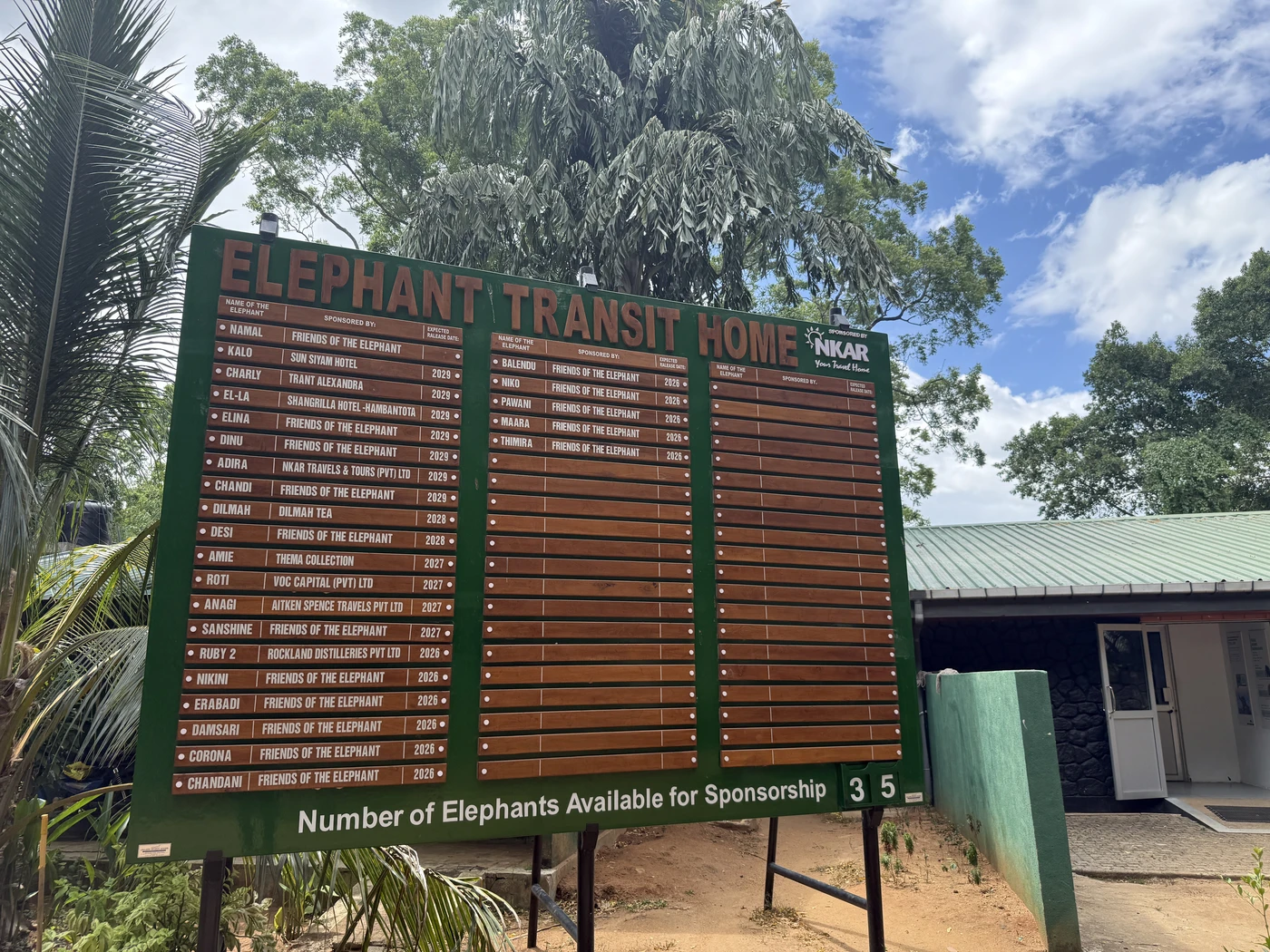
Near the entrance there is a large sponsorship board. It lists calves by name, the sponsor, and the expected release year. When we visited, it showed 35 elephants still available for sponsorship. Some sponsors were hotels and companies, and some were listed as a general supporters’ group. Ask at the ticket office for the current process and cost, because it can change.
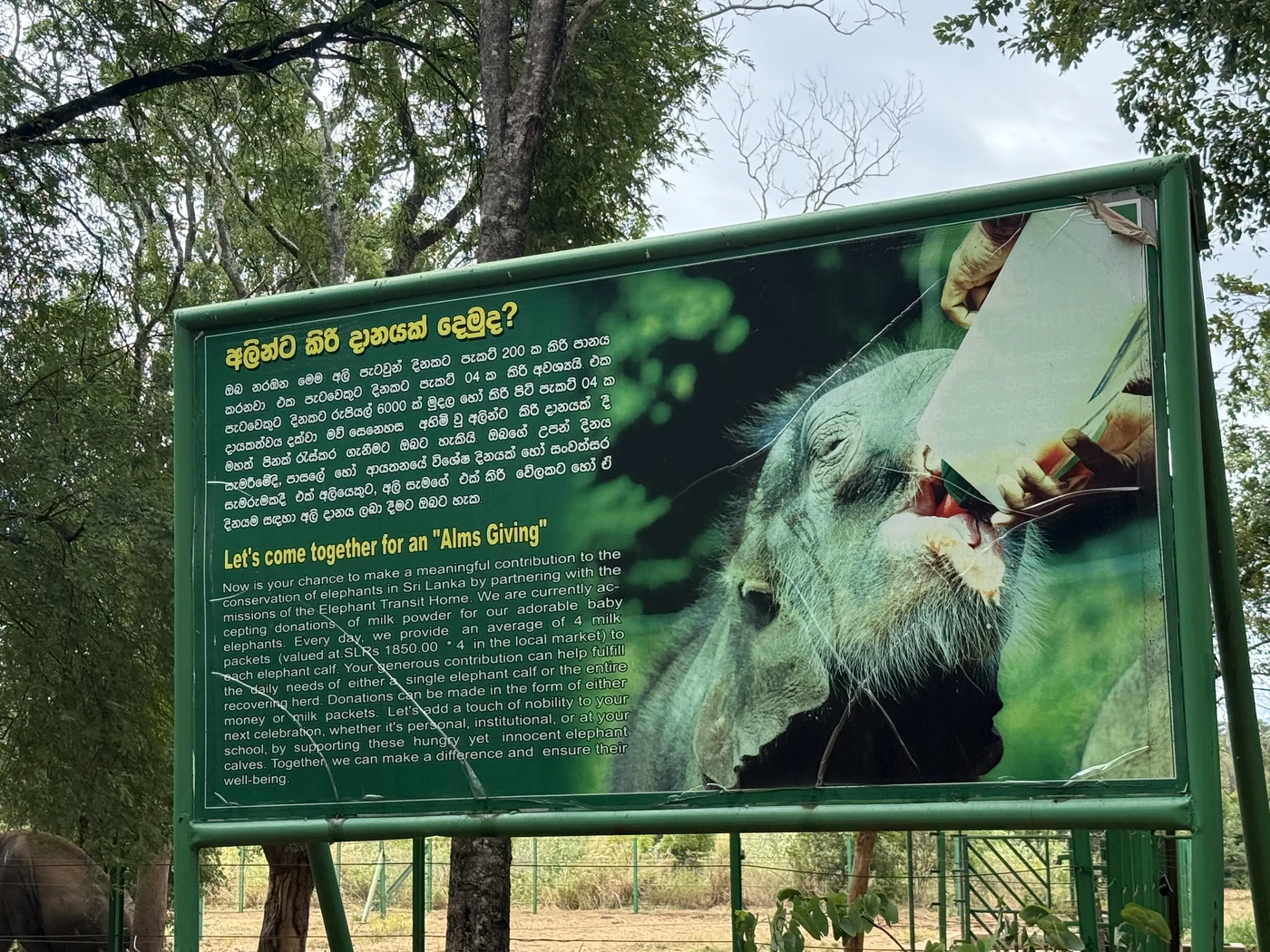
A second signboard invites donations of milk. According to it, each calf needs an average of four packets of milk powder a day, valued at LKR 1,850 per packet at local market prices. You can give money or milk packets, either for a single calf or for the whole recovering herd, and the board suggests doing it for a birthday, a school event, or a family celebration.
Your entrance ticket also contributes. As the welcome sign puts it, your ticket purchase becomes a lifeline for the calves’ ongoing care.
Tips for visiting
- Choose your session. The three daily sessions are 10:30 am, 2:30 pm, and 6:00 pm. Confirm on the day, as timings can change.
- Arrive 30 to 40 minutes early so you can see the museum and still get a seat.
- Bring cash. There is no ATM on site.
- Keep quiet. Signs ask visitors to stay silent, and the calves are being prepared for a wild life.
- Go with the safari. The transit home is close to Udawalawe National Park, so it pairs well with a morning or afternoon safari.
- Pack water and a hat. The viewing area is covered, but it can be hot.
- Don’t expect to touch the calves. There is no petting or cuddling, by design.
Getting there and what else to see
The Udawalawe Ath Athuru Sevana is beside Udawalawe National Park, around 165 km from Colombo. From the south coast and hill country it is a convenient stop, and travellers often combine it with Ella (roughly 75 km) or Mirissa (roughly 100 km).
In the area, the national park is the obvious companion visit, and the Sri Sankapala temple makes a good cultural stop on the same day. If you are planning a longer stay, we will cover things to do and places to stay in Udawalawe in separate articles.
Final thoughts
If you are anywhere near Udawalawe, make time for the Ath Athuru Sevana, the Elephant Transit Home. It is educational, it supports a real conservation effort, and the sight of dozens of orphaned calves racing for milk is something our family will remember for a very long time.
Location Map
Nearby Atractions
- Sri Sankapala Rajamaha Viharaya - An Ancient Cave Temple Near Udawalawe - 6.5 km
- Complete Guide to Udawalawe National Park - 8.9 km
- Idalgashinna Railway Station: Sri Lanka's Fifth Highest Station and a Ride Worth Taking - 40.2 km
- Adisham Bungalow (St. Benedict’s Monastery): A Peaceful Colonial Retreat in Haputale - 40.4 km
- Haputhale Travel Guide - 41 km
- Lipton’s Seat: A Scenic Viewpoint Above Sri Lanka’s Tea Country - 45 km
- Sudagala Ella & Beyond - A Jungle Glamping Escape in Kuruwita - 61.5 km
- Monara Gala Mountain (Peacock Hill) - 75.9 km
- Galle Fort: A Historic Coastal Treasure of Sri Lanka - 79.8 km
- Kondagala Rock – A Hidden Hike Above Sri Lanka’s First Tea Estate - 81.1 km