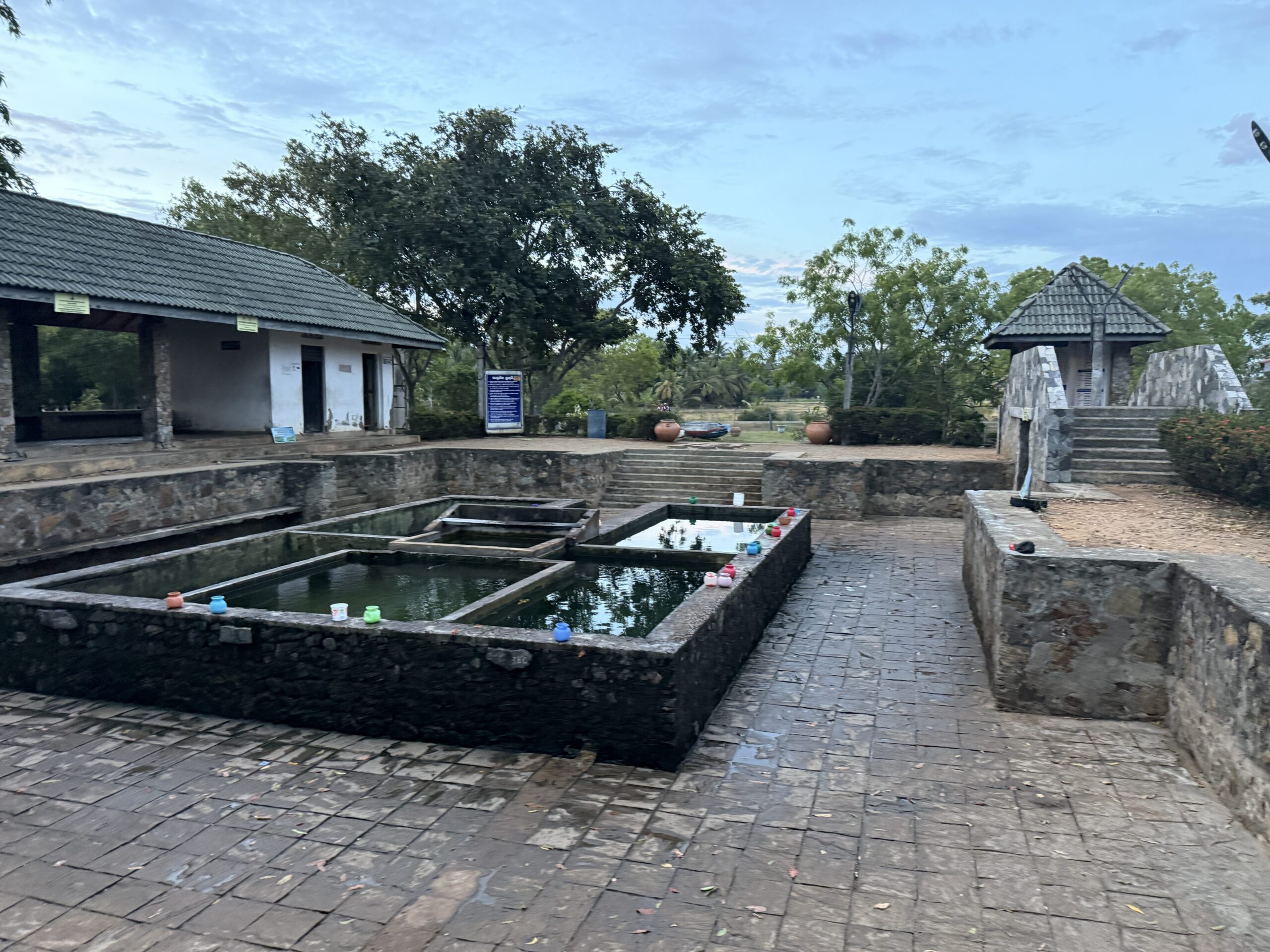
Madunagala Hot Water Springs is a natural thermal spring in the Hambantota District, set among paddy fields between Sooriyawewa and Ridiyagama. It is also known as the Mahapelessa hot springs. The site has a central hot tank surrounded by four cooler ones, along with changing rooms, washrooms, a small aquarium, and a large car park lined with stalls.
It is far less famous than the Kanniya hot springs in Trincomalee, but it is very well kept and much easier to combine with a trip to Udawalawe, Hambantota or the south coast.
Quick facts
| Location | Madunagala (Mahapelessa), near Sooriyawewa, Hambantota District |
| Opening hours | Daily, roughly 8.00 am to 5.30 pm (the gates close between 5.30 and 6.00 pm) |
| Tickets | Around Rs. 100 for local adults and Rs. 50 for children; around Rs. 1,000 for foreign adults and Rs. 500 for children. Prices change, so check at the counter |
| Number of tanks | Five: one hot central tank and four cooler tanks around it |
| Water temperature | Mid to high 40s °C in the centre, down to about 38°C in the outer tanks |
| Facilities | Car park, changing rooms, washrooms, waiting area, aquarium, children’s park, photo service, food and souvenir stalls |
| Time needed | One to two hours |
How to get there
The springs are about 4 km off the Sooriyawewa to Padalangala road. Turn off near Sooriyawewa and follow the signboards through the paddy fields.
I came from the Udawalawe side. After finishing the safari covered by my Udawalawe National Park guide, I drove down past the Sevanagala sugar factory towards Hambantota and reached Madunagala from there. It is an easy drive on good roads.
From Colombo, the springs are roughly 190 km away, and the drive takes three to four hours through Ratnapura. From the south coast, the turn off at Nonagama near Ambalantota is about 32 km away.
Parking, tickets and the walk in
The car park is huge. There is room for at least 50 to 100 vehicles, and it is ringed by small shops selling toys, food, fruit and coffee. On busy days this area feels like a small village fair.
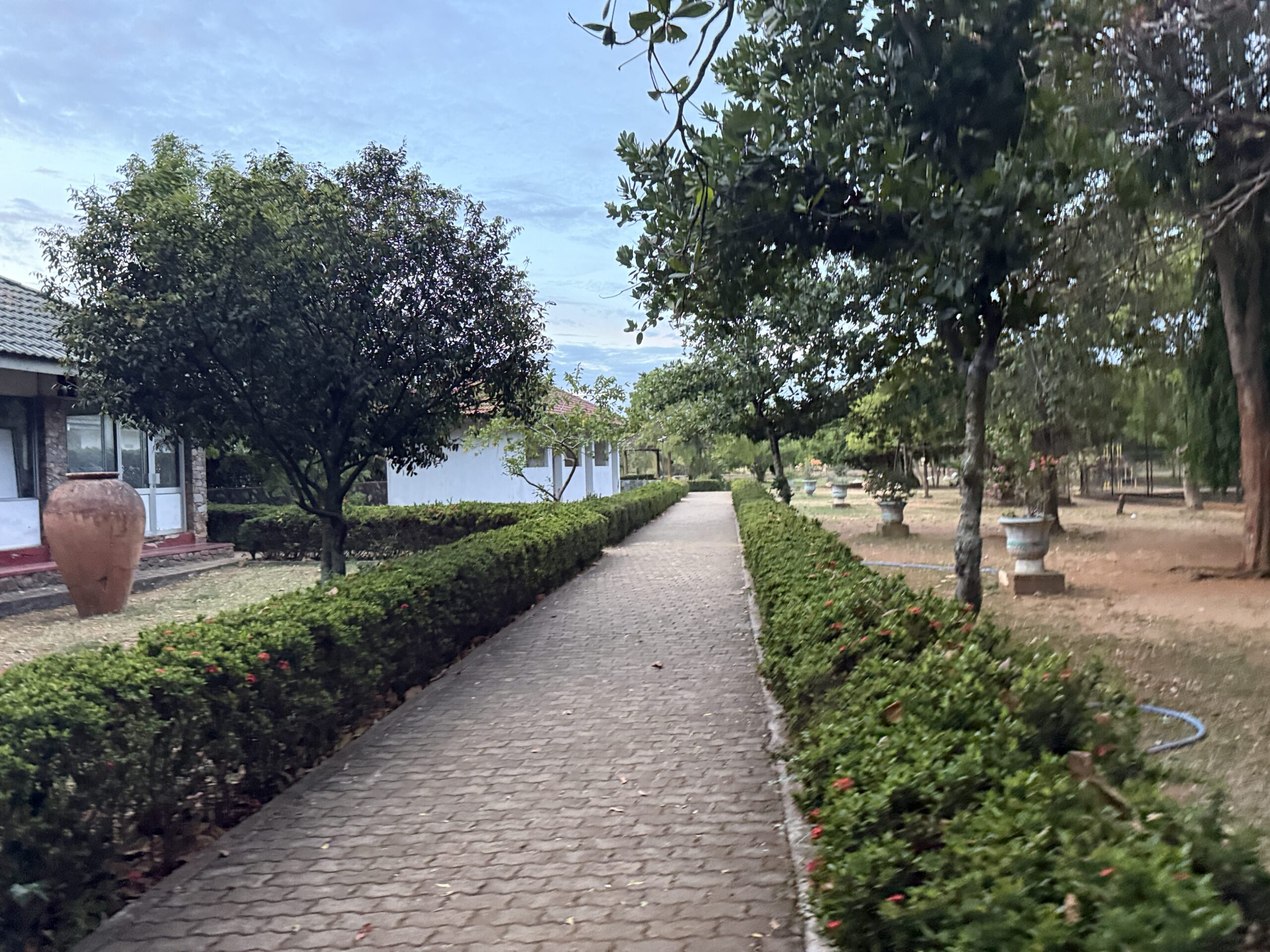
You buy your ticket at the car park and then follow a paved pathway through a garden to the springs.
The five tanks
At first glance, it looks like five separate springs. In fact, there is a single spring in the middle, and the water flows from that central tank into the four tanks built around it. That is why the temperature drops as you move outwards.
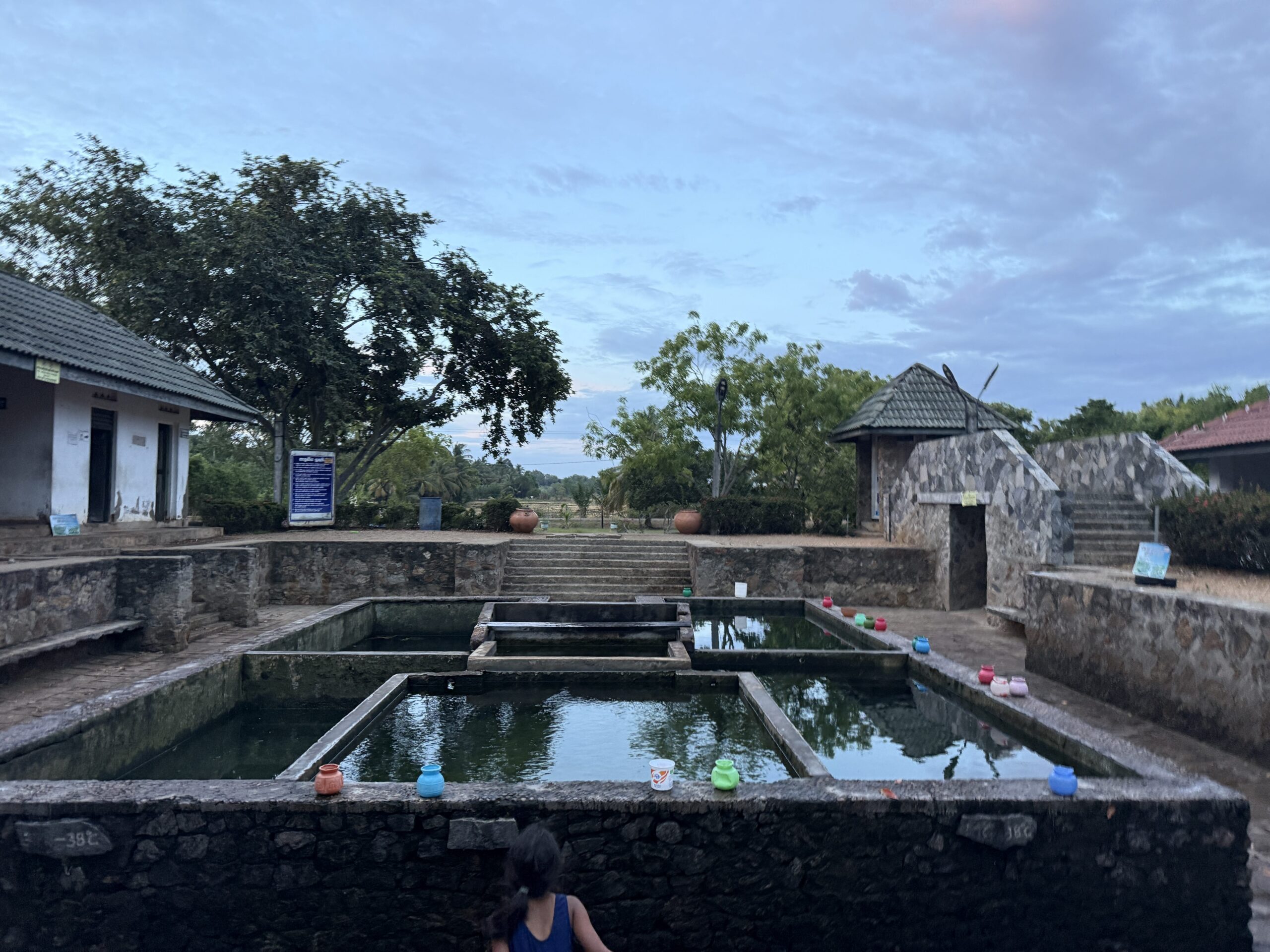
The middle tank is the hottest. As I remember, it was somewhere around 47 to 49°C, and a published scientific study measured the spring at about 44.5°C. The outer tanks are cooler, and one of them has a stone marker reading 38°C. You can bathe in the middle tank as well, but it is very hot, so start with the coolest tank and work your way in.
You do not get into the tanks. As at other hot springs in Sri Lanka, you stand beside the wall, scoop the water out with a bucket or one of the small pots left along the edge, and pour it over yourself.
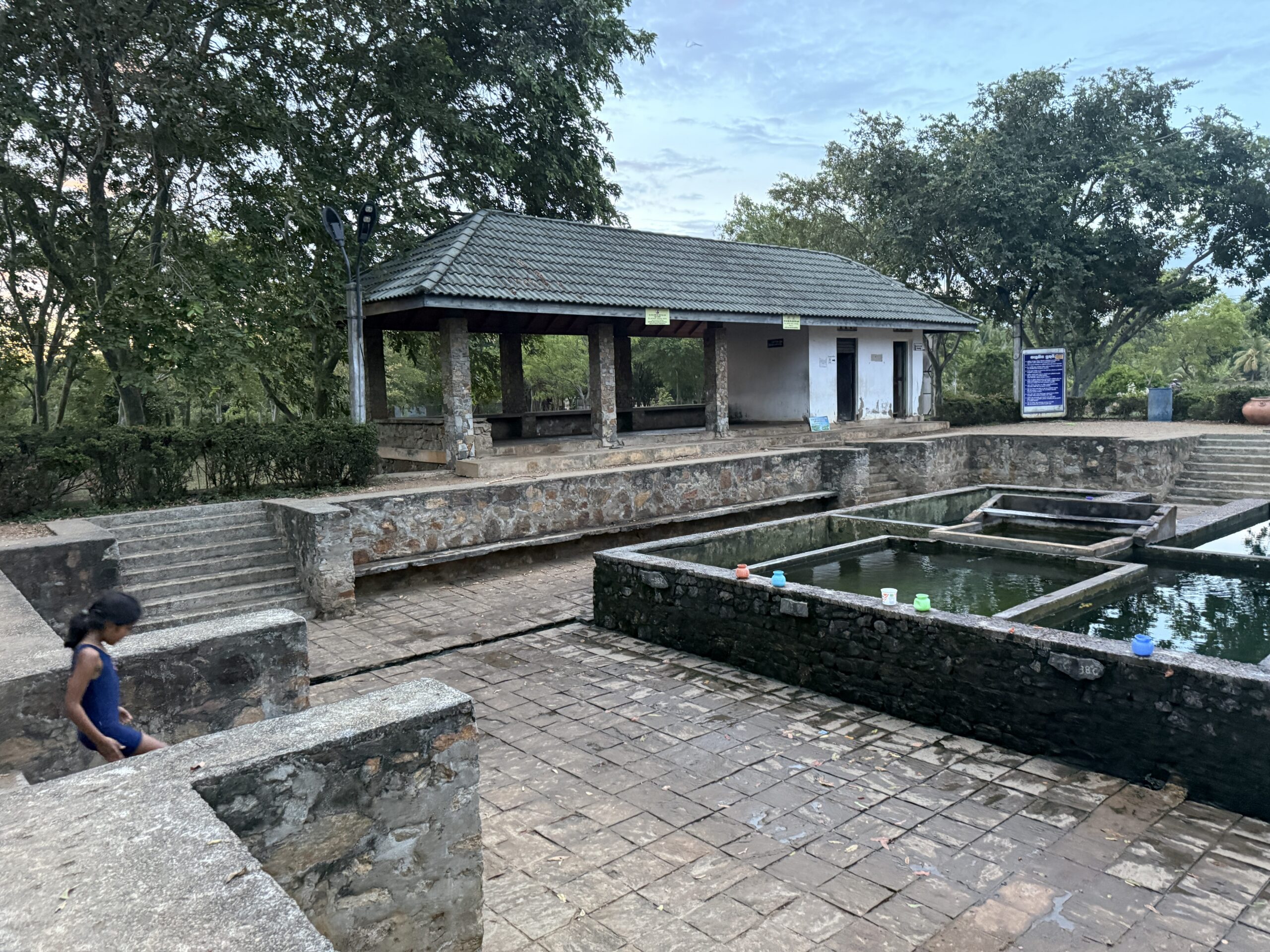
Many of the visitors come from nearby villages. There is a strong local belief that bathing here helps with skin rashes and similar conditions. I cannot vouch for the medical side, but a warm bath in the open air with paddy fields all around is a good enough reason to come.
Facilities at the site
- Changing rooms and washrooms right next to the tanks, with a covered waiting area.
- A small aquarium on the way down to the springs. It has only a few fish, so treat it as a quick stop rather than an attraction.
- An instant photo service at the office. Staff take a photo of you and your family and hand over the print on the spot, for a separate fee.
- Two parrots kept inside the office, which children enjoy.
- A children’s park next to the springs, run by the same management. It has not been maintained well, and some of the play equipment is broken, so check before letting small children loose.
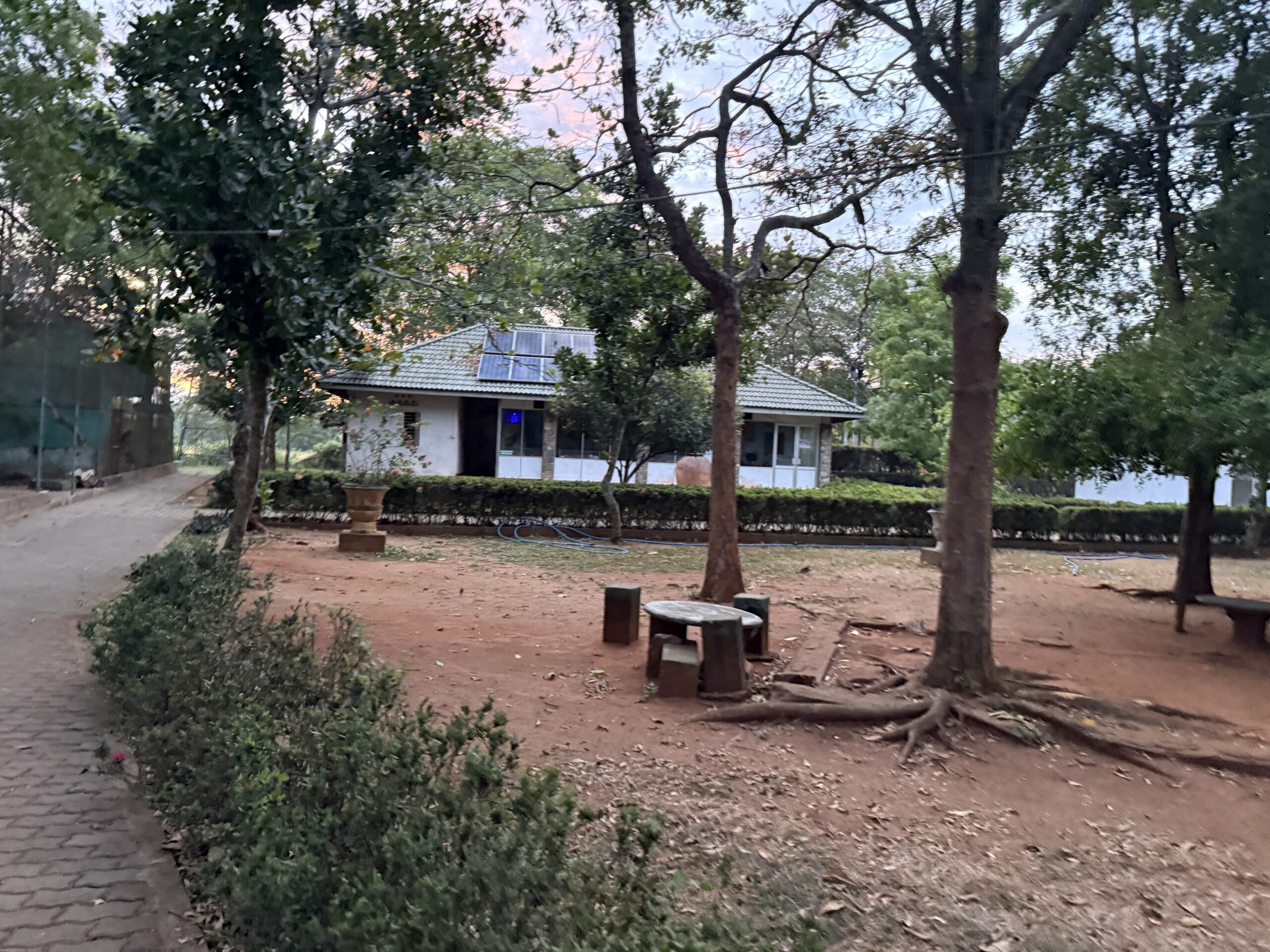
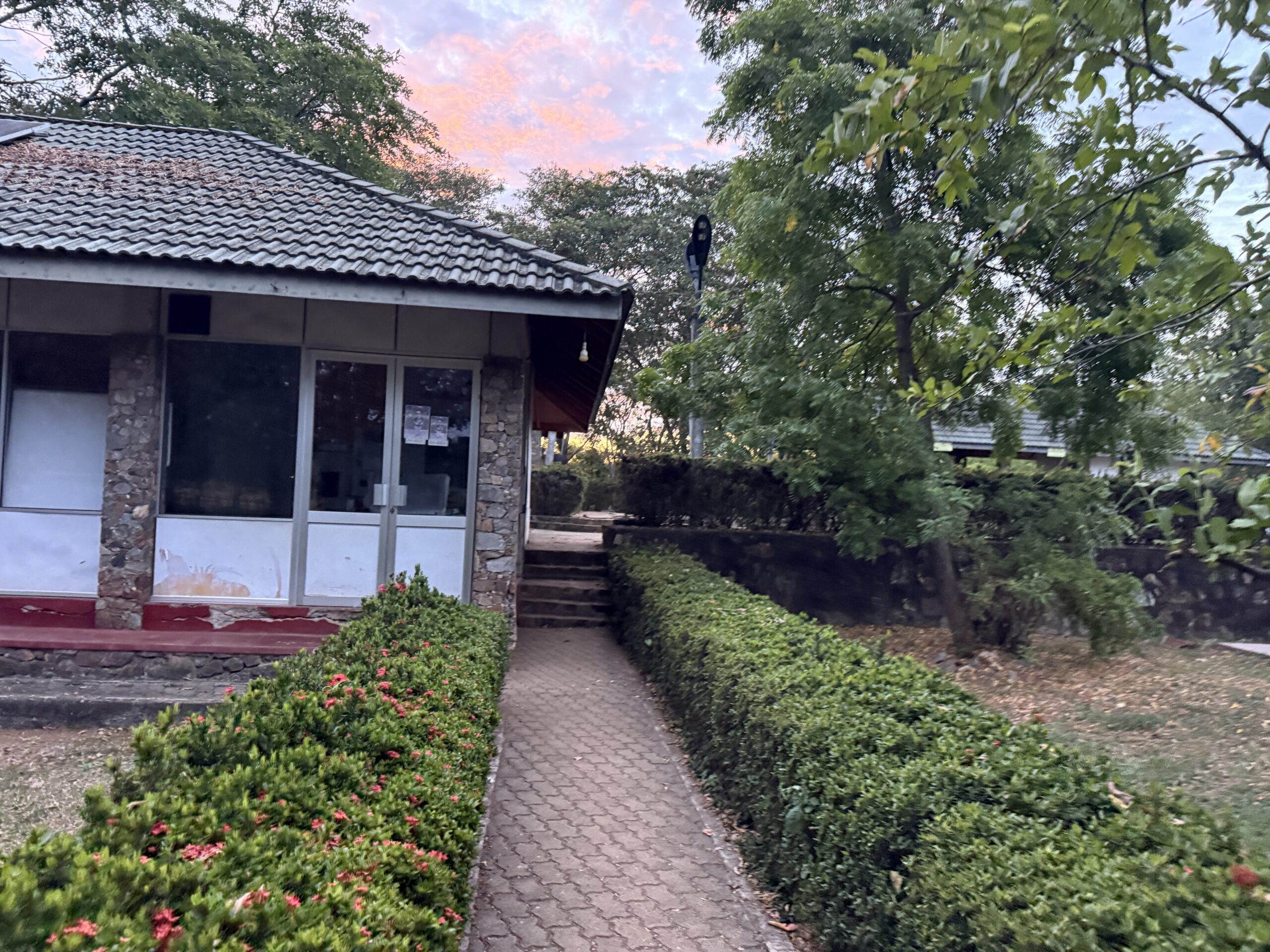
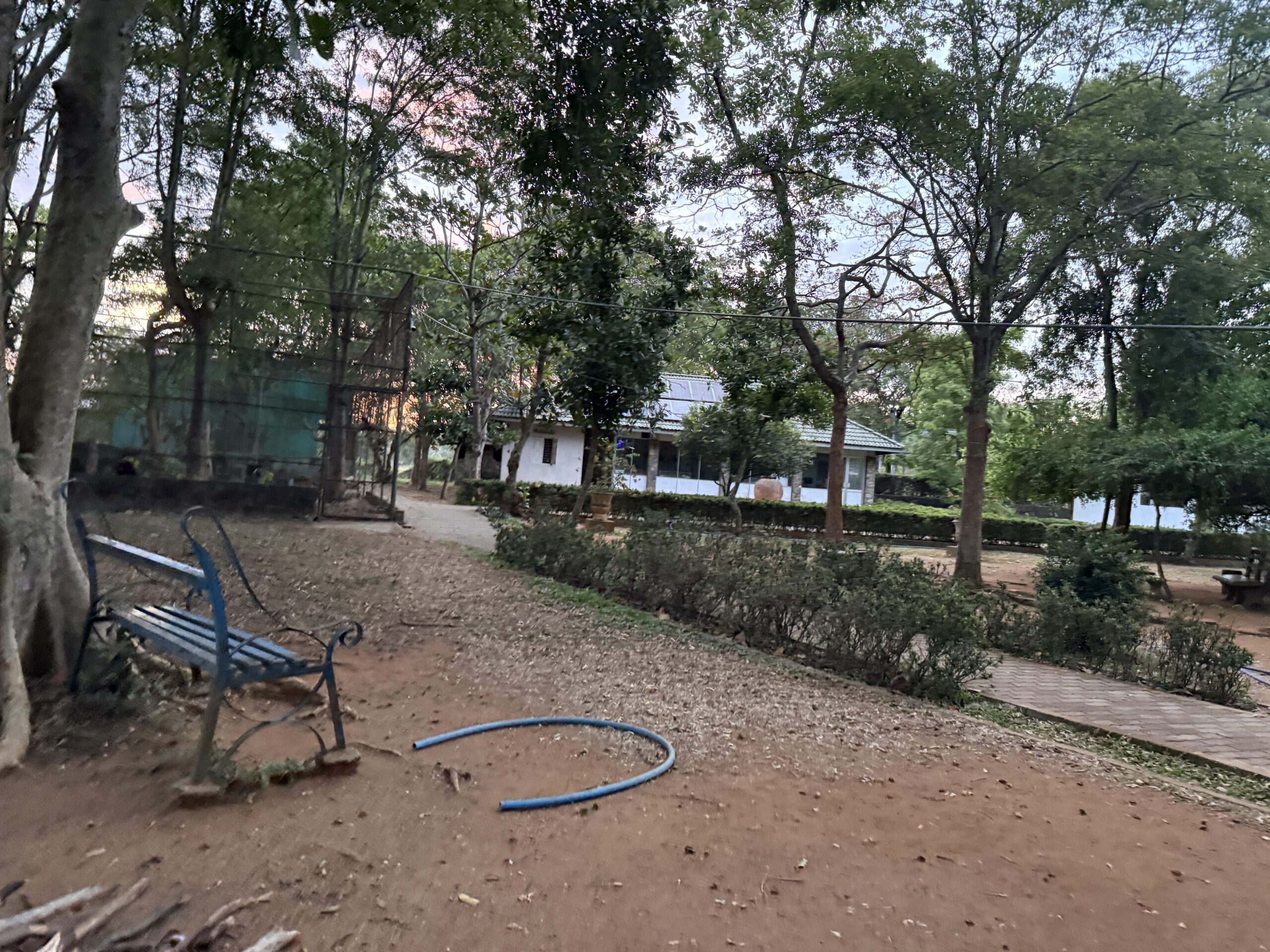
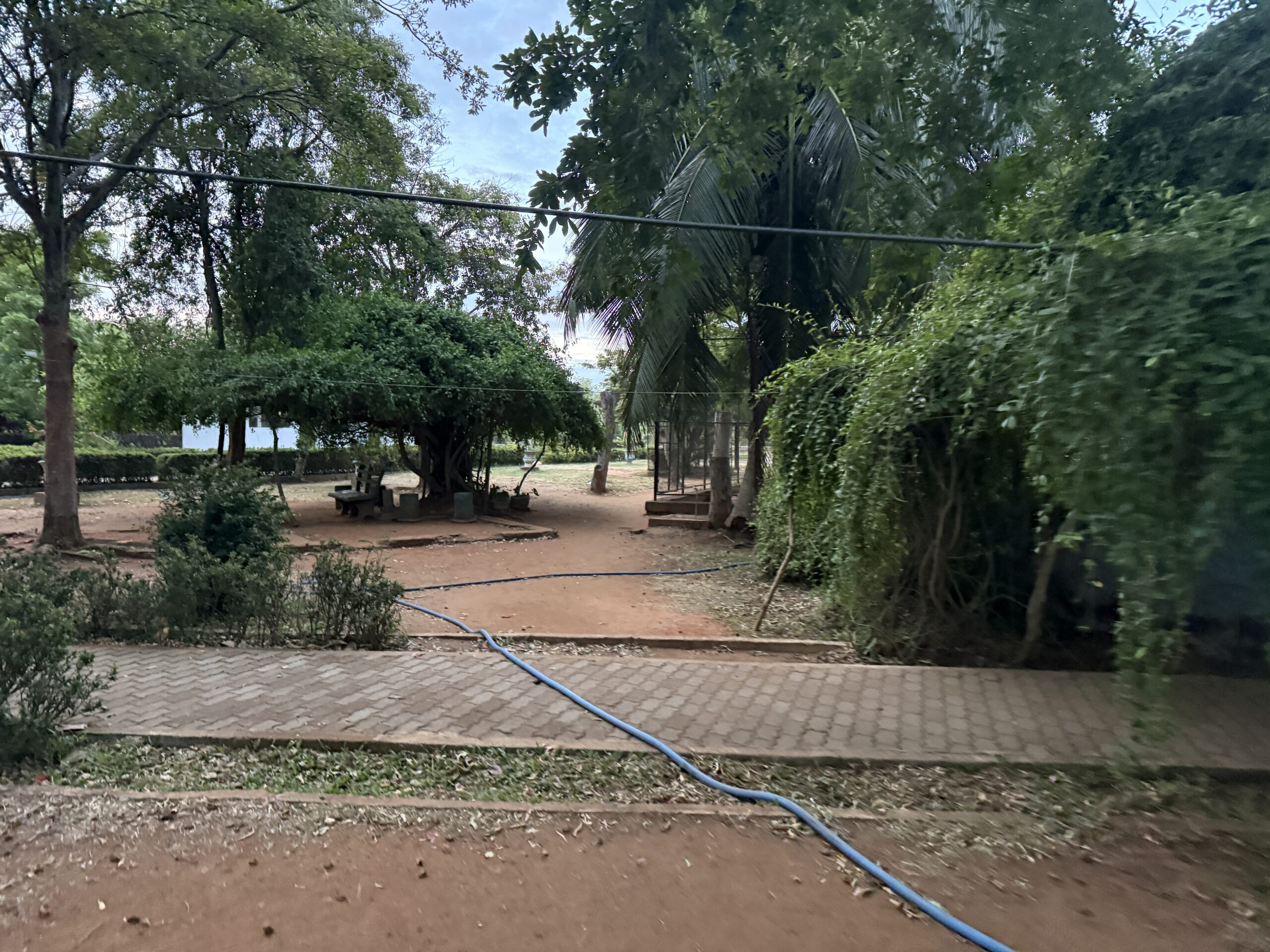
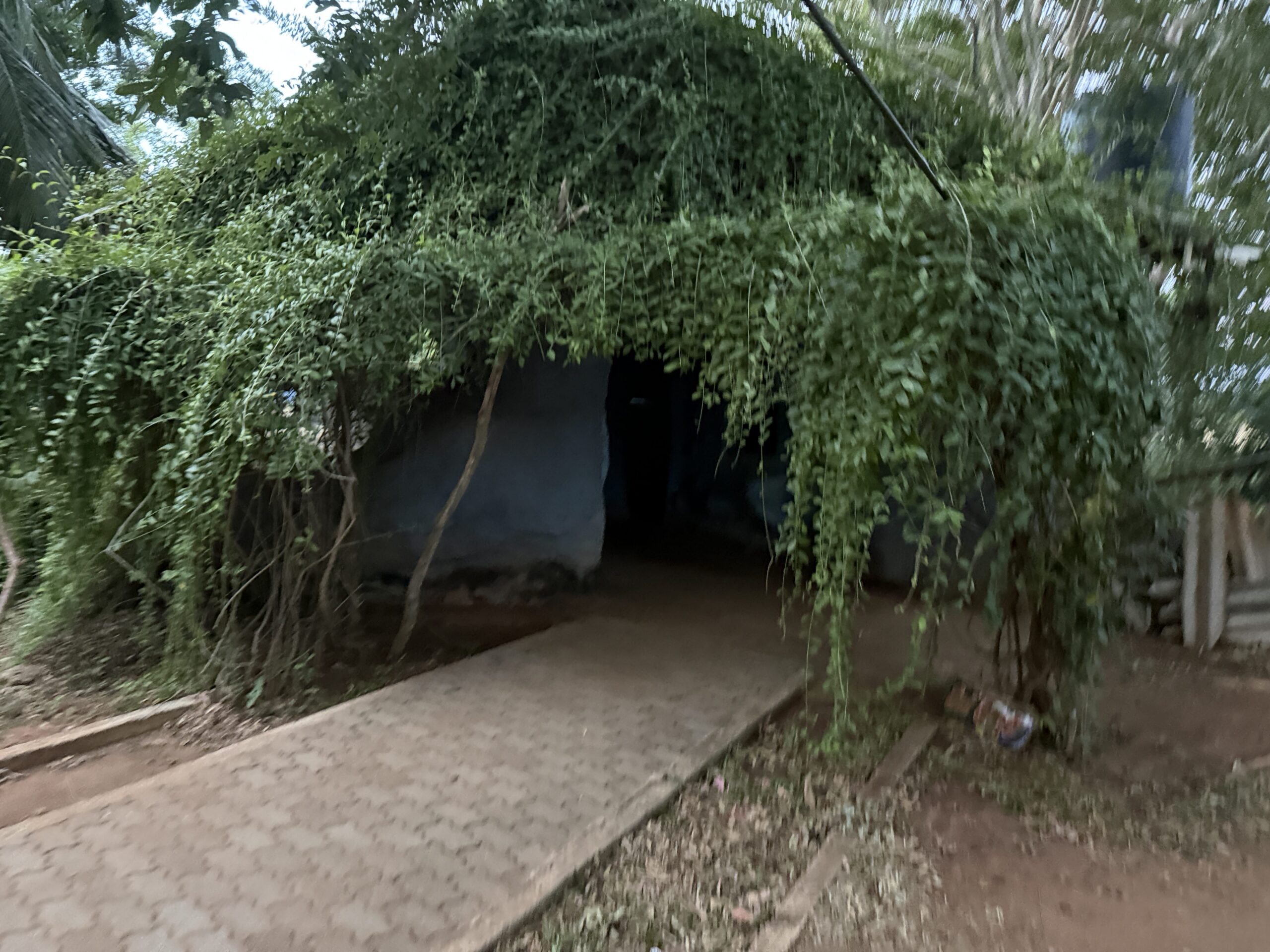
One warning: the whole place is surrounded by monkeys. If you are carrying food, keep it packed away and out of sight.
History of Madunagala Hot Water Springs
For most of its history, this spring sat in the middle of thick jungle.
The earliest written record usually cited comes from Leonard Woolf, who served as Assistant Government Agent of Hambantota from 1908 to 1911. His diaries are said to describe a hard journey through a forest full of wild animals to reach the spring, and he is reported to have taken water samples for analysis.
The spring came back into public view in the early 1960s, when the Uda Walawe development project opened up this part of the dry zone for farming and settlement. Sooriyawewa grew into the main town for the left bank of the Uda Walawe reservoir, and the jungle around the spring was gradually cleared for paddy.
In the 1970s, the open spring became a hazard for wildlife. According to published accounts, several elephant calves fell into it and died during dry seasons, when other water sources had run out.
After the Wildlife and Nature Protection Society of Sri Lanka raised the issue with the Mahaweli Authority, two walled wells were built around the spring in the 1980s, one for men and one for women. For years, that was all there was.
In the early 2000s, the site was chosen for development as a visitor attraction. The stone courtyard, the four tanks around the central spring, the gardens, changing rooms, play area and aquarium all date from this period. During long holidays, it is now common to see busloads of pilgrims and families stopping here on their way through the south.
Why is the water hot?
Sri Lanka has around nine recognised hot springs, and almost all of them lie in a line down the eastern and southern side of the island.
Geologists link them to the boundary between two of the island’s main rock formations, the Highland Complex and the Vijayan Complex. Rainwater seeps deep into the ground through fractures along this boundary, heats up, and rises back to the surface.
Madunagala sits very close to that boundary, which is why it has attracted a number of geological studies.
Best time to visit
The springs get very busy on public holidays, weekends and through the middle of the day. For a quieter visit, come early in the morning or late in the afternoon on a weekday.
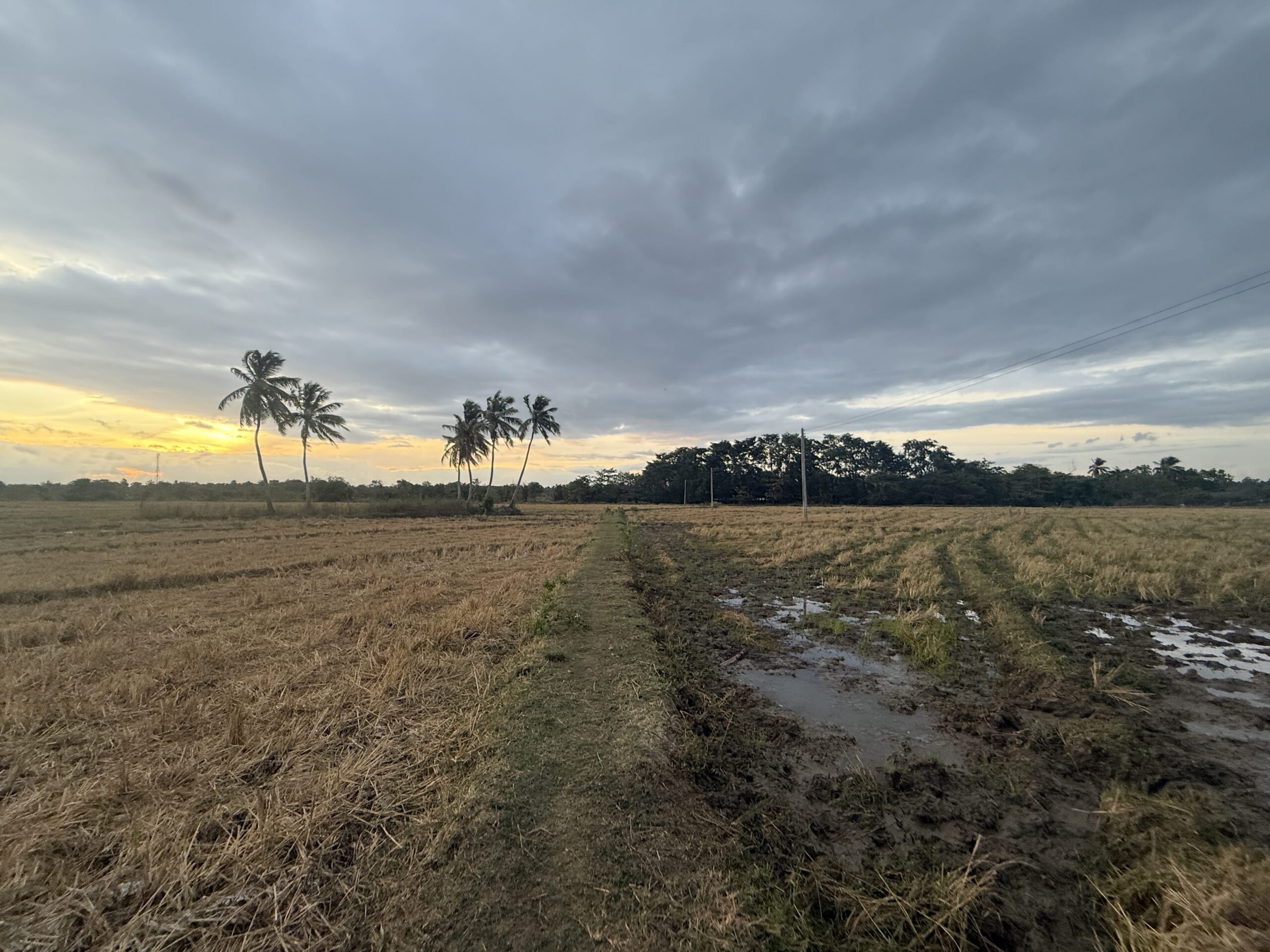
Late afternoon is also the most beautiful time. The paddy field next to the springs opens up to a wide evening sky, and the light is lovely.
Elephants and safety after dark
There is forest right next to the springs, and wild elephants use it. The villagers will tell you that elephants sometimes walk towards the village in the evening, and I was lucky enough to see elephants come out into the paddy field one evening during my stay.
This is the reason the springs close by 6.00 pm, and why both the springs and the nearby properties are ringed with electric fences. Do not hang around the area after dark, and do not walk the back paths at night.
Where to stay: Madunagala Eco Village
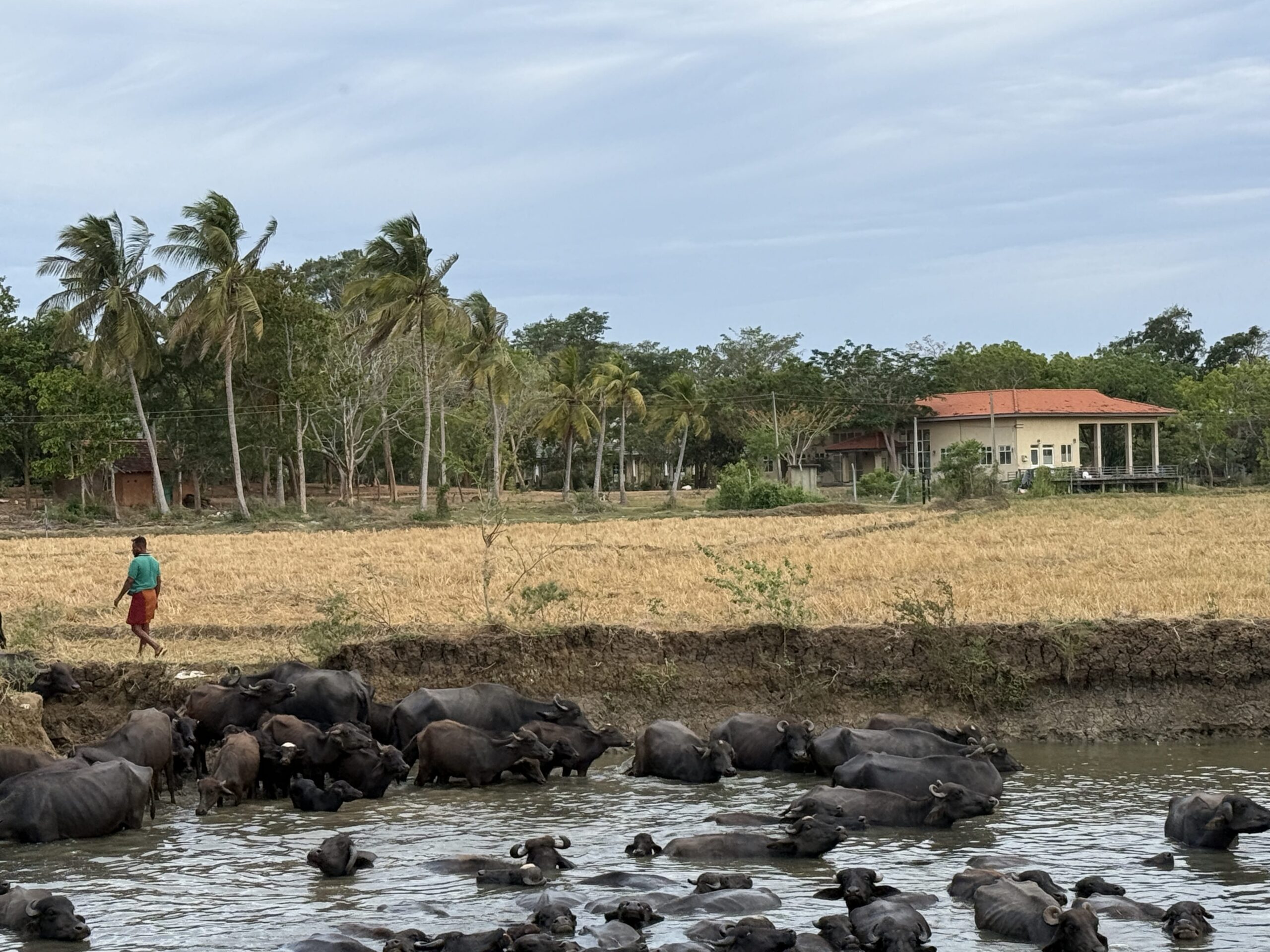
I stayed for three days at the Madunagala Eco Village, which is run by the same government management that looks after the hot springs. I wanted a few days away from a busy routine, and this very rural corner of Hambantota was exactly right for that.
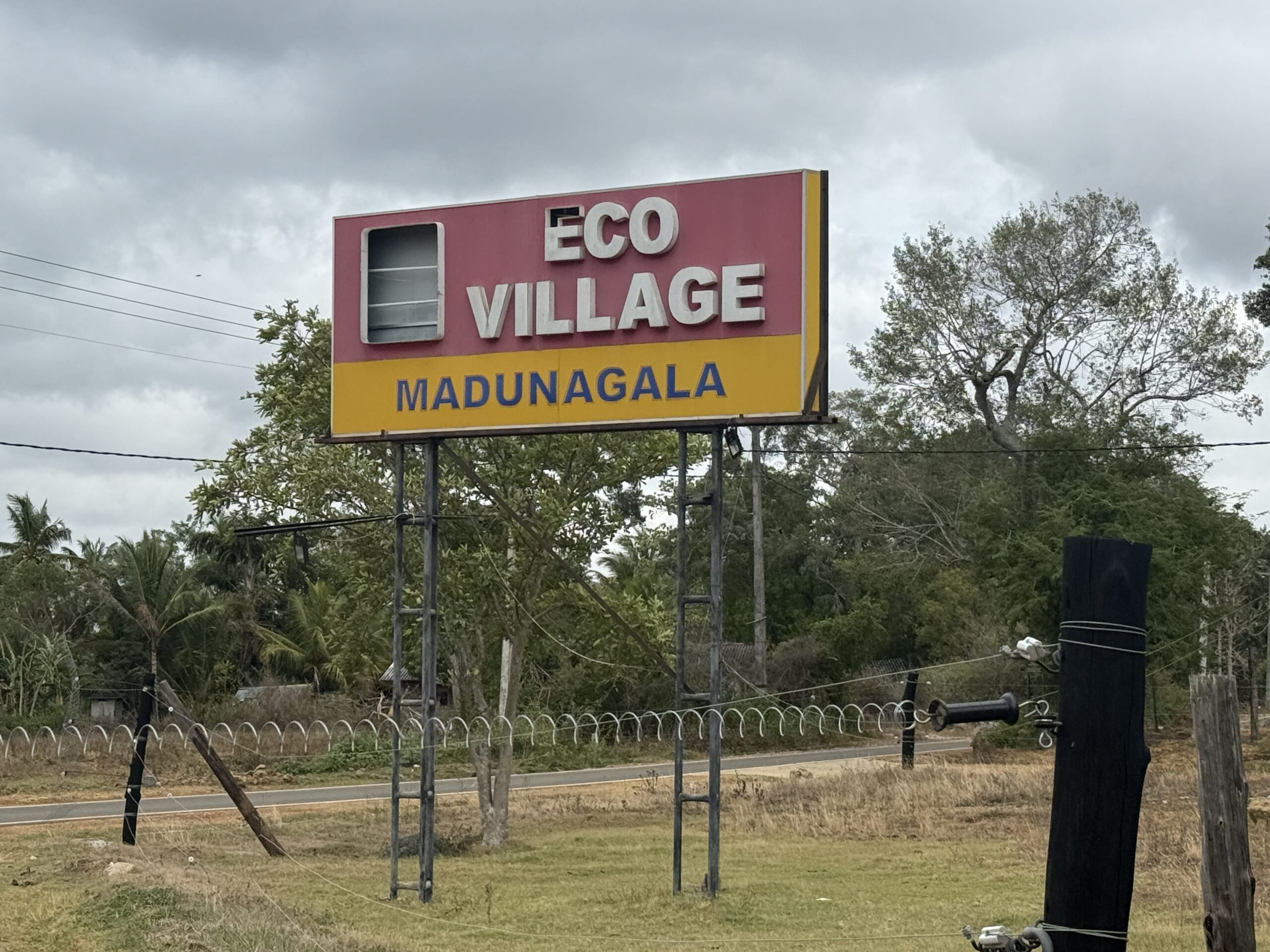
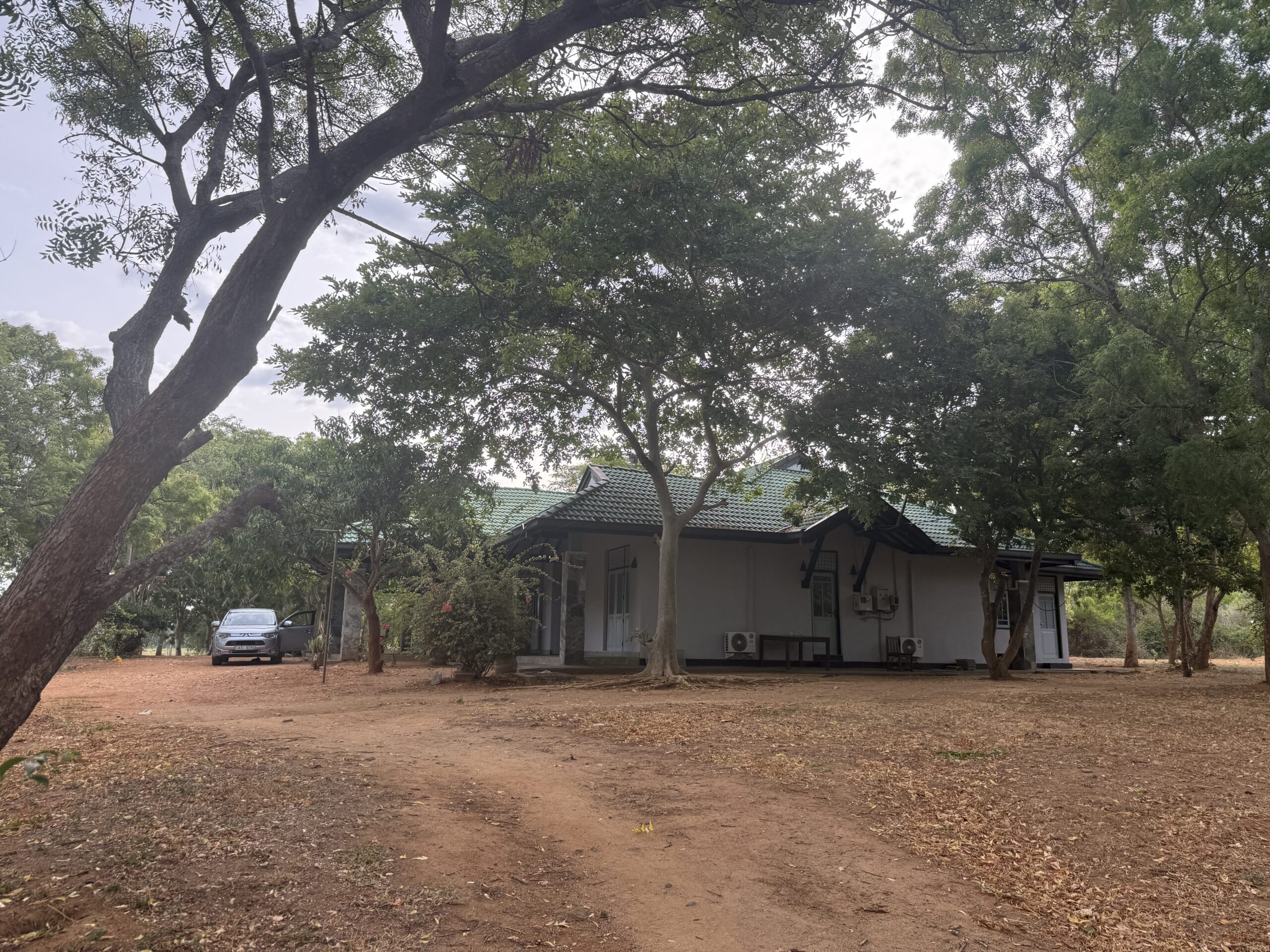
There are about three separate bungalows. Rooms are air-conditioned and well maintained, with family rooms that sleep up to four people as well as double rooms. I paid around Rs. 5,000 to 6,000 per room per night. There is plenty of parking. You need to call ahead and book.
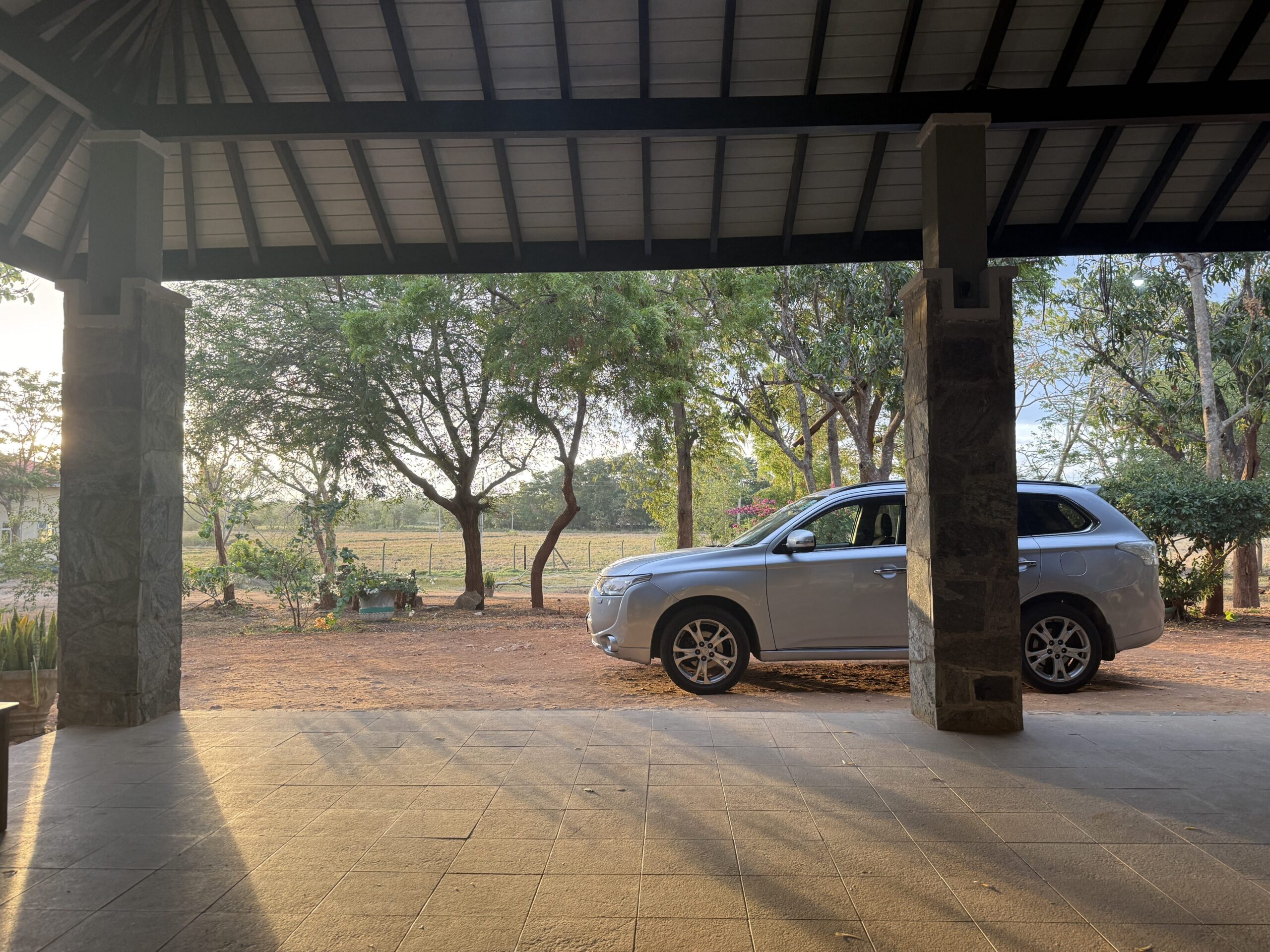
The rooms did not have hot water, which turned out to be no problem at all. The springs are only about 200 metres away across the paddy field. In the evenings, I walked across the field for a hot bath and was back at the bungalow before dark.
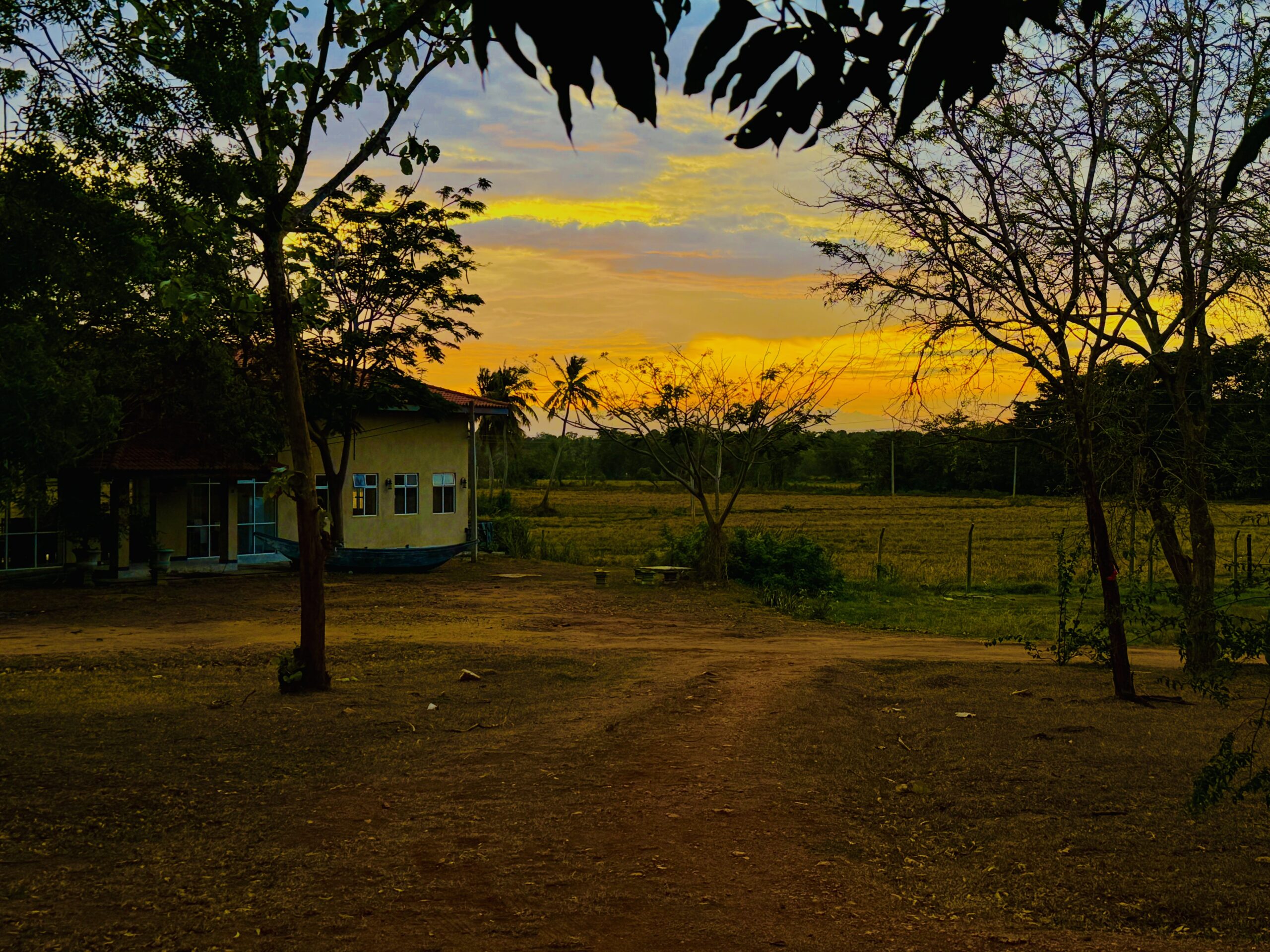
There is an electric fence at the edge of the Eco Village and another at the edge of the springs, both there to keep elephants out. If you are staying at the Eco Village, ask the staff before using this path and get back before the light goes. For everyone else, the main entrance during opening hours is simple and completely safe.
Places to visit nearby
Madunagala makes a good base for a few days. Within easy reach, you have:
- Ridiyagama Safari Park, Sri Lanka’s open zoo, just down the road.
- The NLDB farm at Ridiyagama and its sales outlet, where you can buy fresh yoghurt.
- Madunagala Aranya Senasanaya, a forest monastery. The last one to two kilometres of the road run through jungle on both sides, and the monks warn that elephants cross here, so go in daylight.
- The bird park near Hambantota, about 10 to 15 km away.
- The Dry Zone Botanic Gardens at Mirijjawila, Hambantota
- Hambantota Port.
I visited most of these on the same trip and will cover them in separate guides.
Tips for your visit
- Bring a towel, a change of clothes and a sarong or bathing cloth. Dress modestly, as this is a family and pilgrim site.
- Start with the coolest tank and move towards the centre.
- Keep food sealed and out of sight of the monkeys.
- Carry small notes for the ticket, the photo service, and the stalls.
- Avoid public holidays if you want a quiet bath.
- Leave before dusk. Elephants are a real presence here.
Location Map
Nearby Atractions
- Hambantota Birds Park Guide: Tickets, Hours & What to See - 12.7 km
- Sevanagala Sugar Factory: A Free Factory Tour Near Udawalawe - 16.7 km
- Udawalawe Ath Athuru Sevana (Elephant Transit Home) - Visitor Guide, Feeding Times & Tickets - 26.6 km
- Complete Guide to Udawalawe National Park - 28 km
- Sri Sankapala Rajamaha Viharaya - An Ancient Cave Temple Near Udawalawe - 32.3 km
- Haputhale Travel Guide - 57.3 km
- Adisham Bungalow (St. Benedict’s Monastery): A Peaceful Colonial Retreat in Haputale - 57.9 km
- Lipton’s Seat: A Scenic Viewpoint Above Sri Lanka’s Tea Country - 58.7 km
- Idalgashinna Railway Station: Sri Lanka's Fifth Highest Station and a Ride Worth Taking - 59.3 km
- Sudagala Ella & Beyond - A Jungle Glamping Escape in Kuruwita - 88 km