If you are in Udawalawe and have a few free hours between a safari and your next stop, Sri Sankapala Rajamaha Viharaya is a very good way to use them. It is an ancient rock temple at Pallebedda, just off the road towards Ratnapura, with cave shrines, old paintings, a hilltop dagoba and a wide view over the surrounding valley. There is no ticket, the car park is large, and it is only a short drive from Udawalawe town.
I visited on the second day of my Udawalawe trip, after the morning safari and before the afternoon feeding session at the Elephant Transit Home. It filled the gap perfectly, and it turned out to be one of the most memorable stops of the trip.
Sankapala Temple Quick Facts
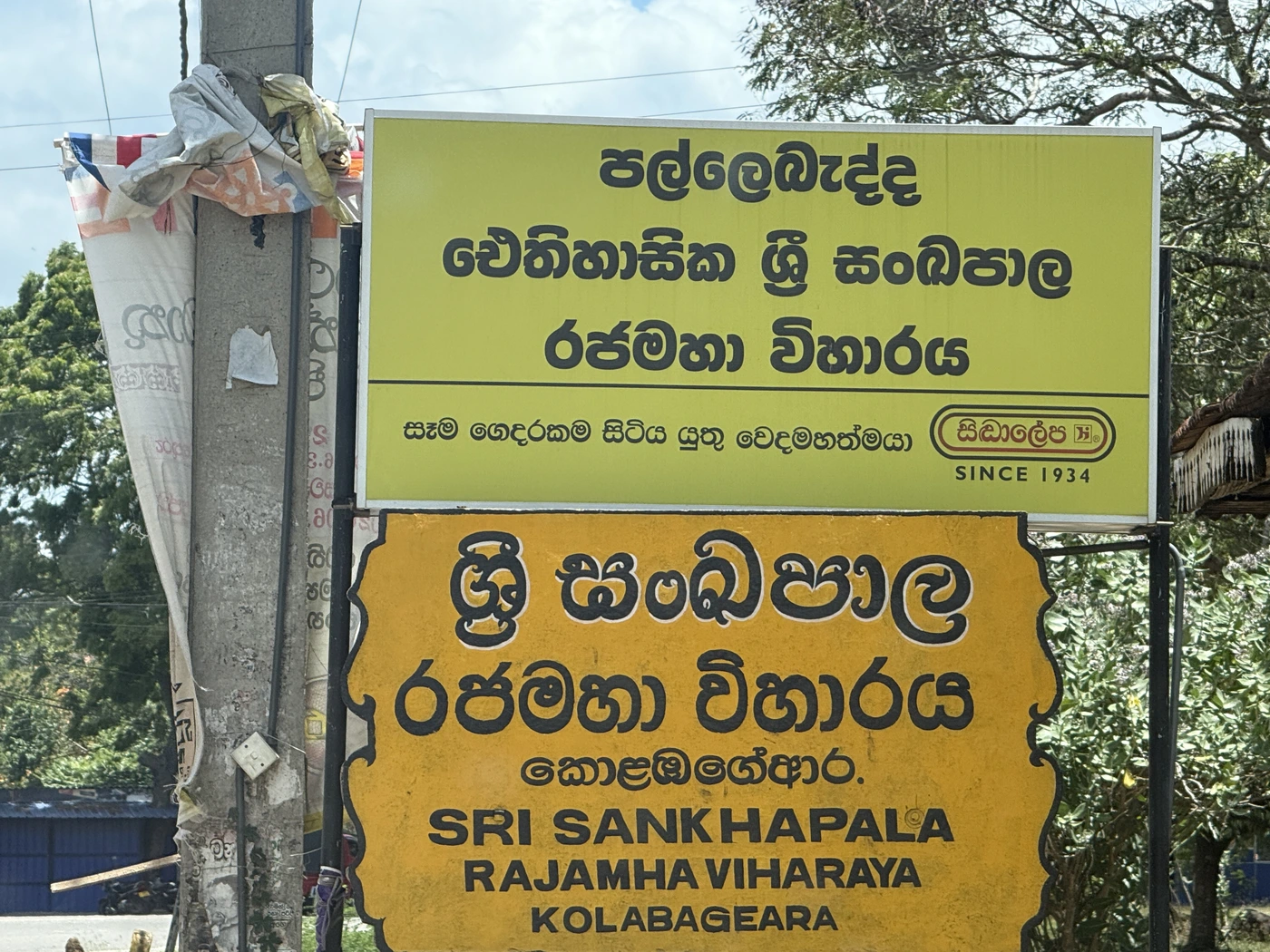
- Full name: Sri Sankapala Rajamaha Viharaya, Kolambageara (ශ්රී සංඛපාල රජමහා විහාරය, කොළඹගේආර). Signboards on the road often spell it “Sankhapala”.
- Location: Pallebedda, Ratnapura District, Sabaragamuwa Province
- Distance from Udawalawe: About 5 km from Udawalawe town, on the Ratnapura side
- Entry: Free, including for foreign visitors
- Dress code: Cover your legs and arms (shirts with sleeves, long skirts or trousers)
- Parking: Large car park right at the temple
- Good for: A short cultural stop, old paintings and statues, hilltop views
- Best combined with: Udawalawe National Park safari and the Elephant Transit Home
How to Get to Sankapala Temple
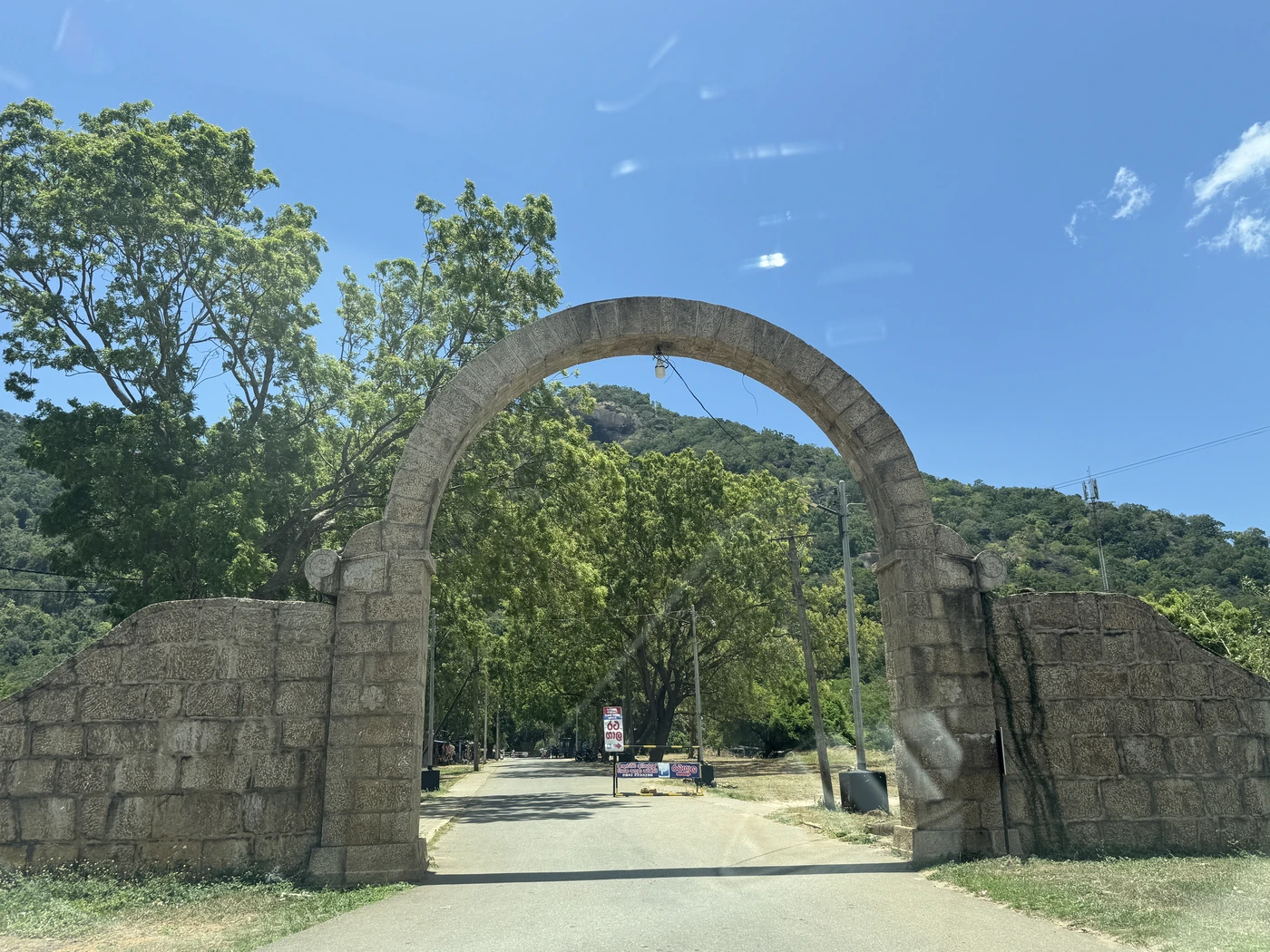
From Udawalawe town, head towards Ratnapura. The temple is about 5 km along this road, and the turn is marked by yellow signboards reading “Sri Sankhapala Rajamaha Viharaya, Kolabageara” in Sinhala and English. A stone arch marks the start of the short road leading up to the temple, with the rocky hill rising behind it.
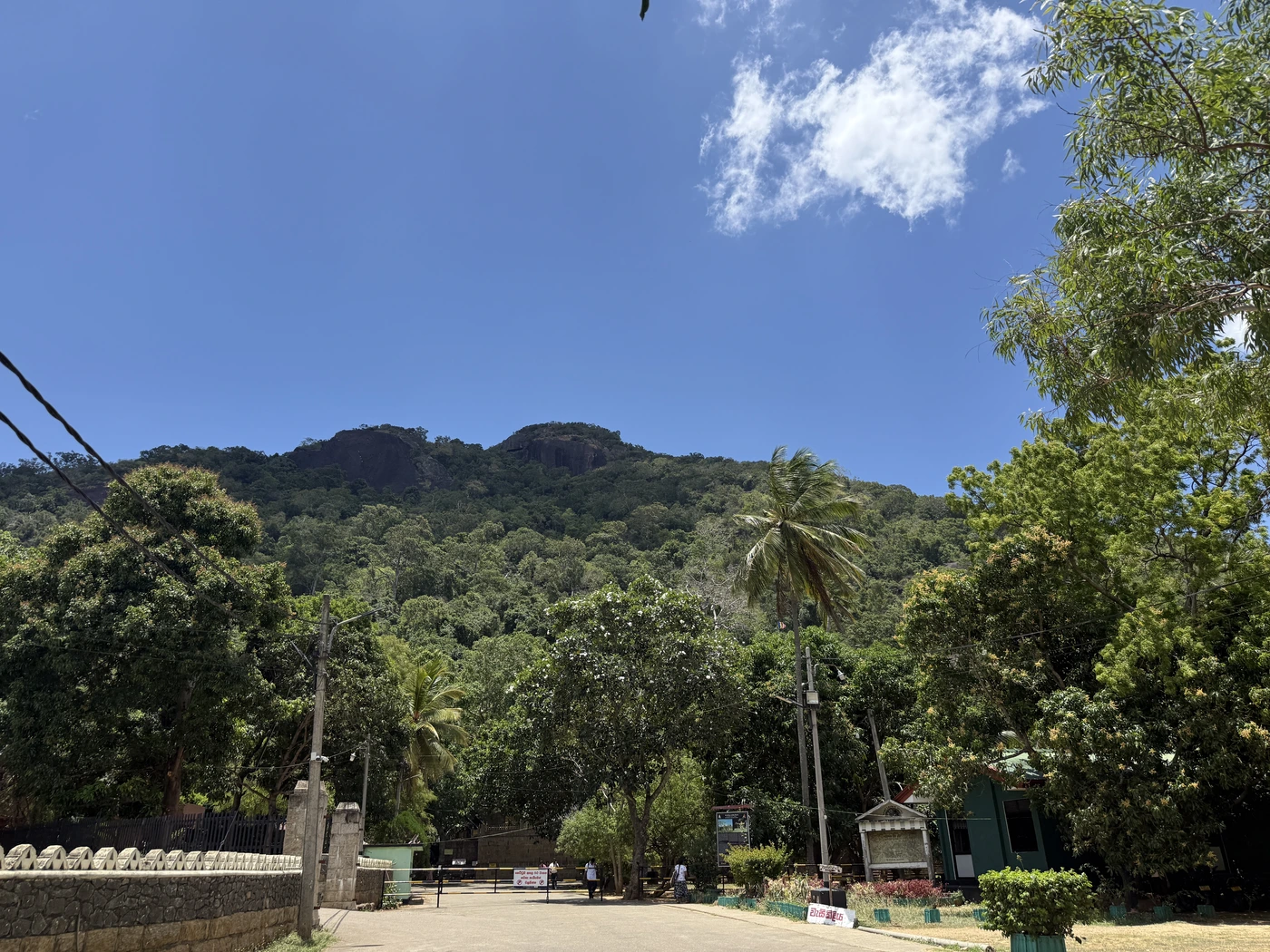
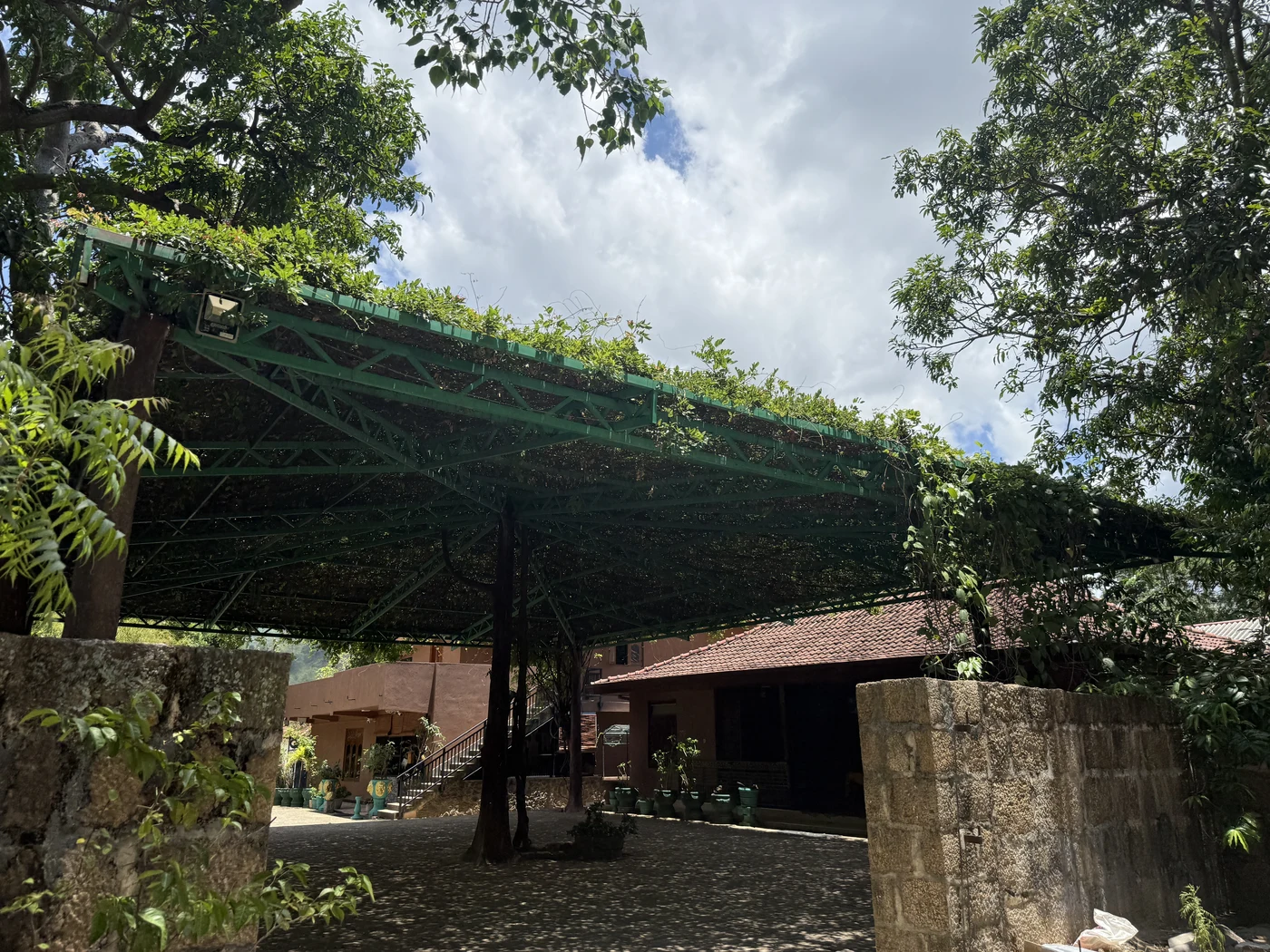
Parking is easy. There is a huge car park under a big bodhi tree, and even though I went on a weekday, there were plenty of visitors, which tells you how popular the temple is with local pilgrims. Small shops near the entrance sell flowers, small oil lamps, incense sticks, and other offerings people carry inside.
What to Wear and Bring
Dress as you would for any Sri Lankan temple. Make sure your legs and arms are covered, and be ready to take your shoes off. The rock and the paved areas get very hot in the middle of the day, so socks or a quick dash between shaded spots help. Bring water and a hat, and buy a few flowers from the stalls if you would like to make an offering. Keep food out of sight, because there are monkeys around.
My Visit: From the Entrance to the Hilltop
We bought flowers at the entrance and walked up from the car park. A stone wall and a stone arch lead to the main steps, with a large bodhi tree standing behind the wall. The mood changes quickly from the busy car park to something calm.
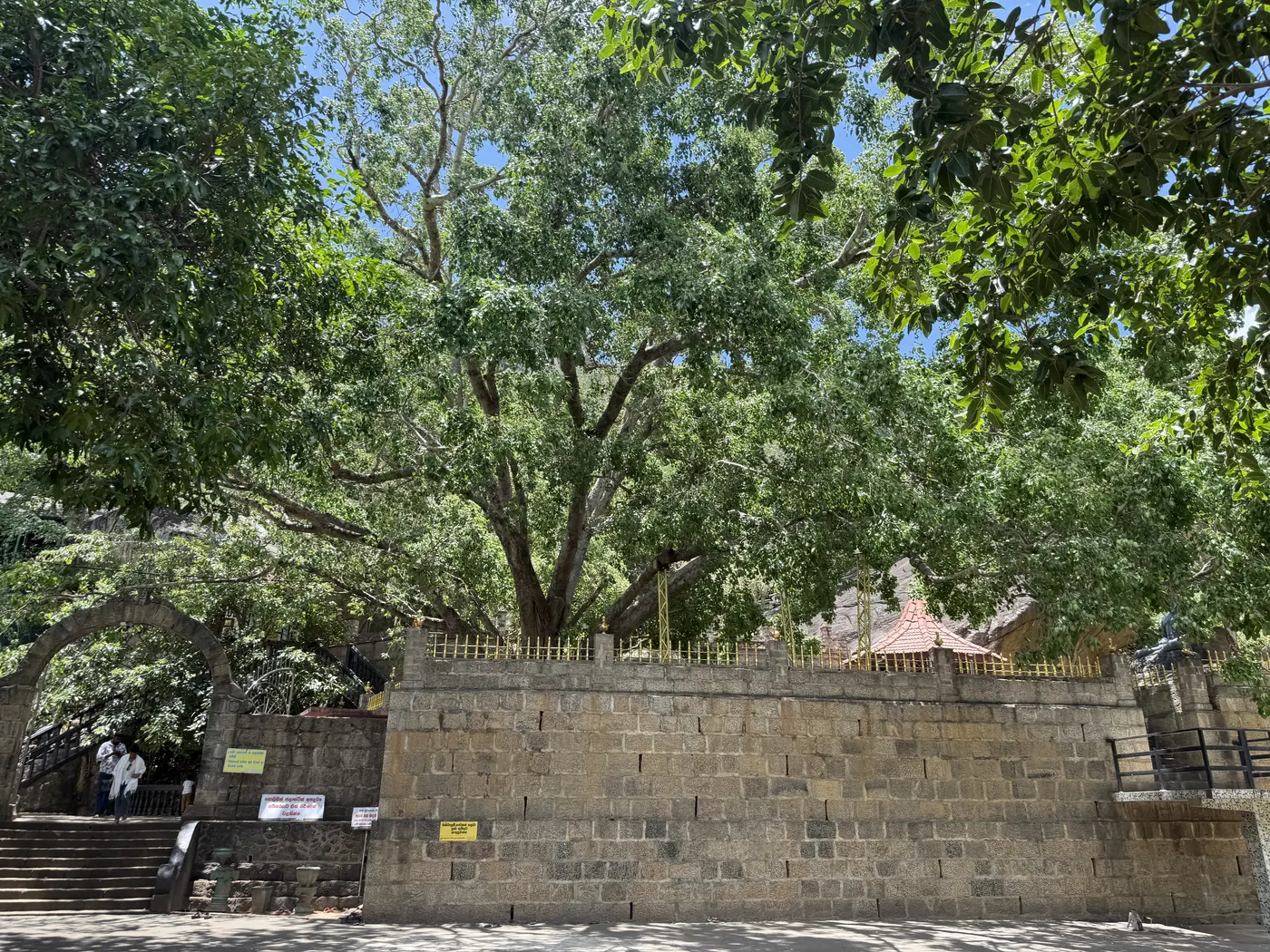
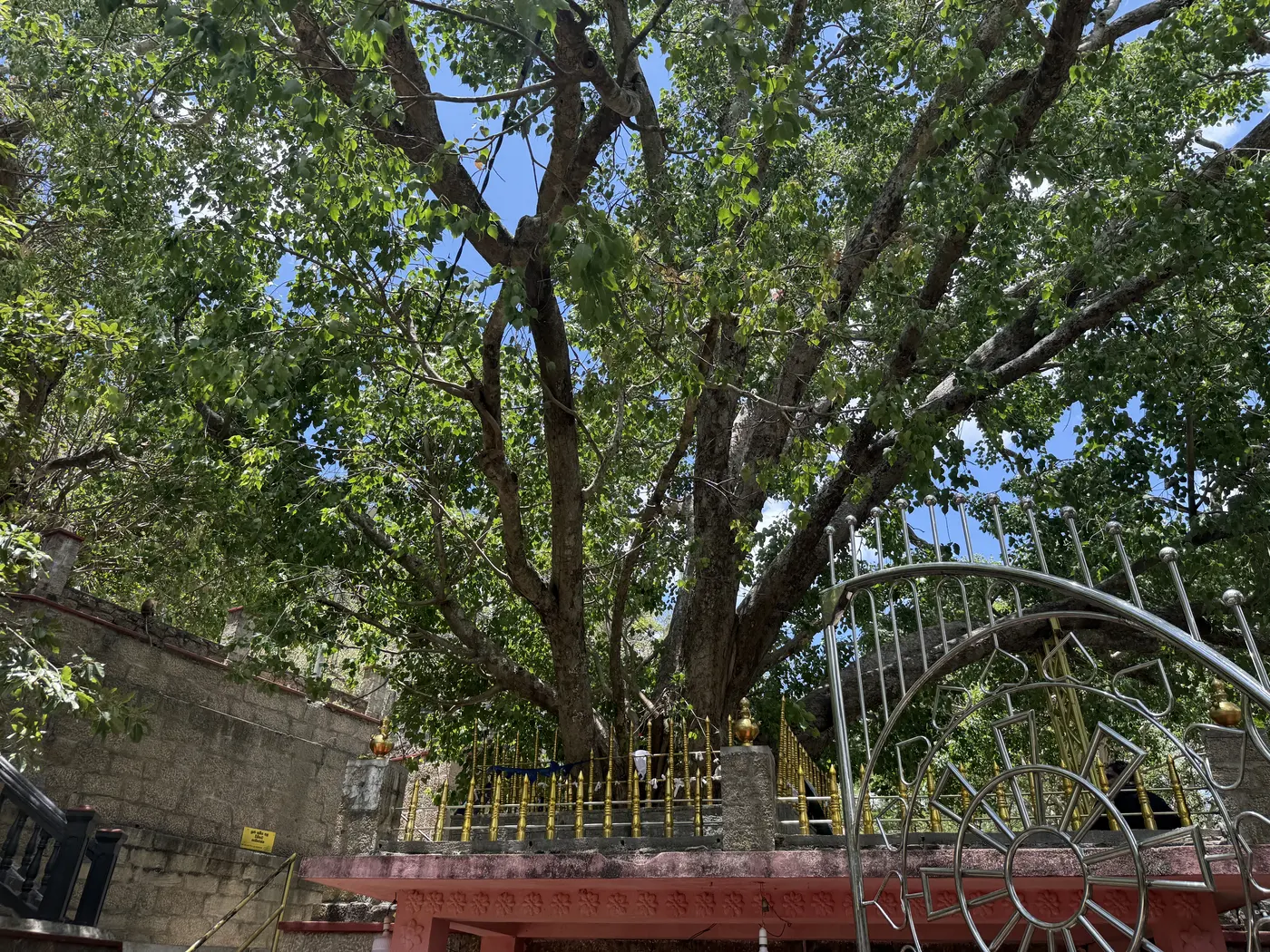
Just inside the gate, the monks’ residence is on the ground floor, and the staircase up the rock starts just beyond it. All the stairs are cut from stone, which gives you a sense of how old the place is.
Climbing Through the Caves
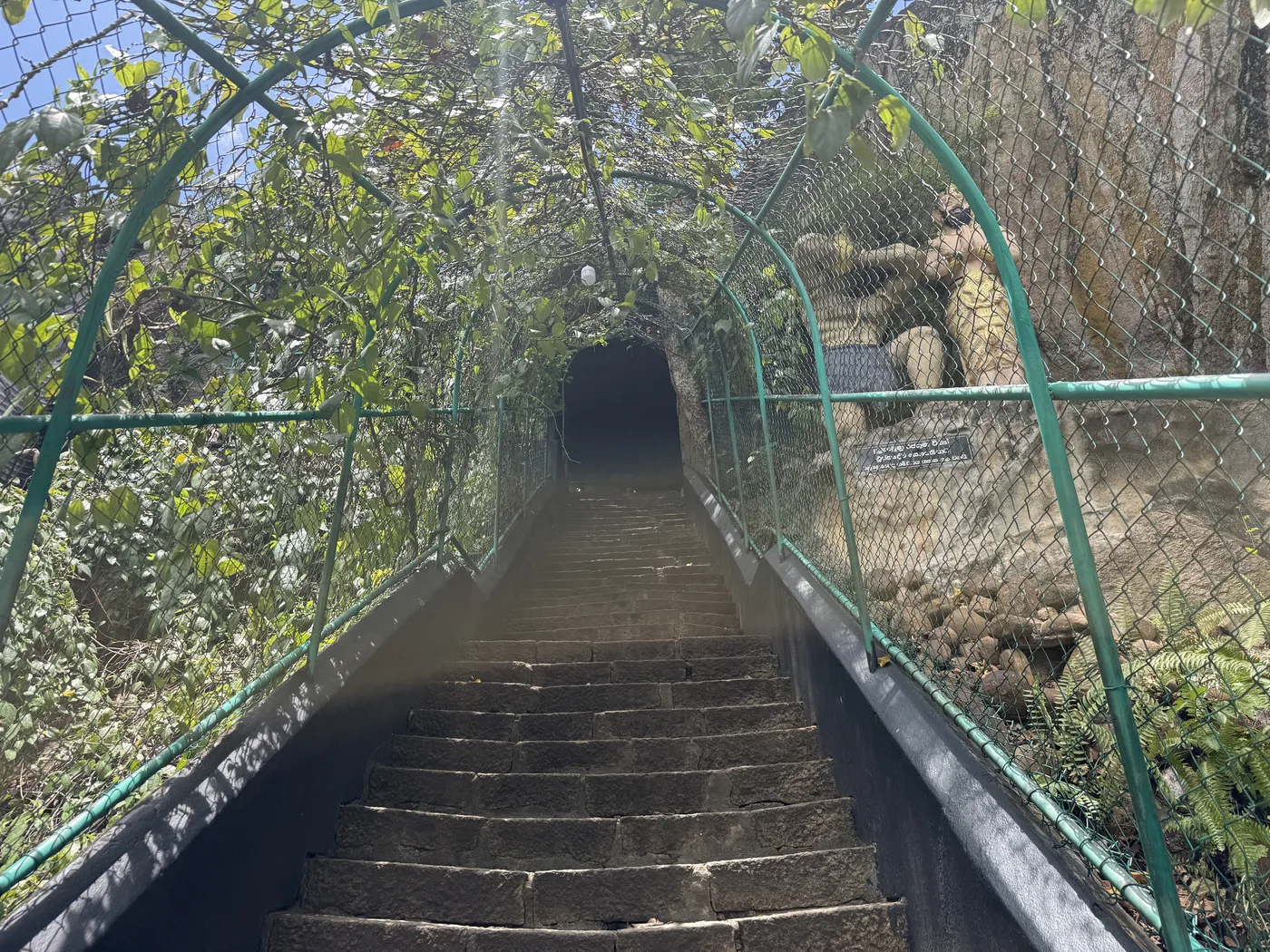
The climb is the best part of the visit. The stone staircase leads into a shaded tunnel and then through a series of small caves and gaps between huge boulders. It is a good reminder that the temple is built into the rock rather than on top of it.
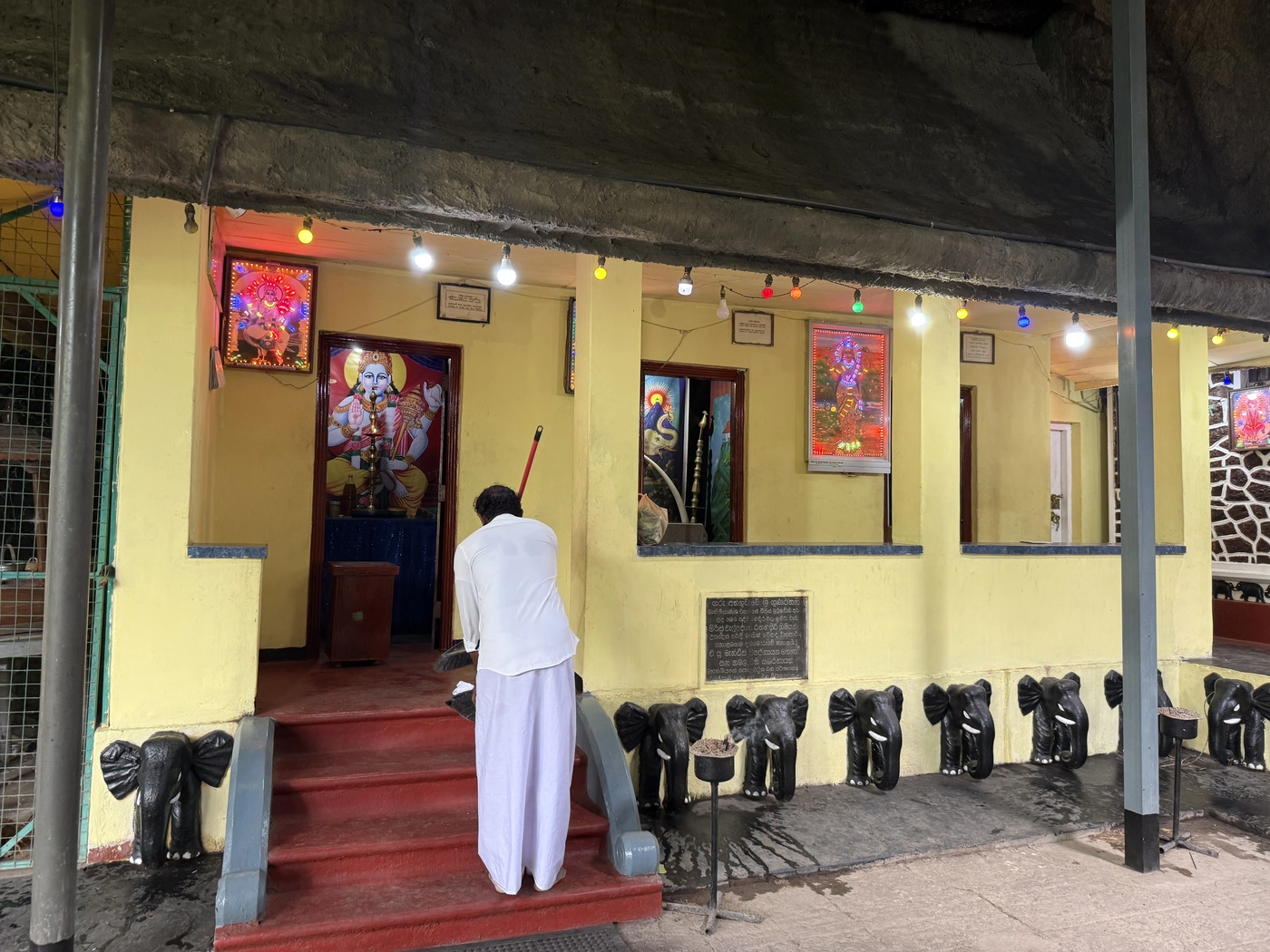
Along the way you pass a cave porch with a small plaque and a little devale shrine with deity images and a row of black elephant figures.
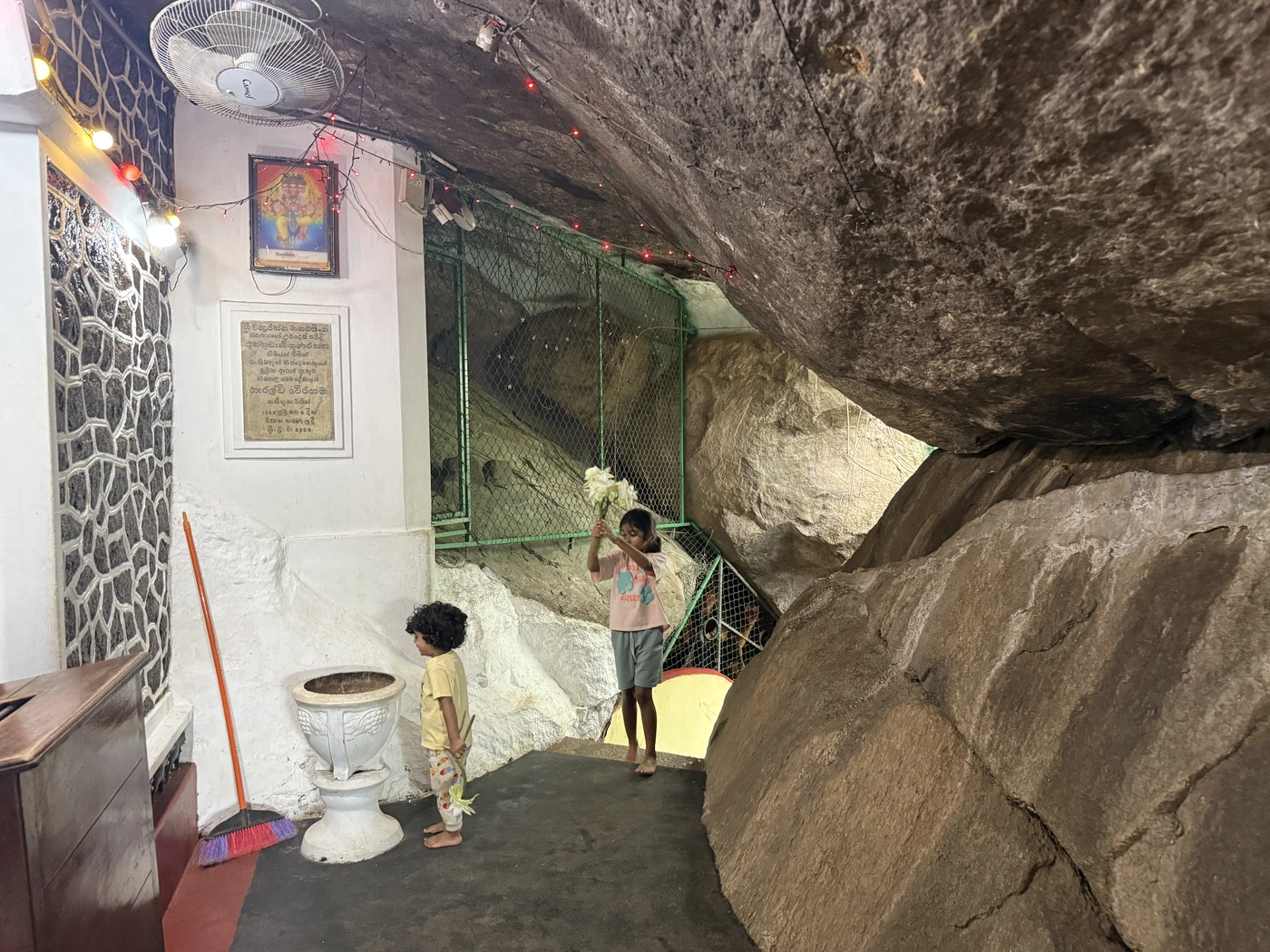
Narrow steps squeeze between the boulders, and the last stretch is a tight passage in the rock.
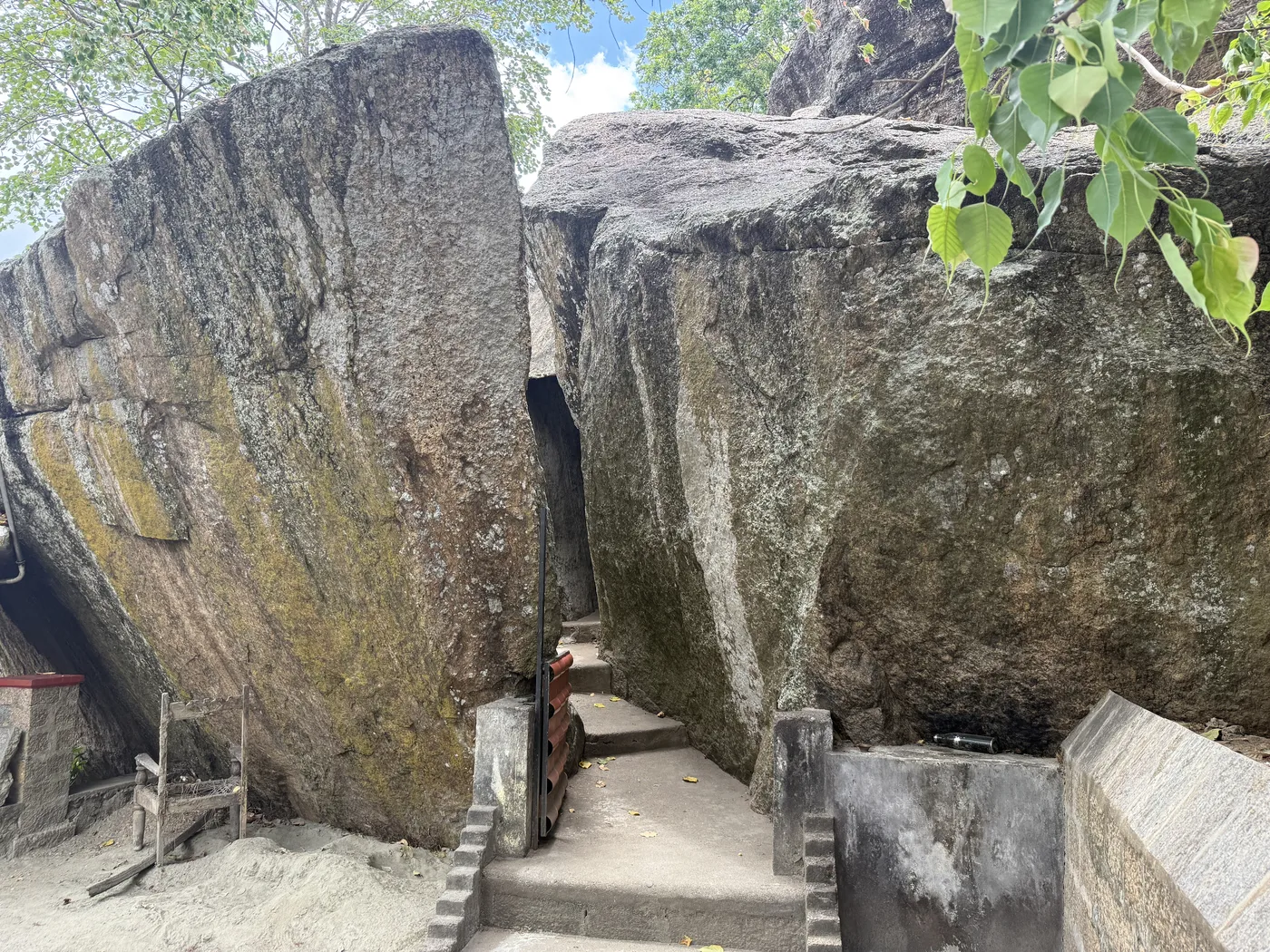
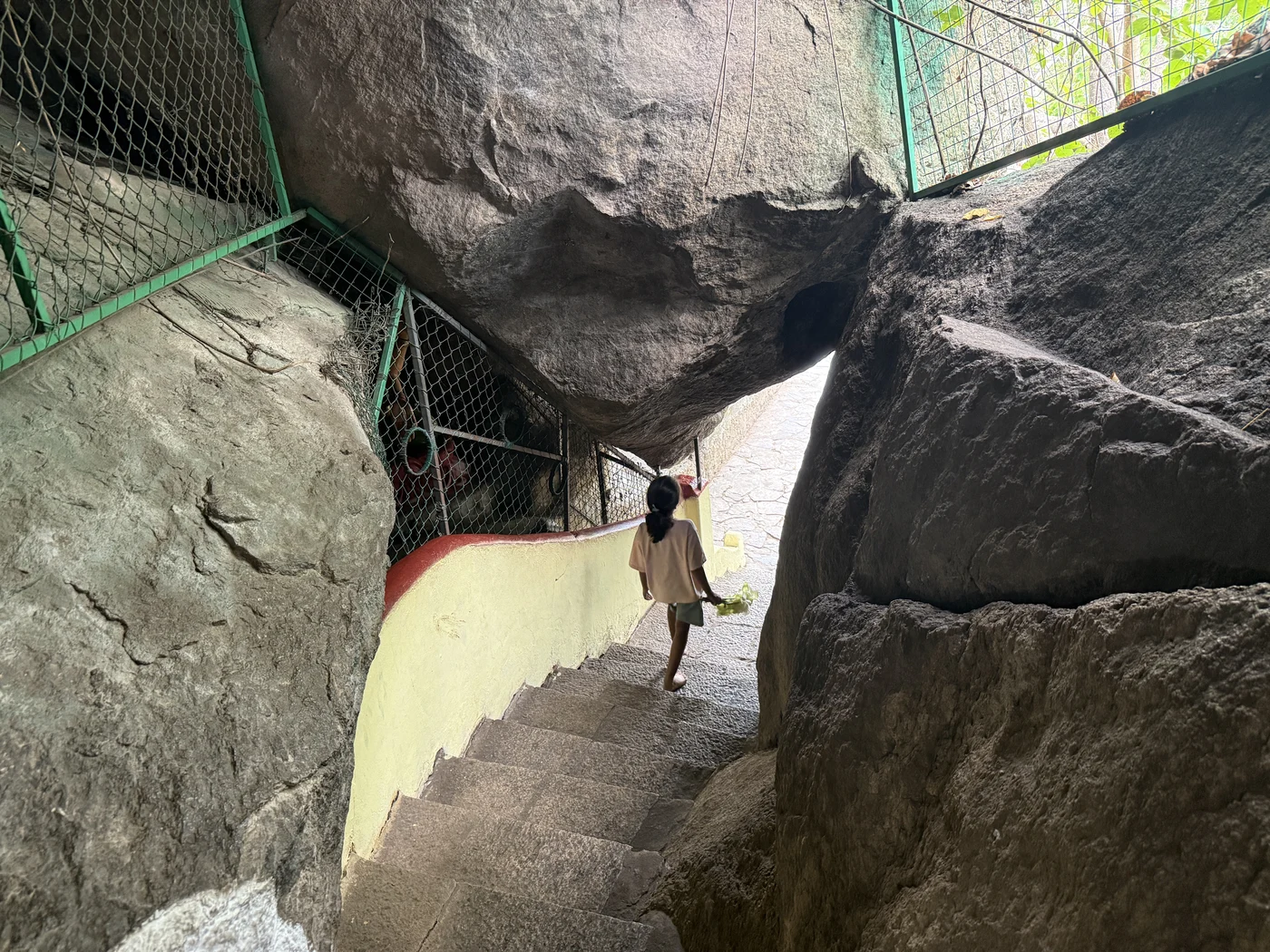
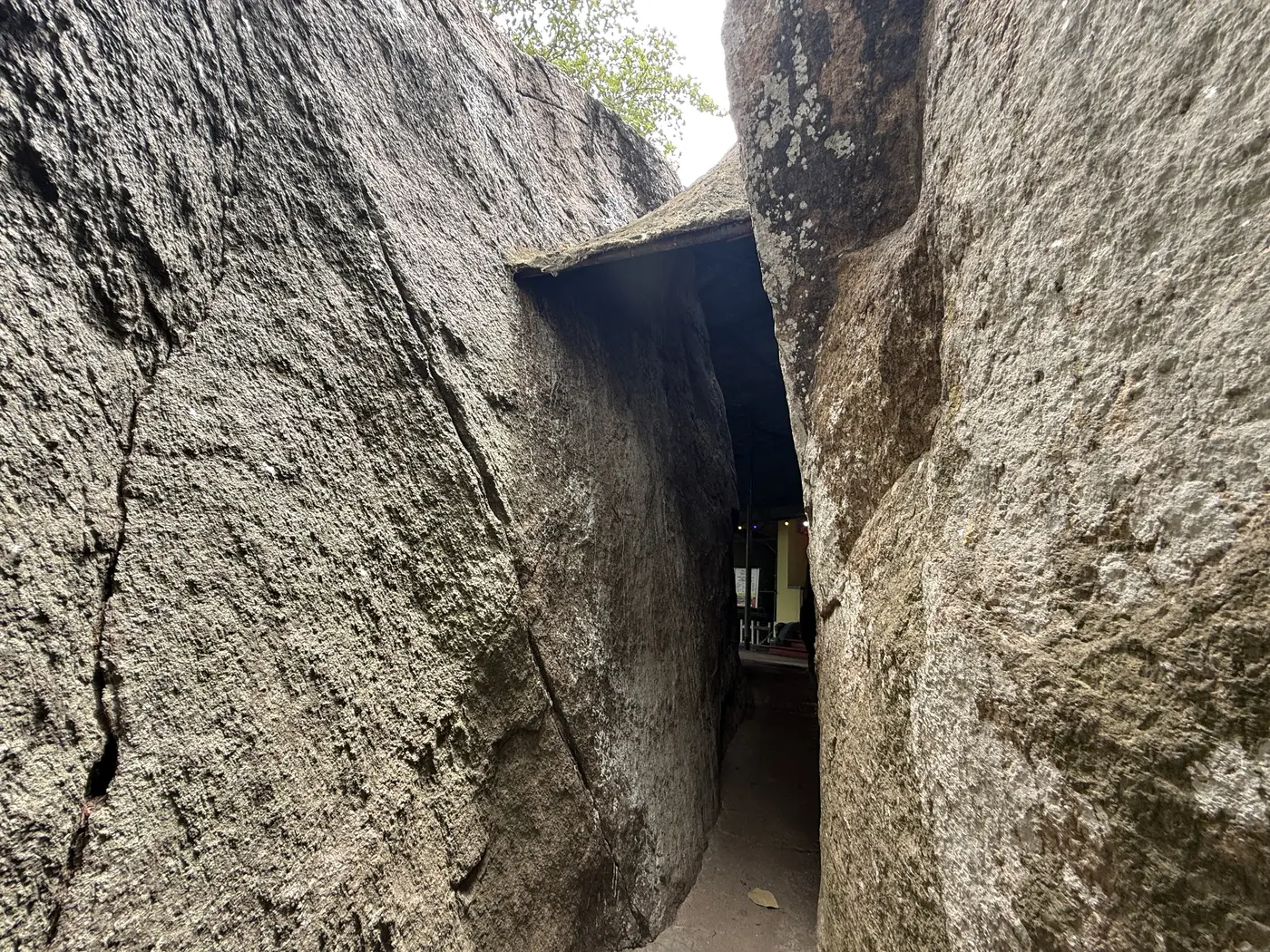
The First Open Area
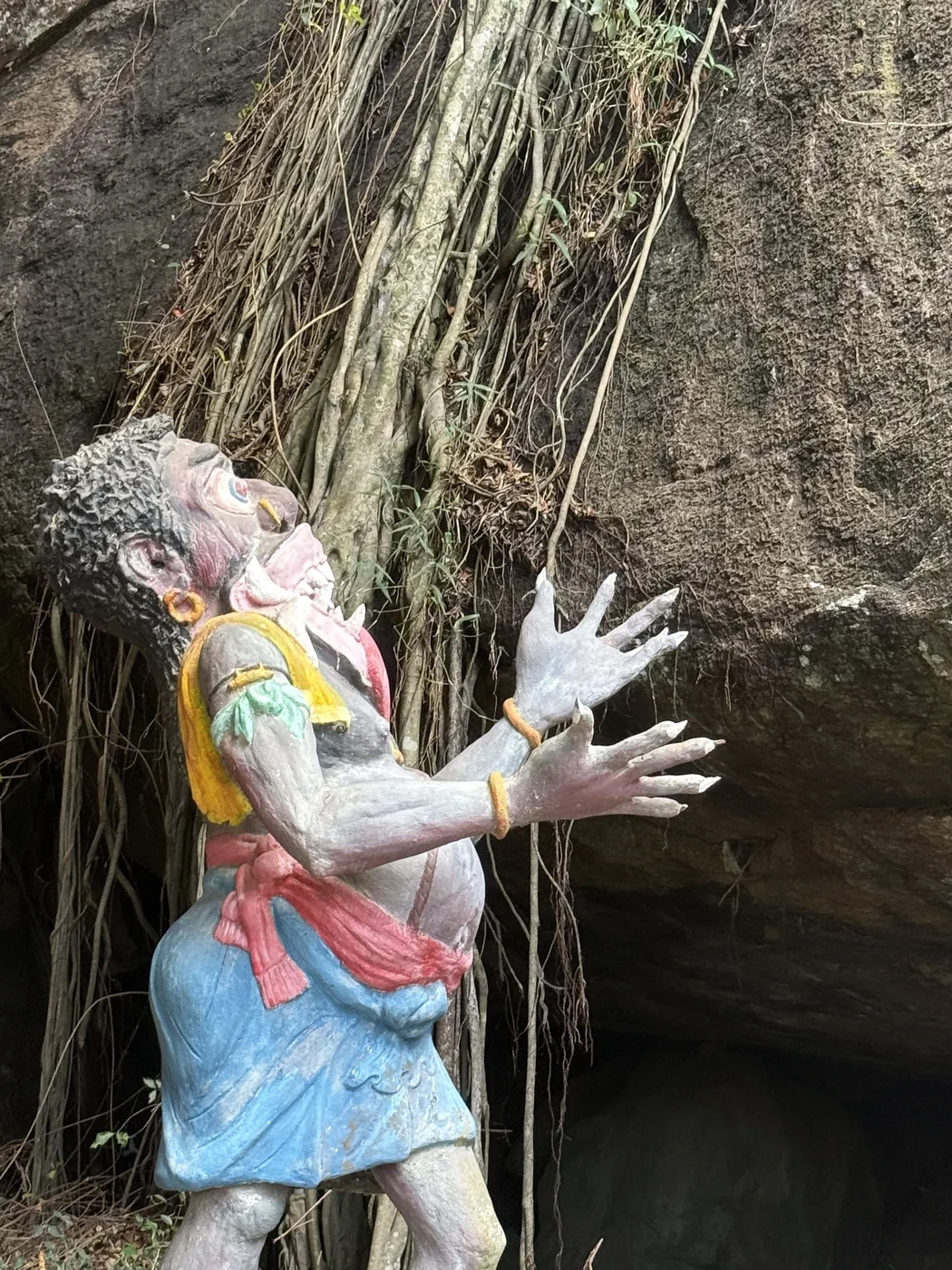
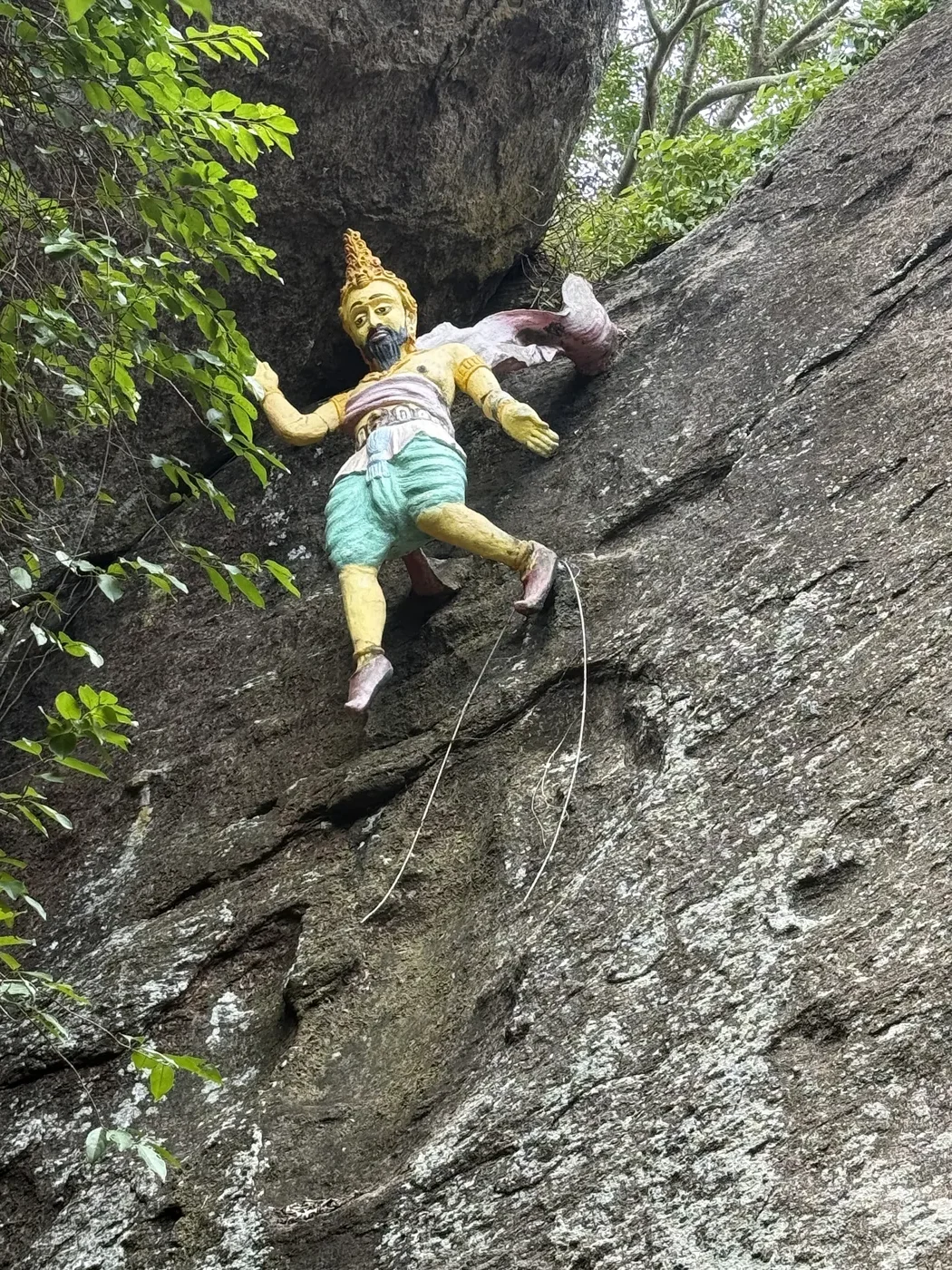
After the caves, the path opens into a first open area. A stone Buddha statue stands beside the path, and colourful figures are fixed to the rock face above. I could not tell what the painted figures represent, so I would suggest asking one of the monks if you are curious.
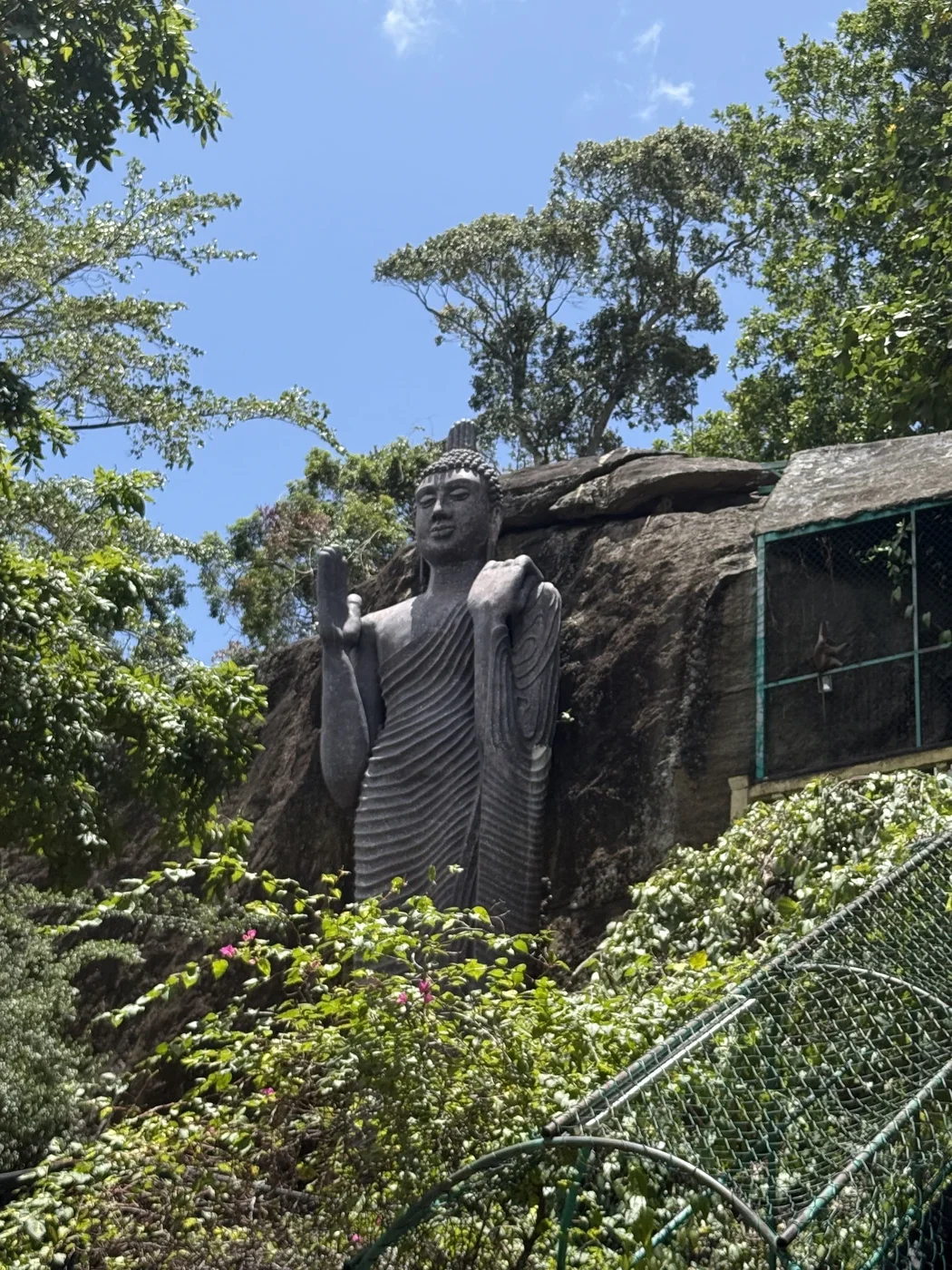
The Image House Under the Rock
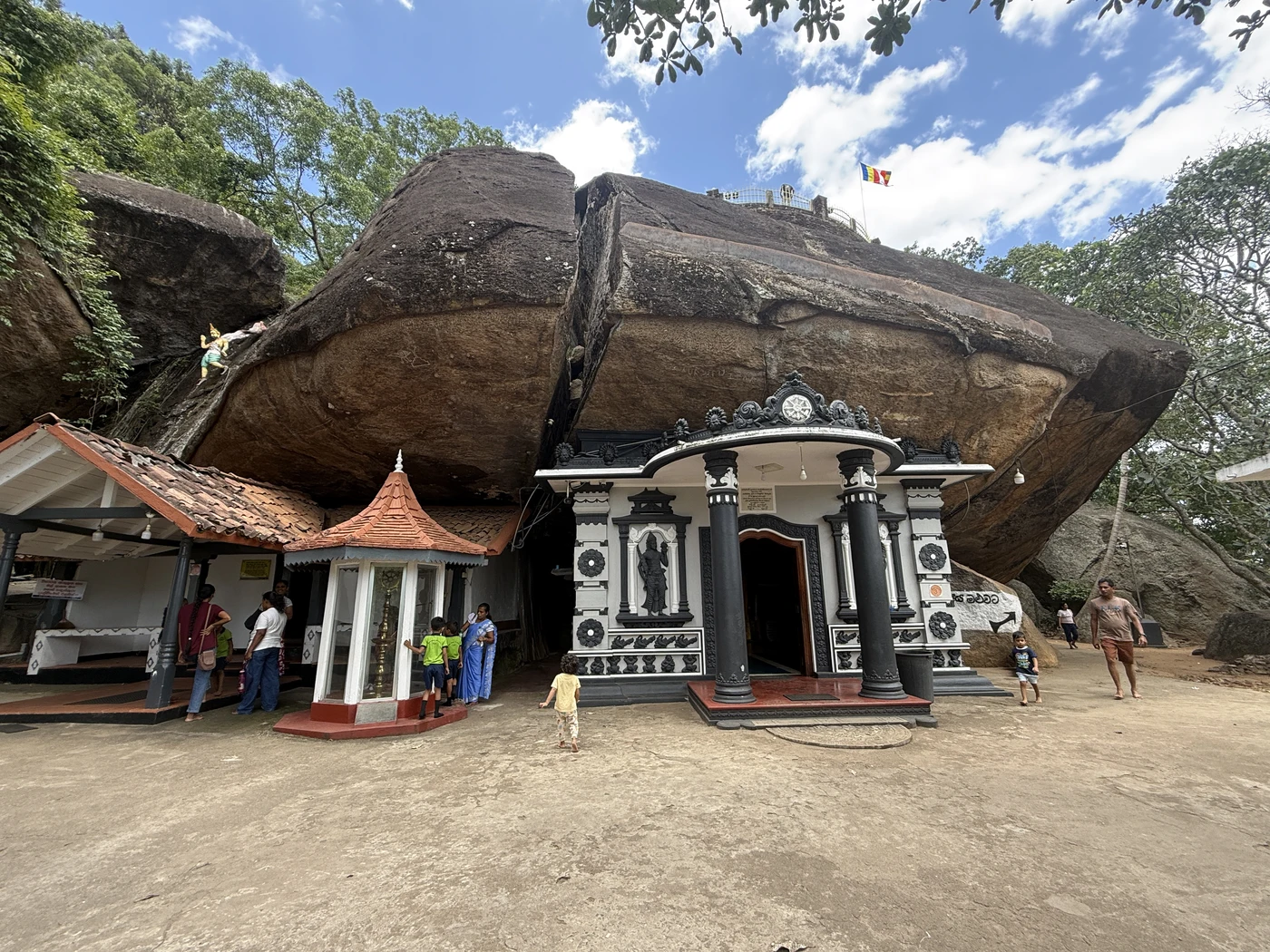
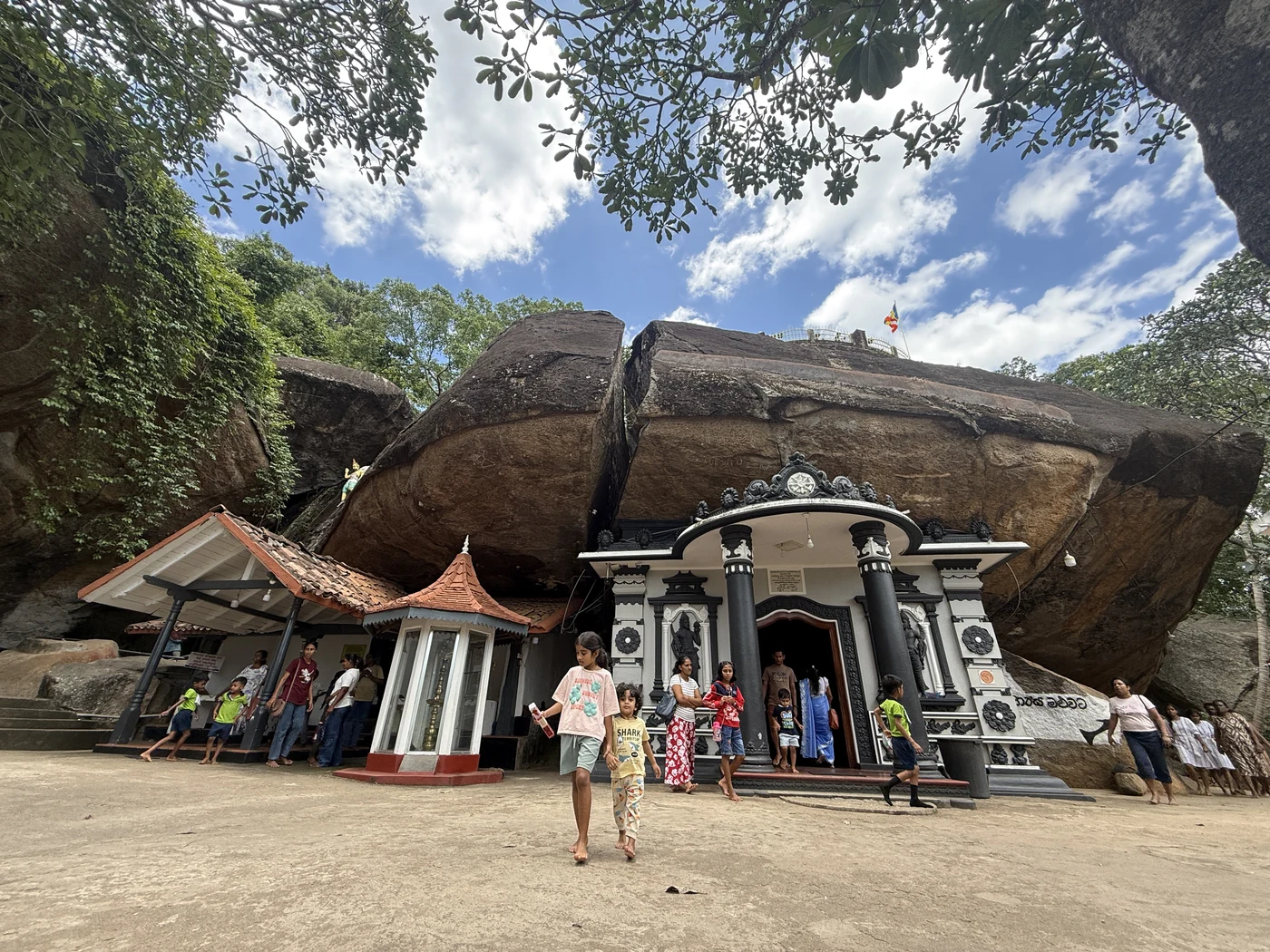
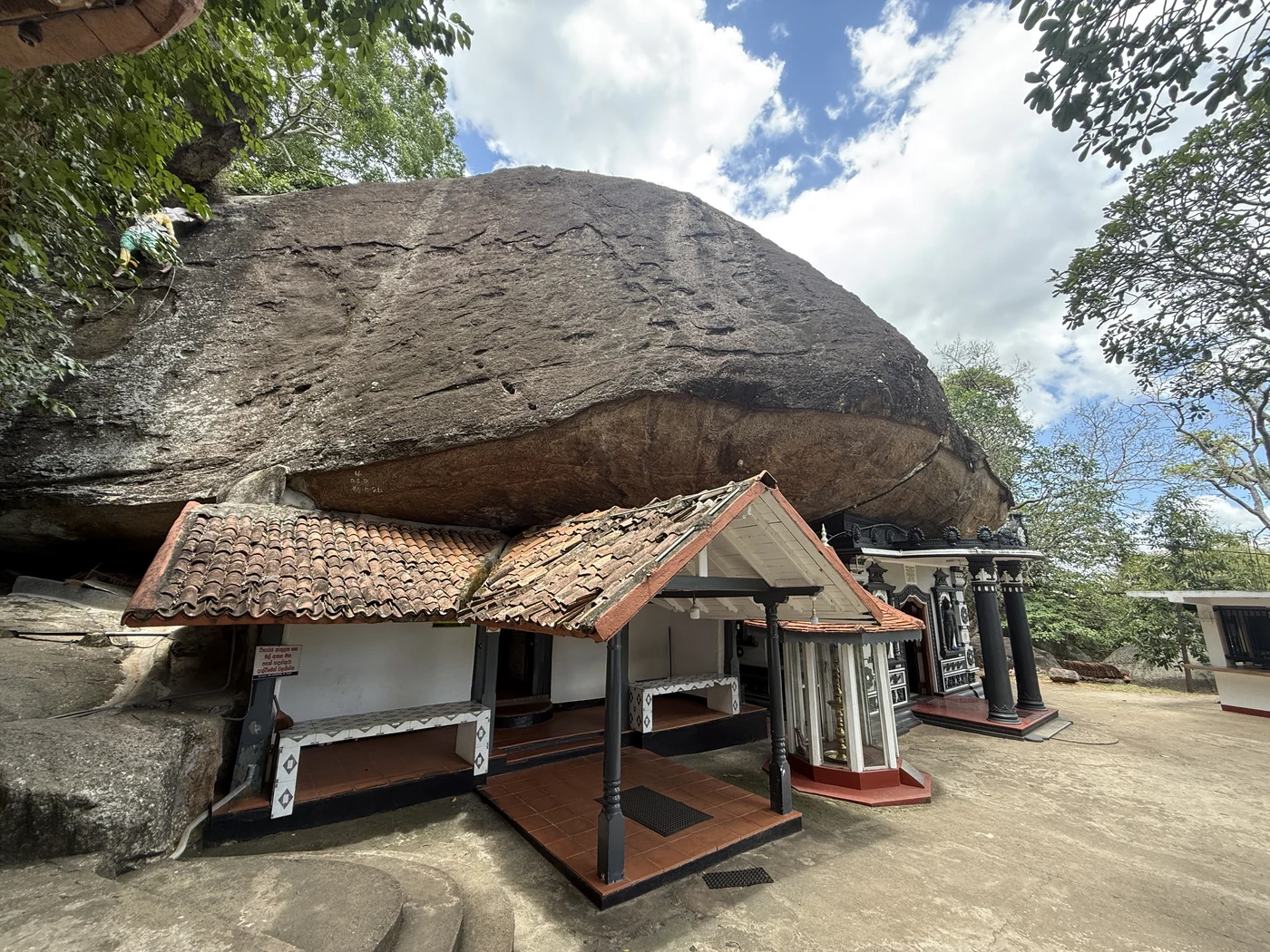
From here, another small path through the rocks leads to the image house (vihara geya), the main Buddhist shrine of the temple. It sits tucked beneath an enormous overhanging boulder, which is one of the most striking sights in the whole complex.
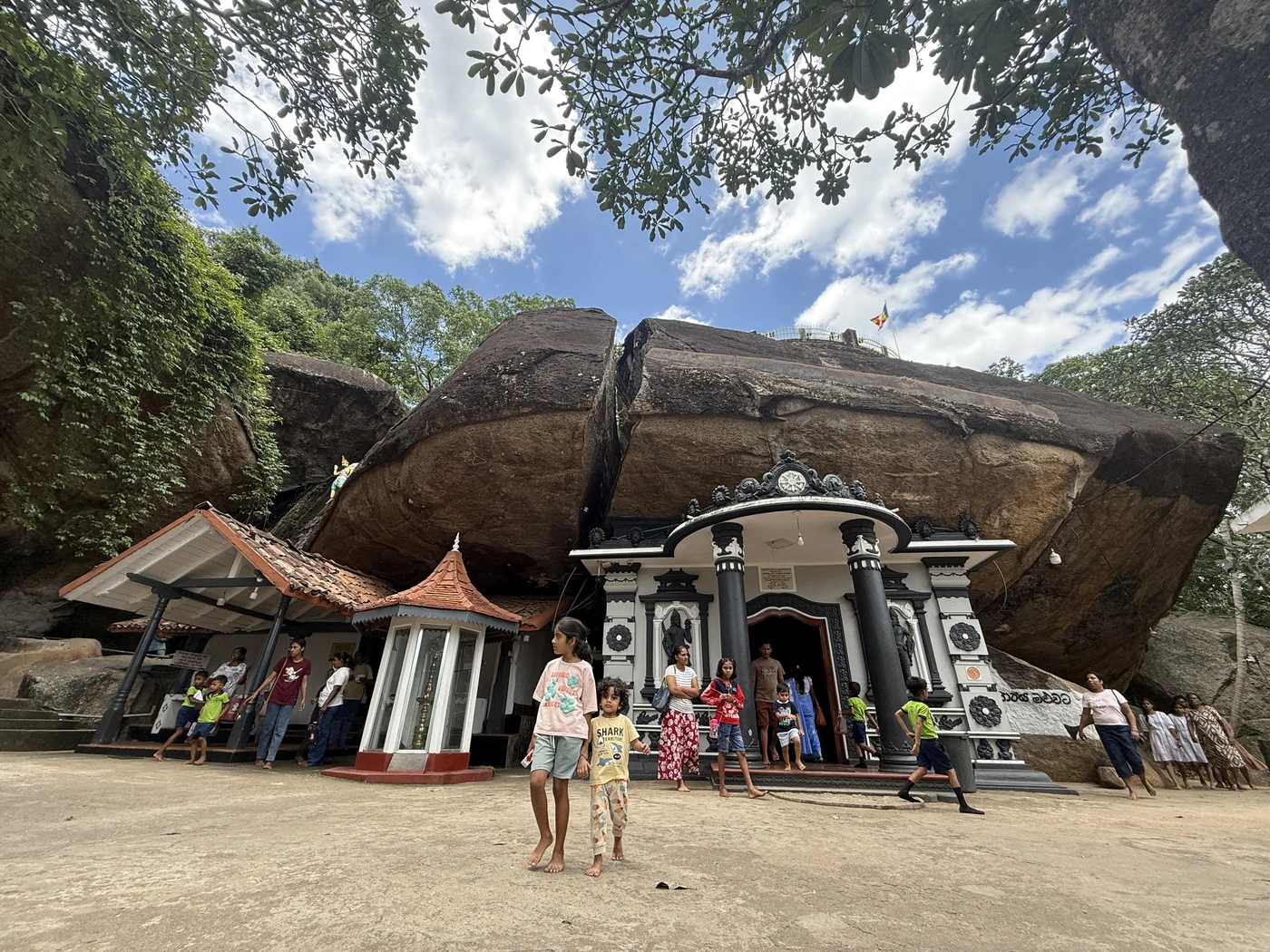
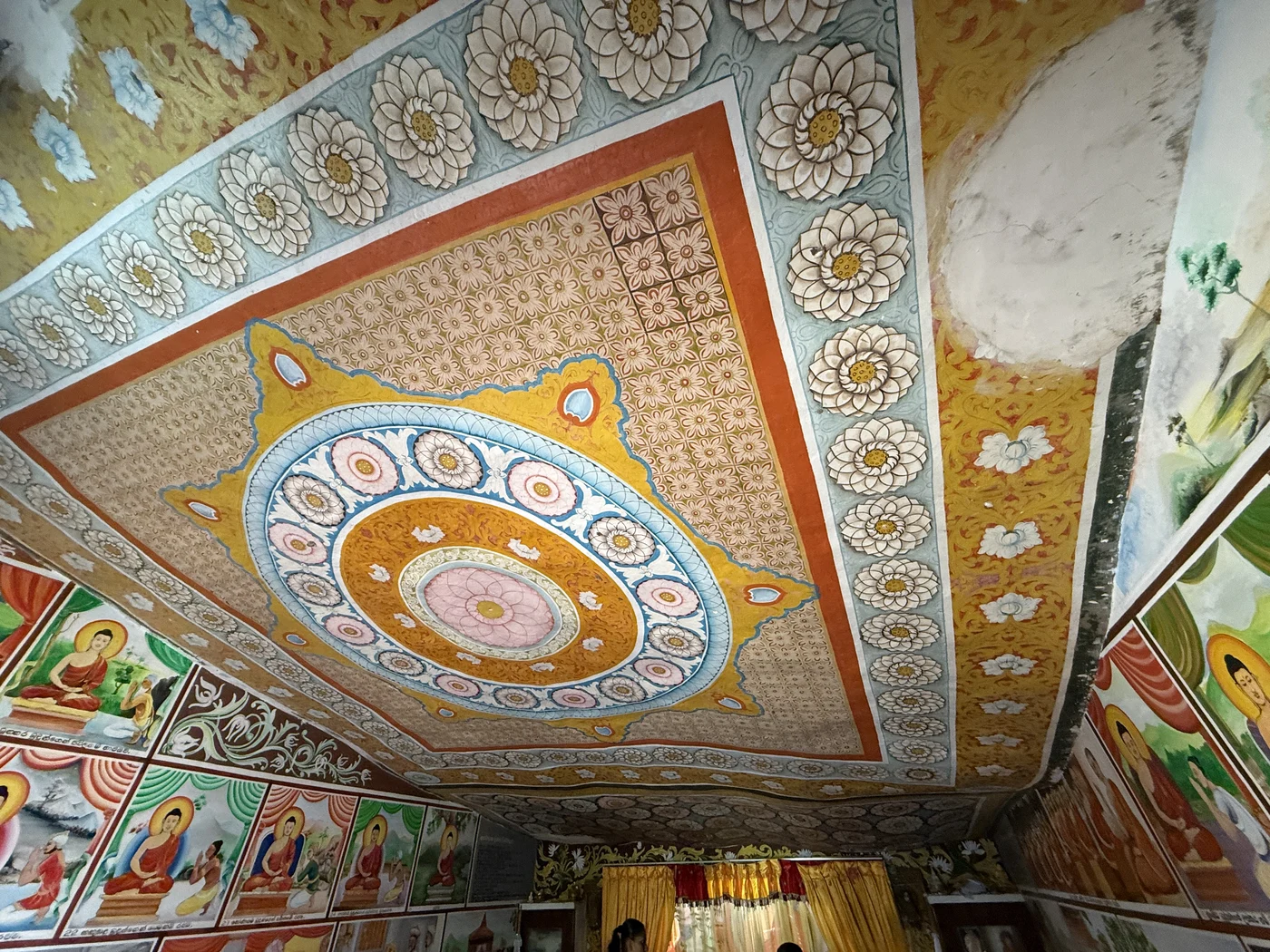
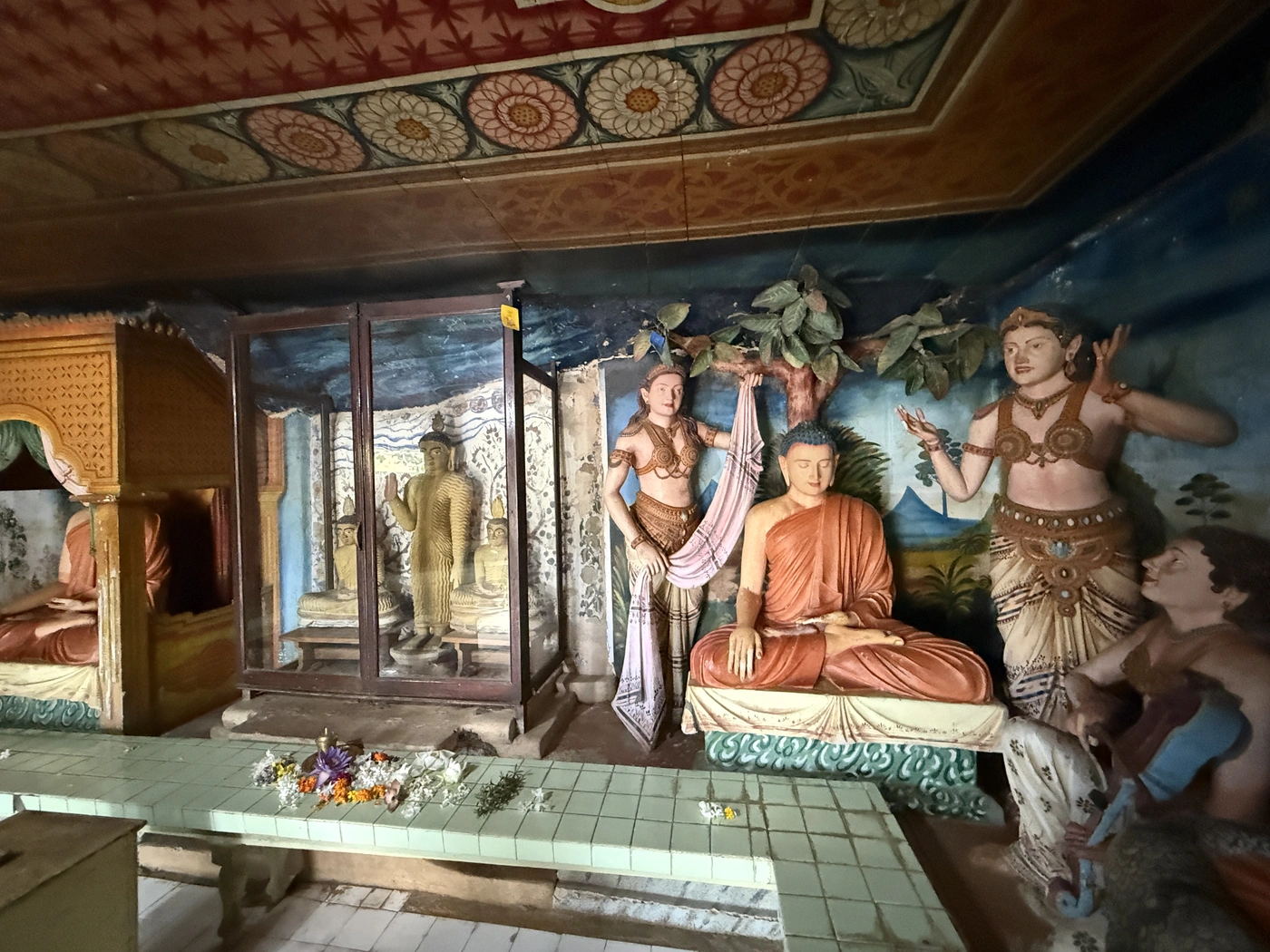
Inside, the walls and ceilings are covered with paintings. A few areas appear to have been repainted in a bright modern style, with scenes from the life of the Buddha and a lotus design on the ceiling.
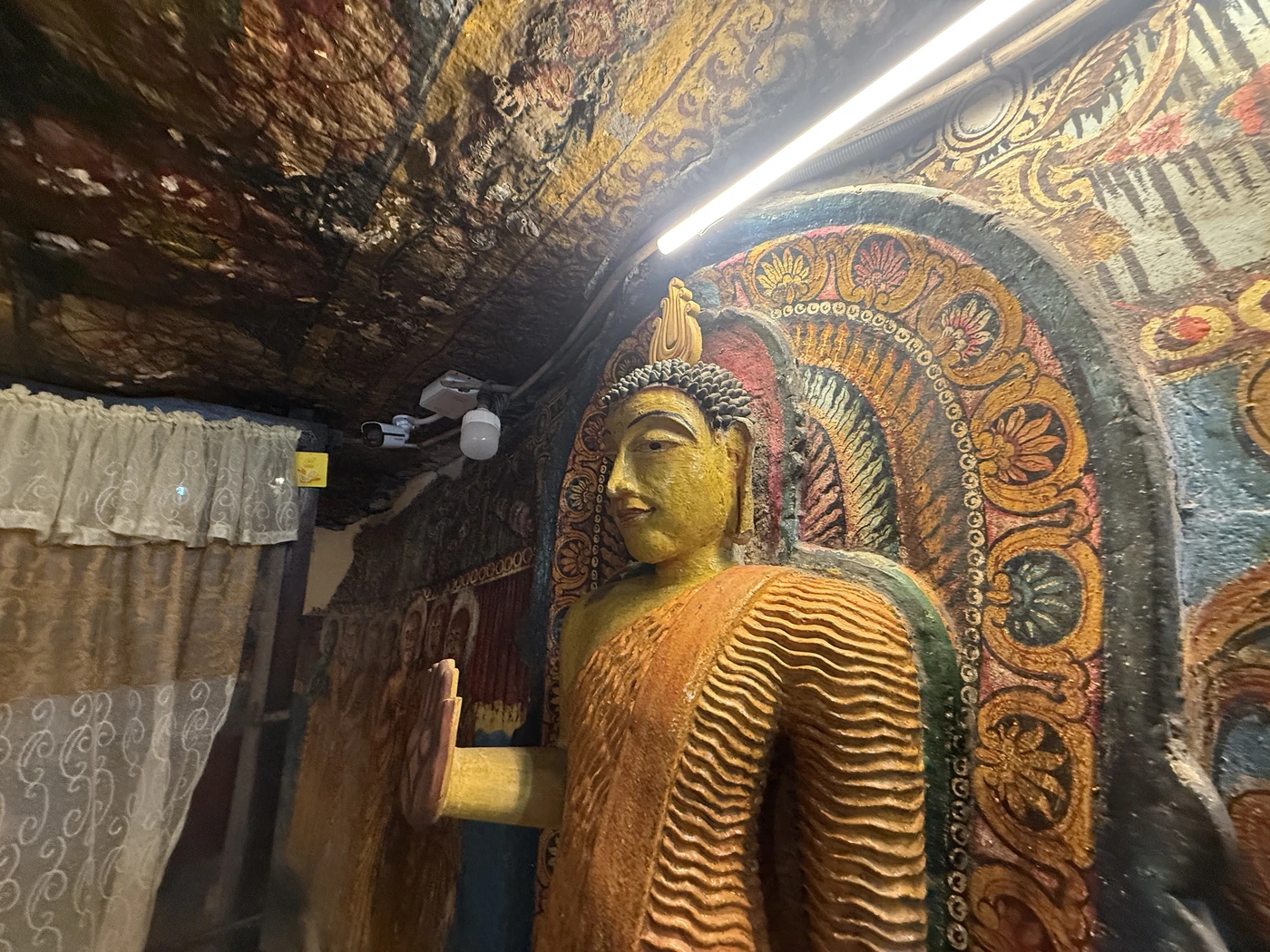
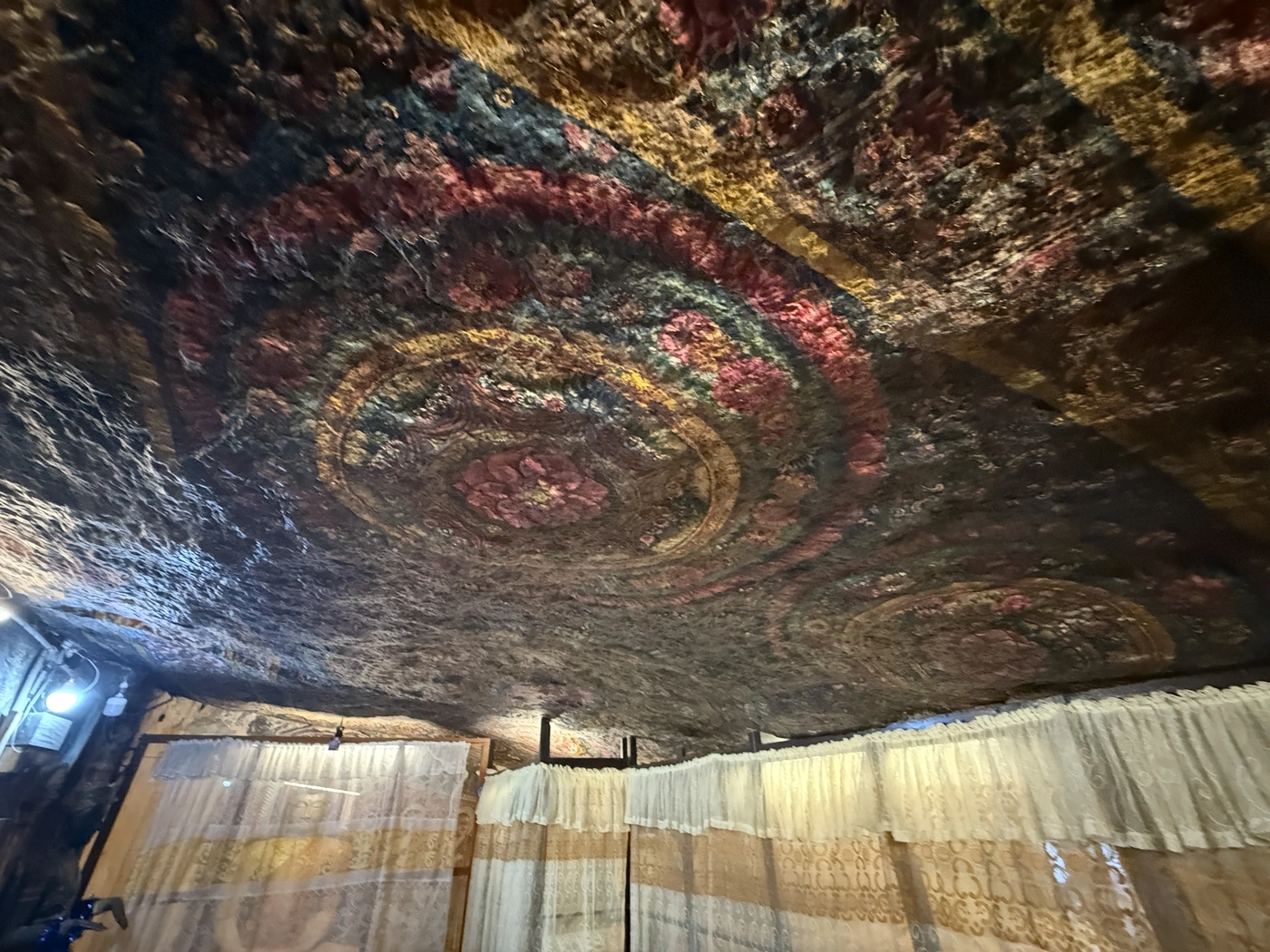
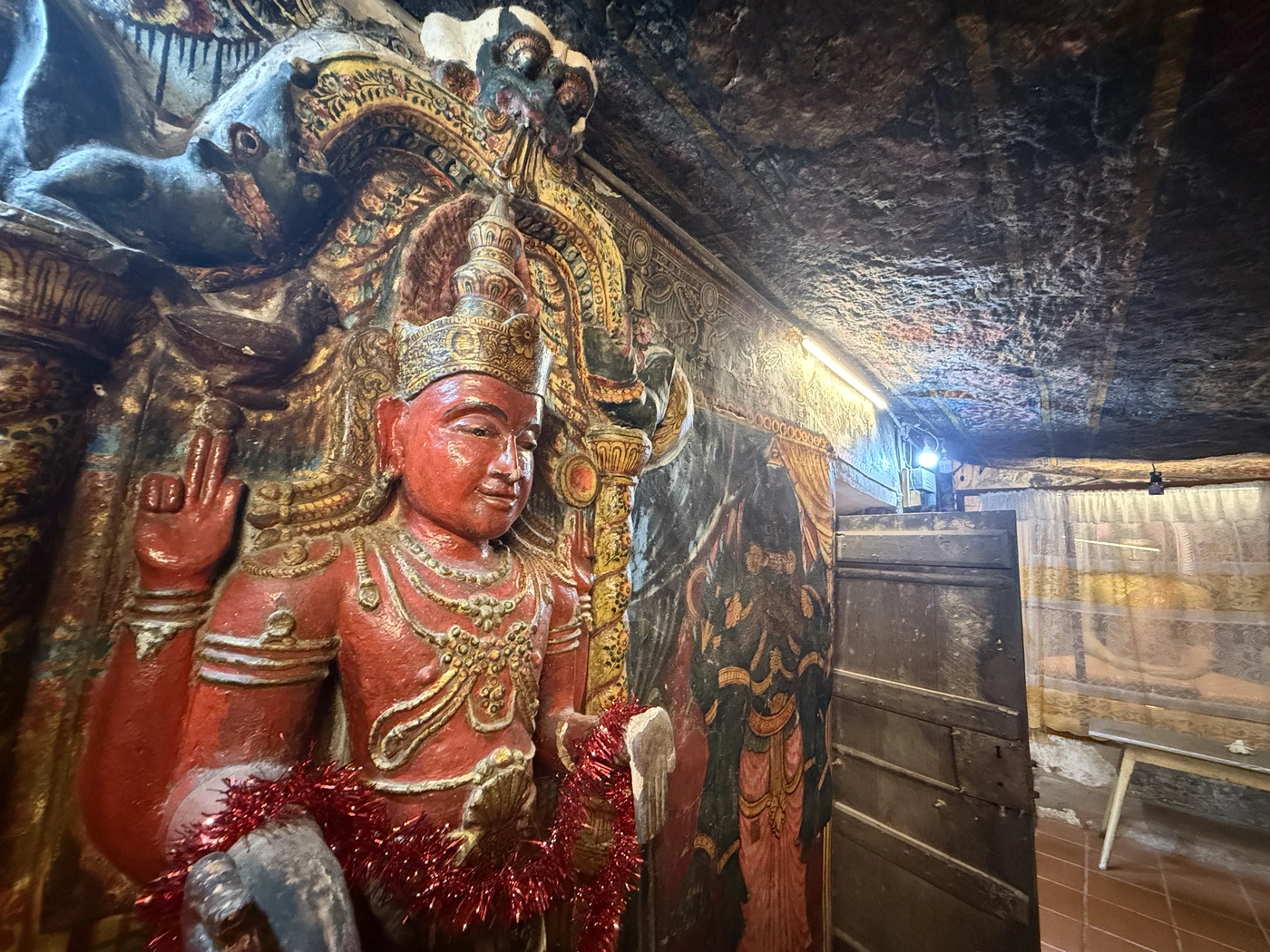
The older cave shrine is the real highlight. Two standing Buddha statues in the Kandyan style stand beside a guardian deity statue, and the rock ceiling above carries very old-looking painted designs, now faded and darkened with age.
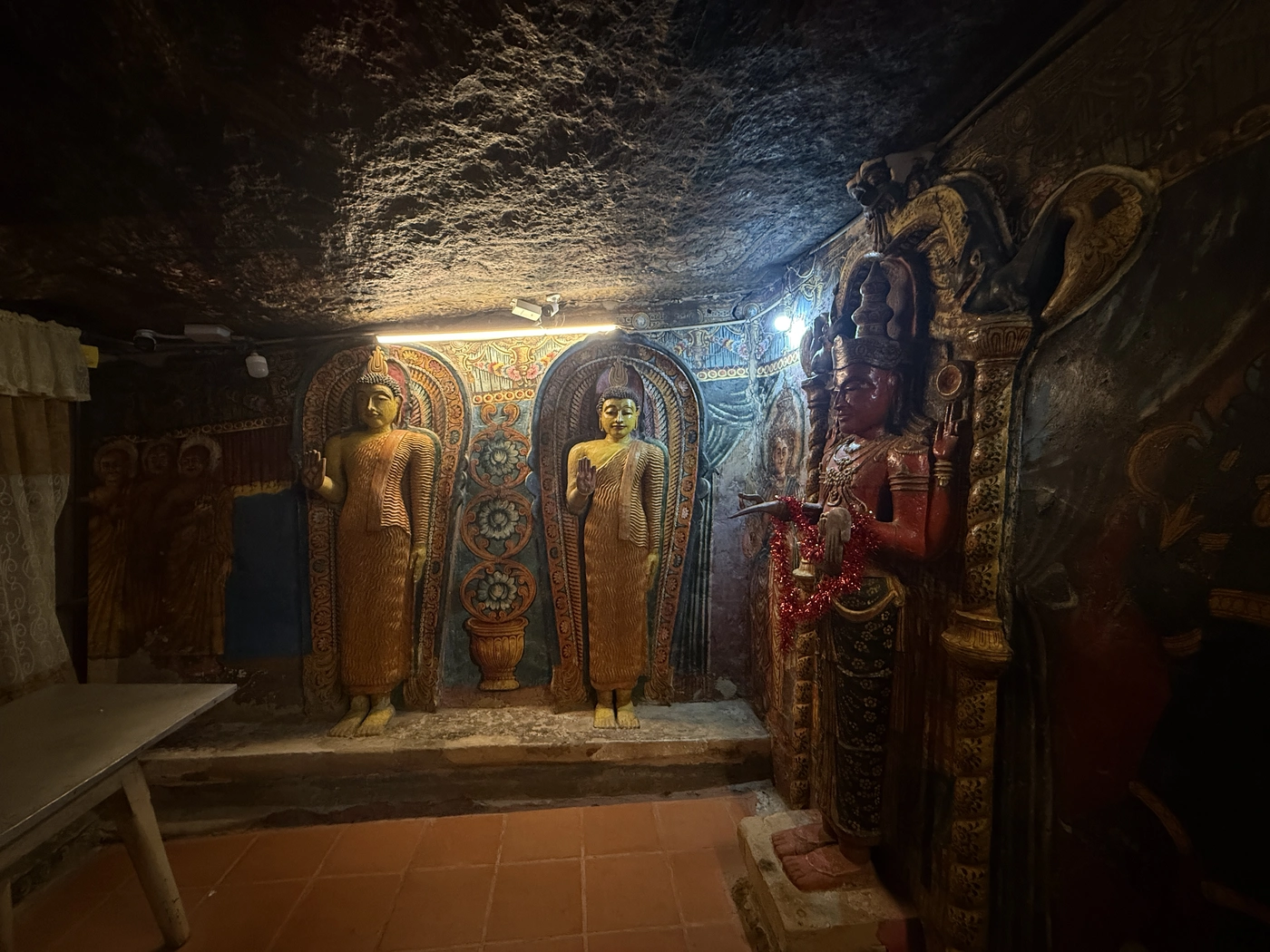
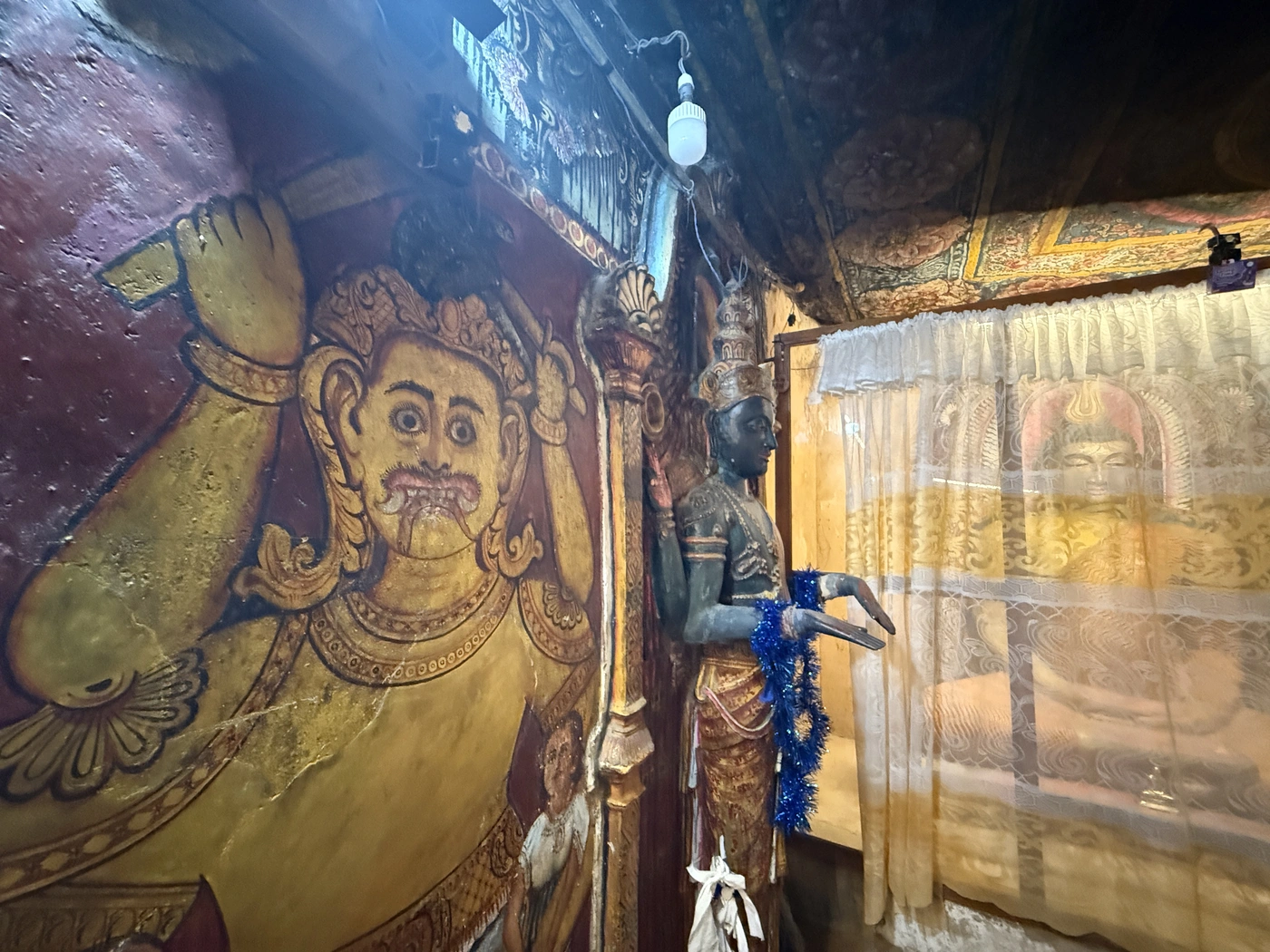
Deity statues and murals stand here too, including a red statue of a deity and a fierce guardian figure painted on the wall beside a blue statue. Behind a curtain you can see a reclining Buddha.
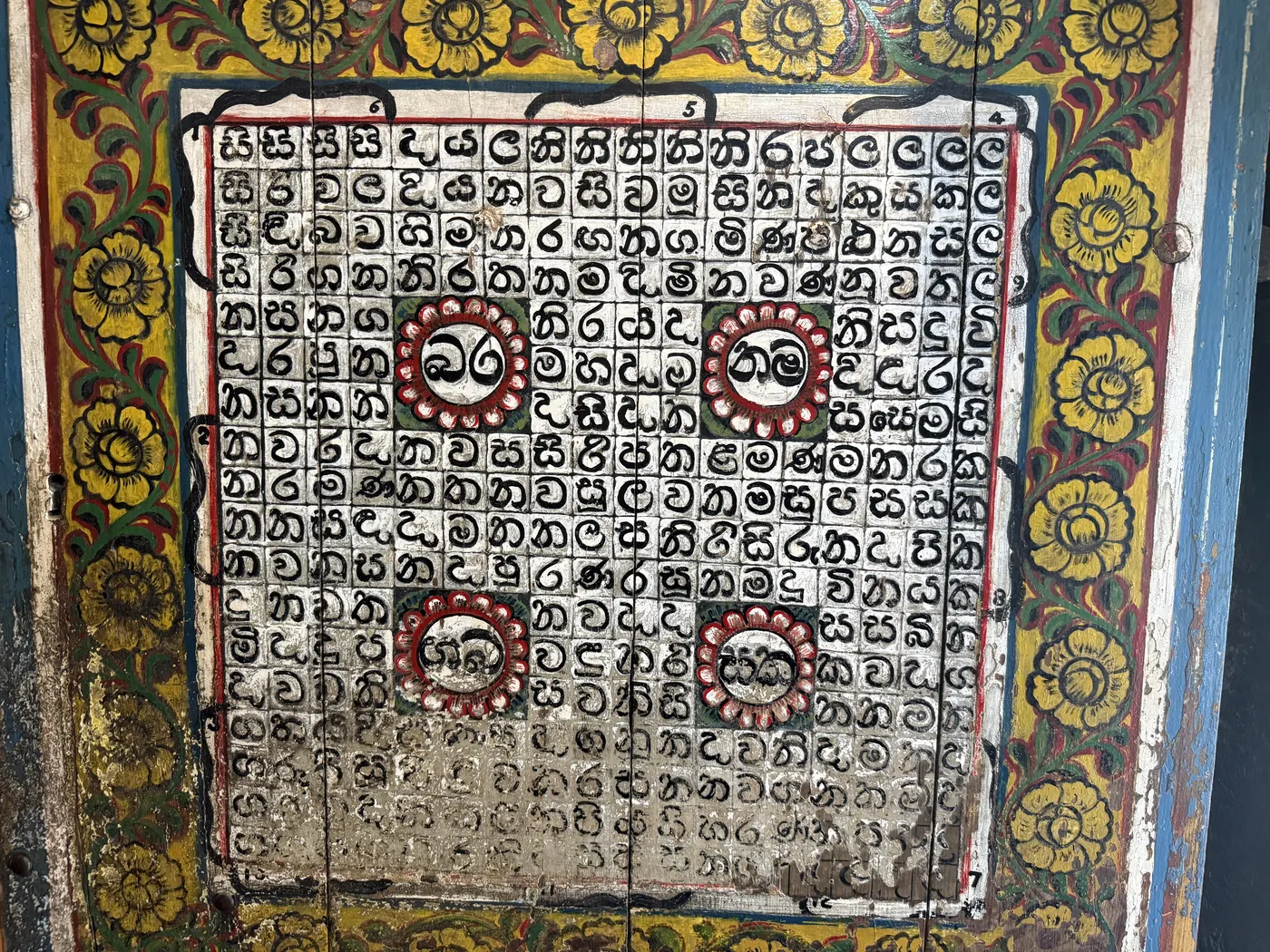
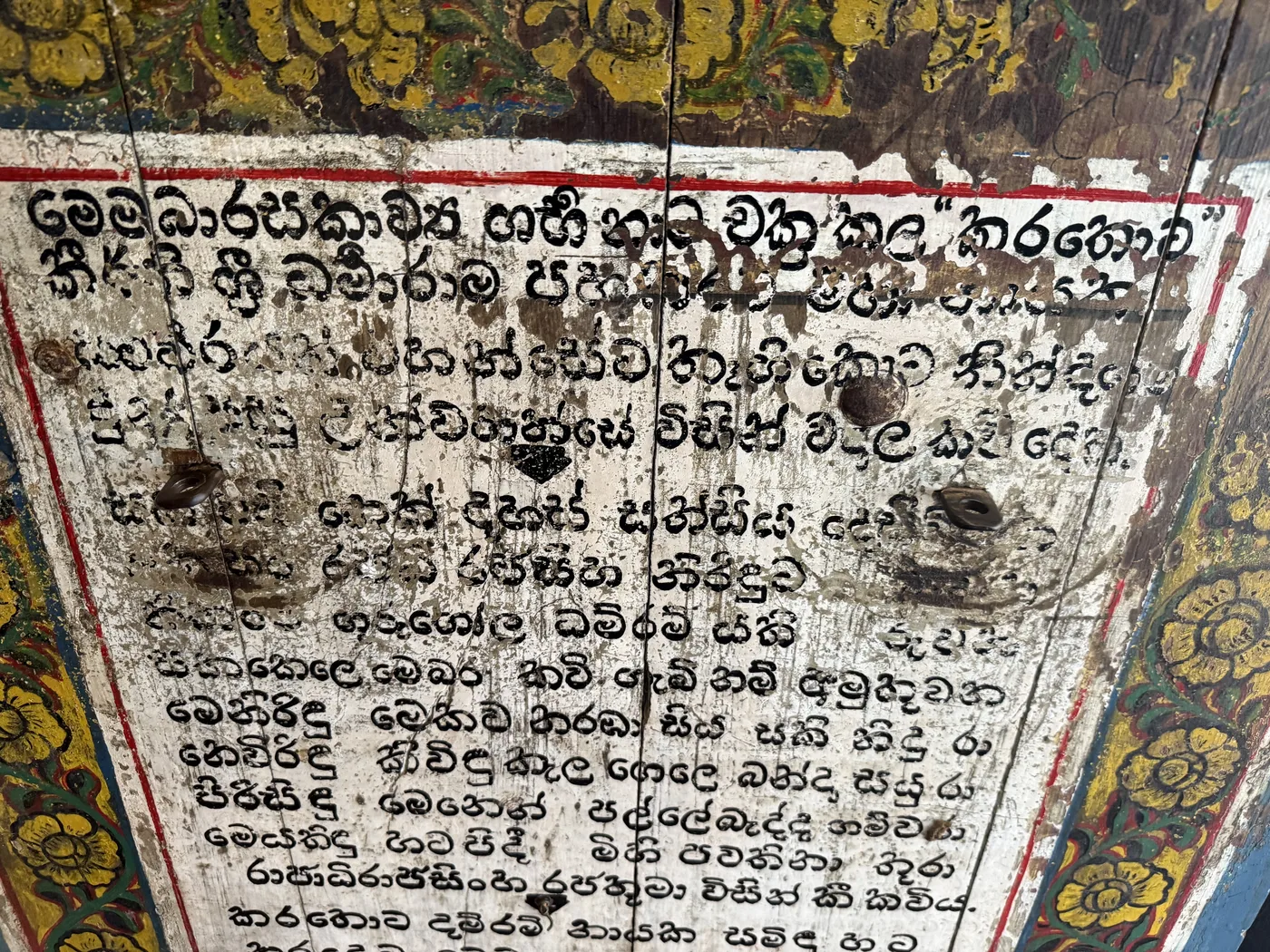
Look out for the old wooden door panels. One is painted with a square grid of Sinhala letters, a type of verse puzzle, and the other carries a painted Sinhala verse that mentions Pallebedda, the Rev. Karatota Dhammarama Thera and King Rajadhi Rajasinghe. The Archaeology Department board explains the story (see the history section below).
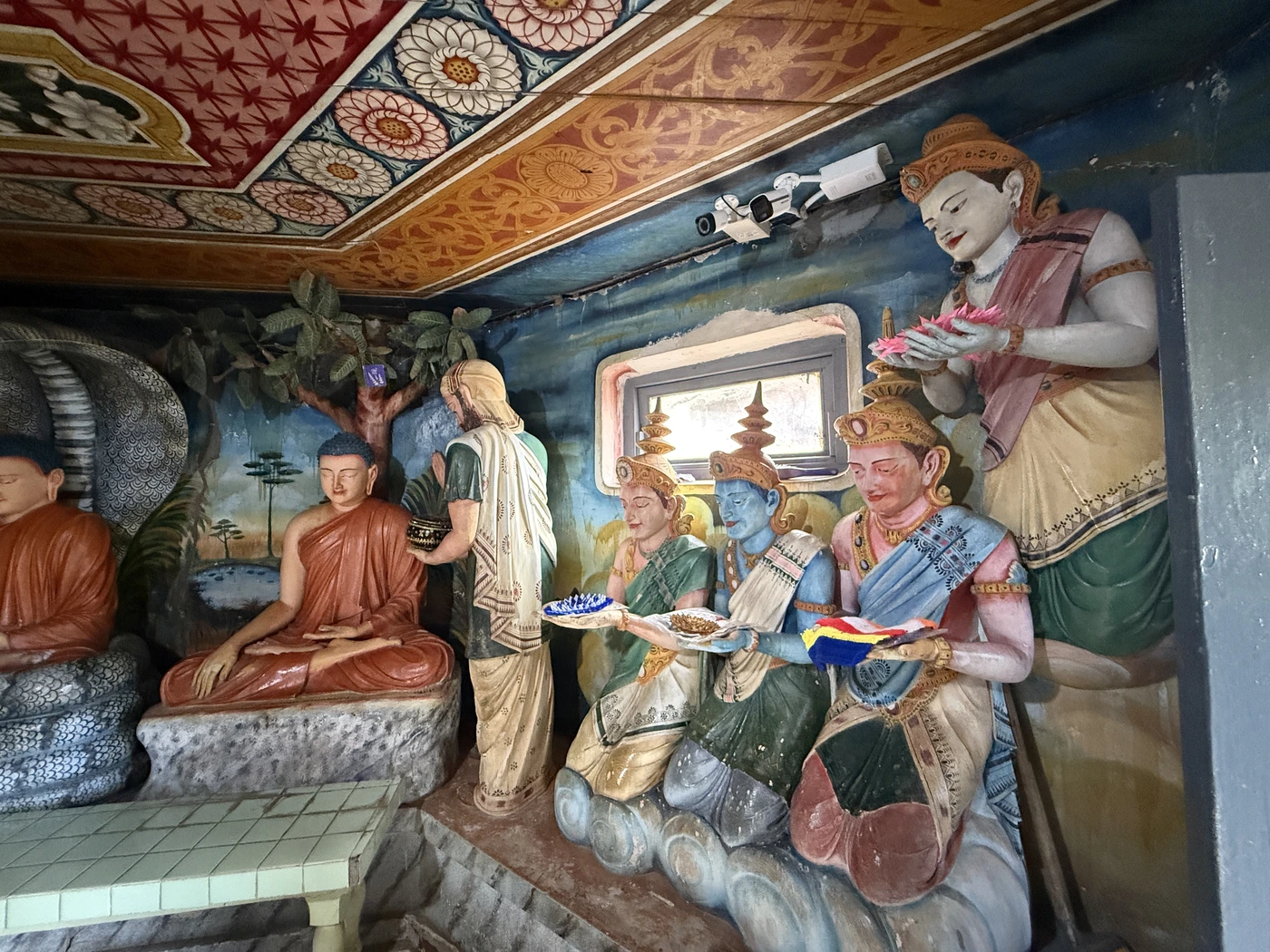
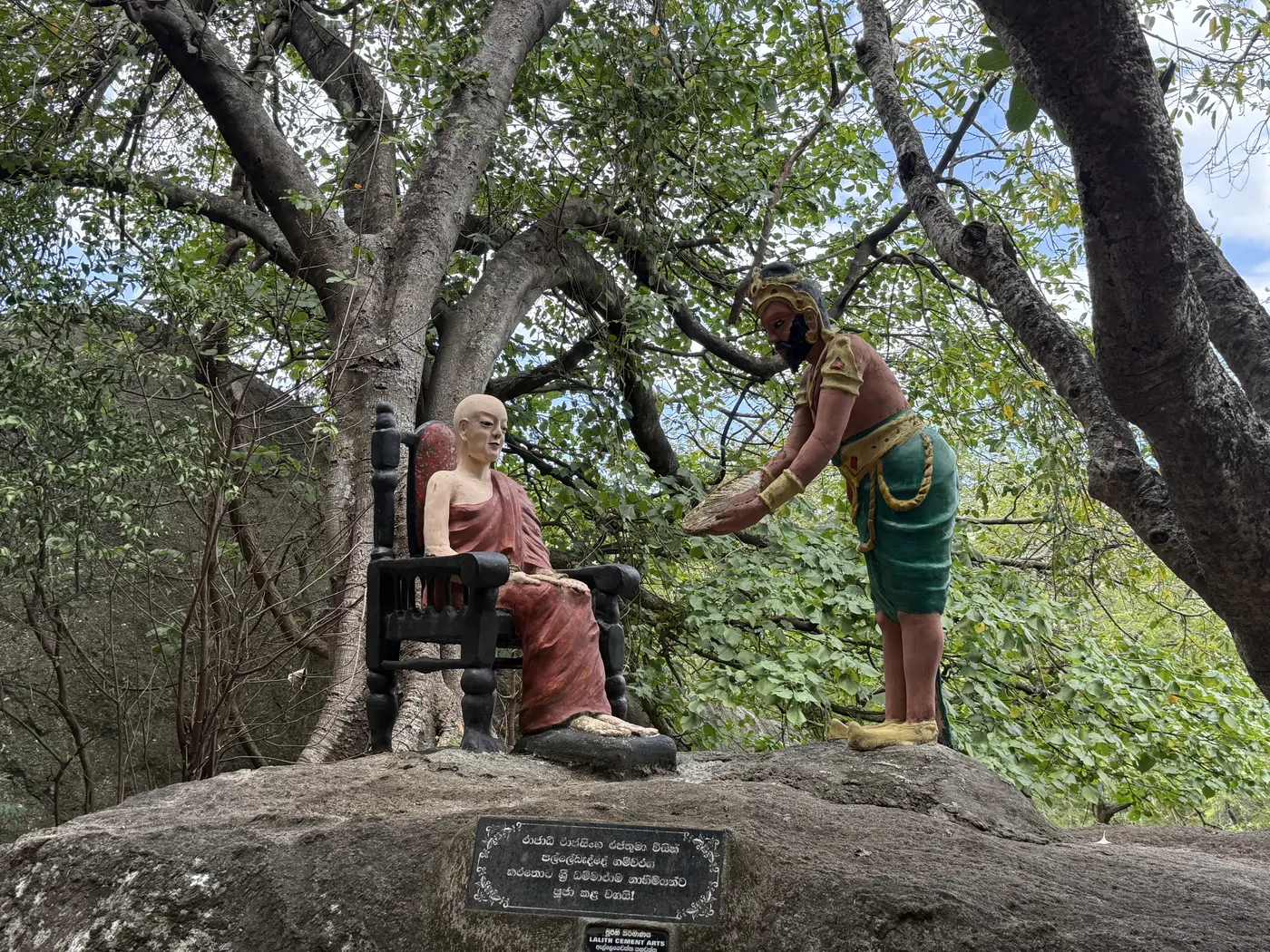
A second shrine room nearby has life-size painted statues of scenes from the Buddha’s life, with attendants making offerings.
The Hilltop Dagoba and the View
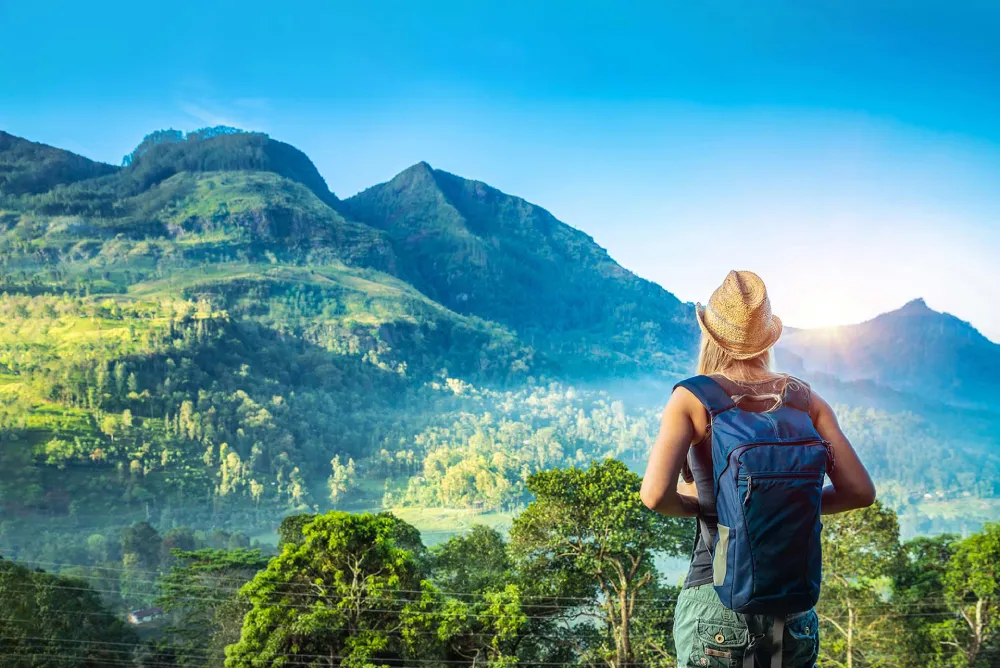
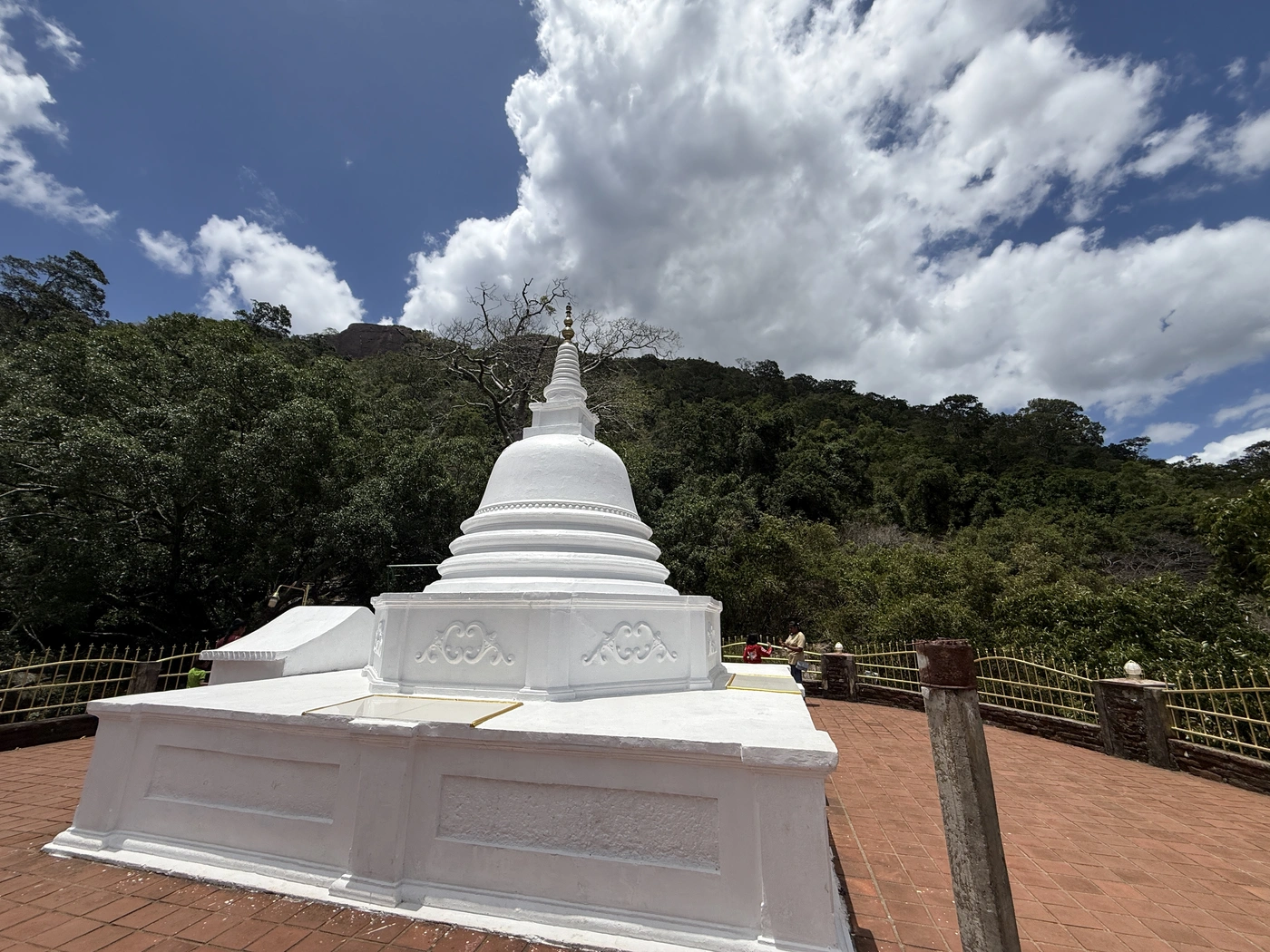
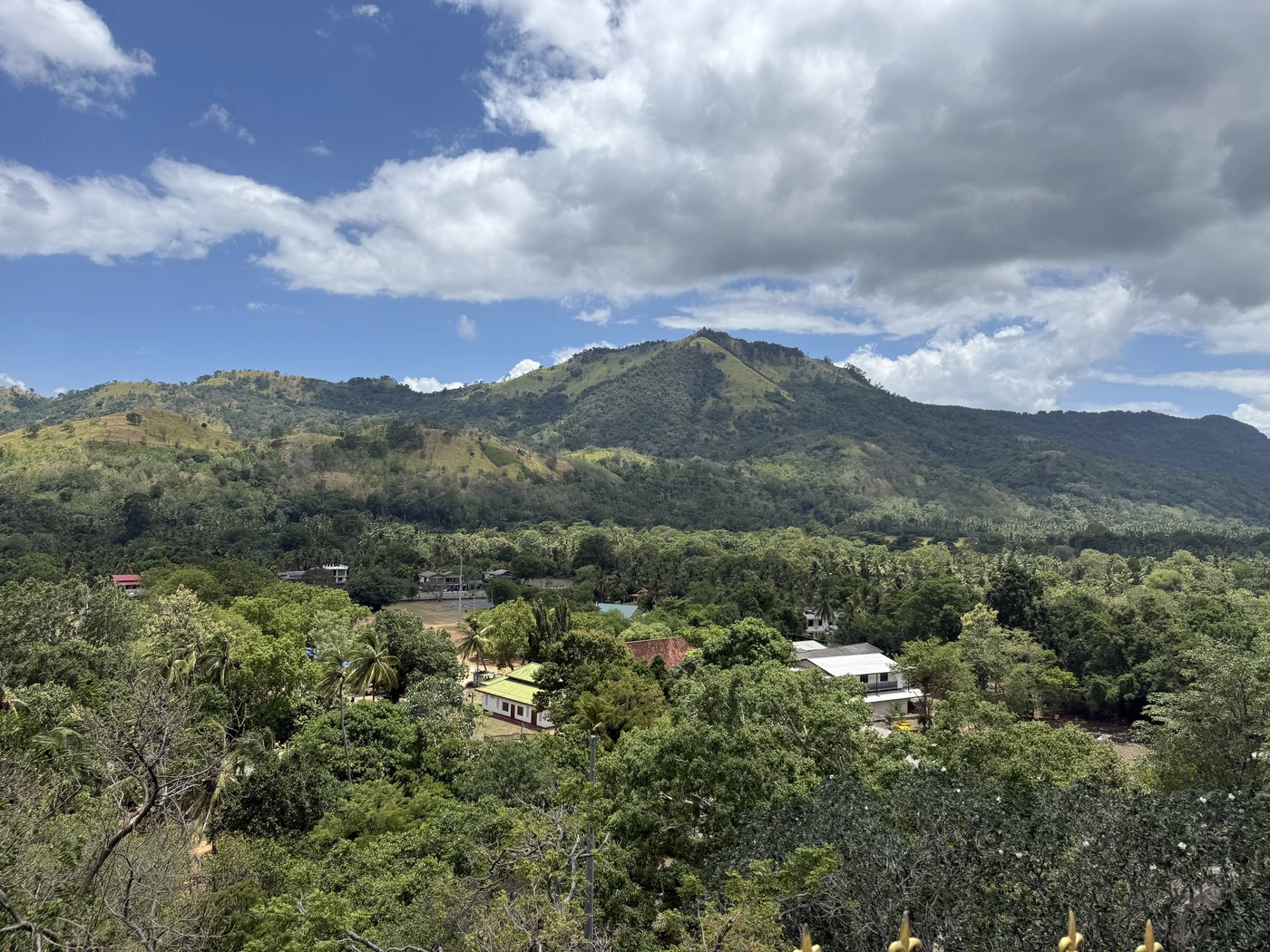
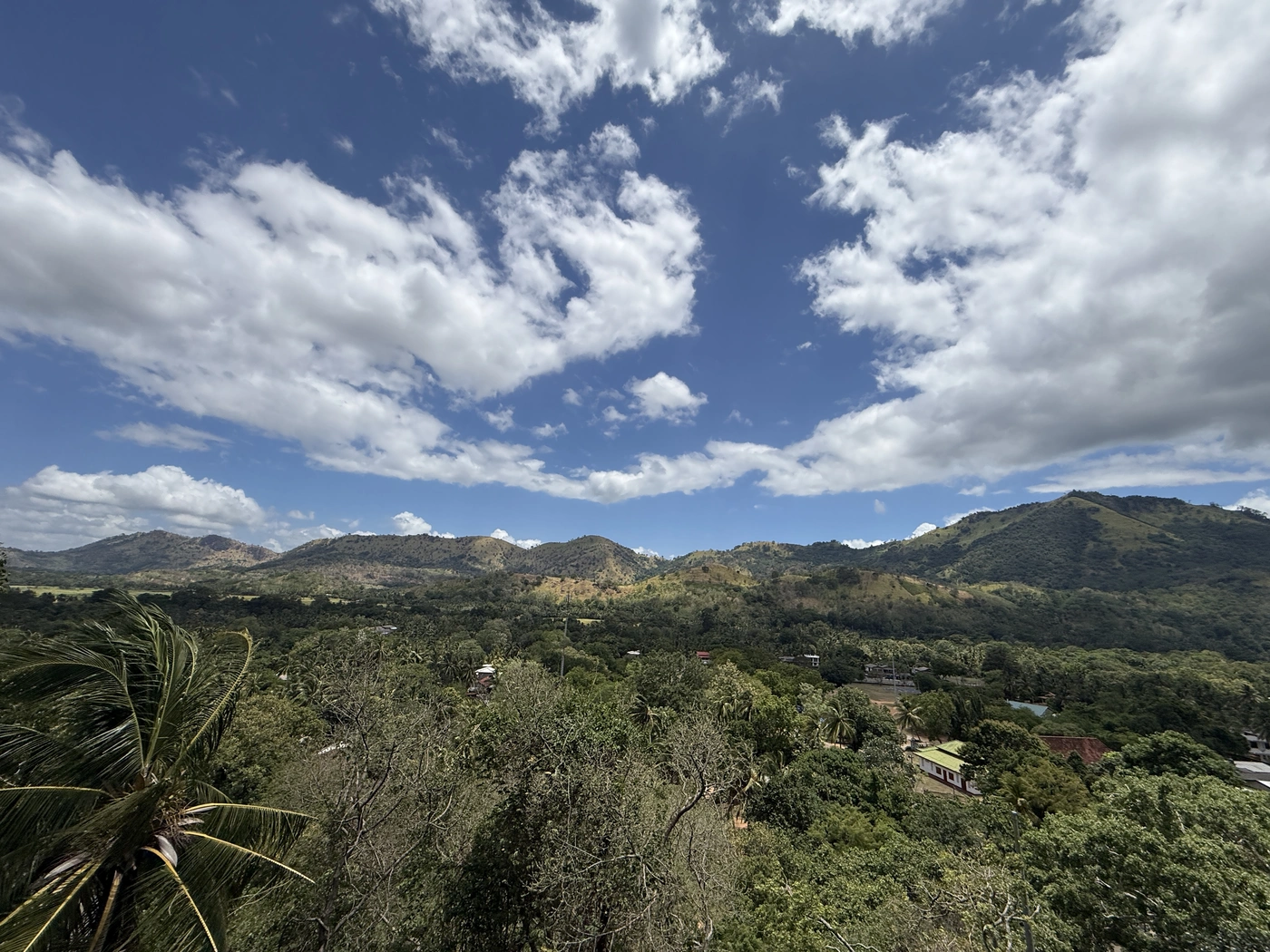
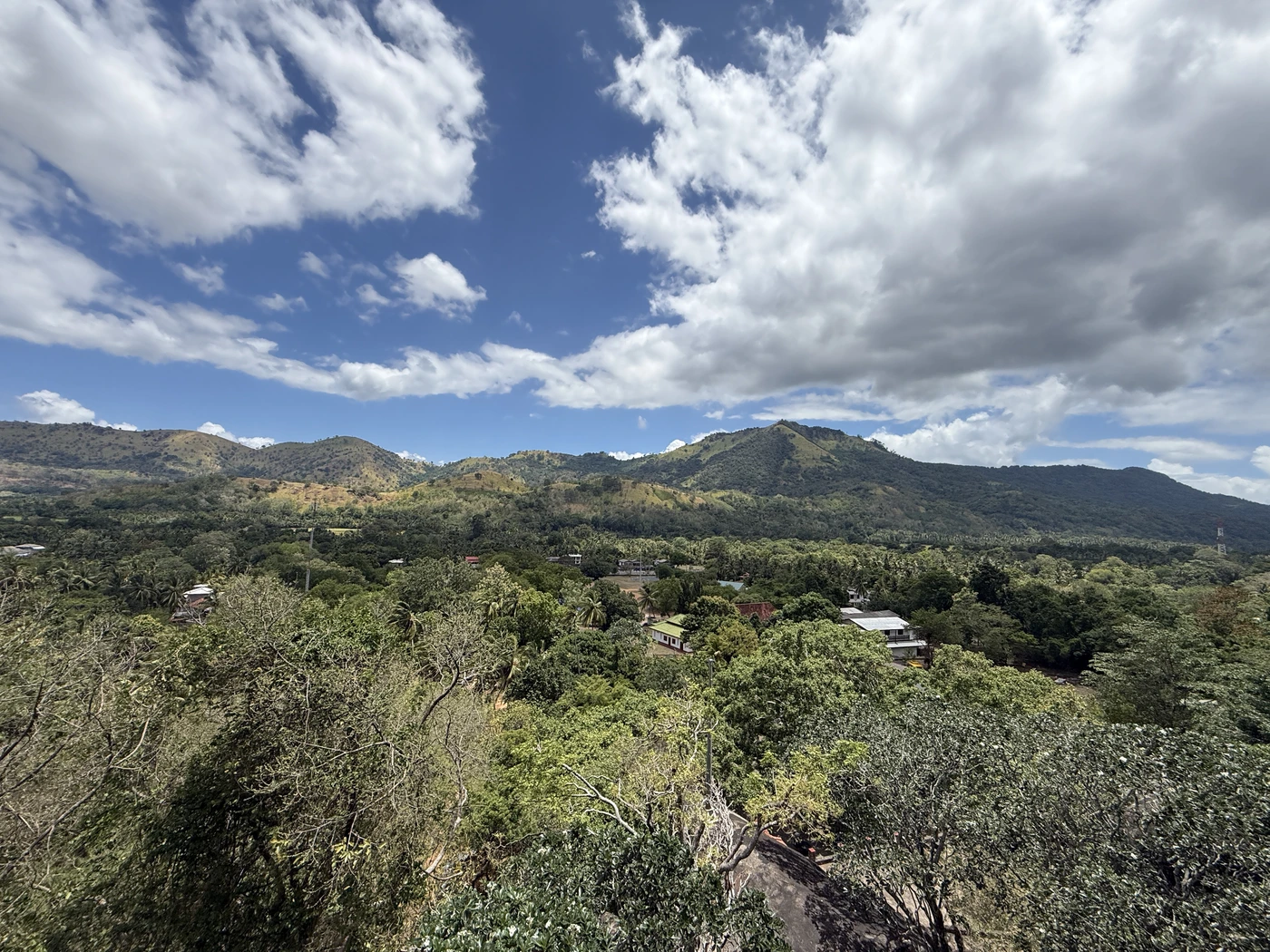
From the image house, one more pathway climbs to the top of the rock, where a white dagoba stands on a paved terrace. From up there you get an almost 180-degree view over the village, the green valley and the hills beyond. The view is excellent, though I went around noon and it was far too hot to stay for long. If you can, come in the early morning or late afternoon so you can enjoy the top properly.
The History of Sankapala Temple
The history below comes from the Sri Lanka Archaeology Department board at the temple entrance and other published sources.
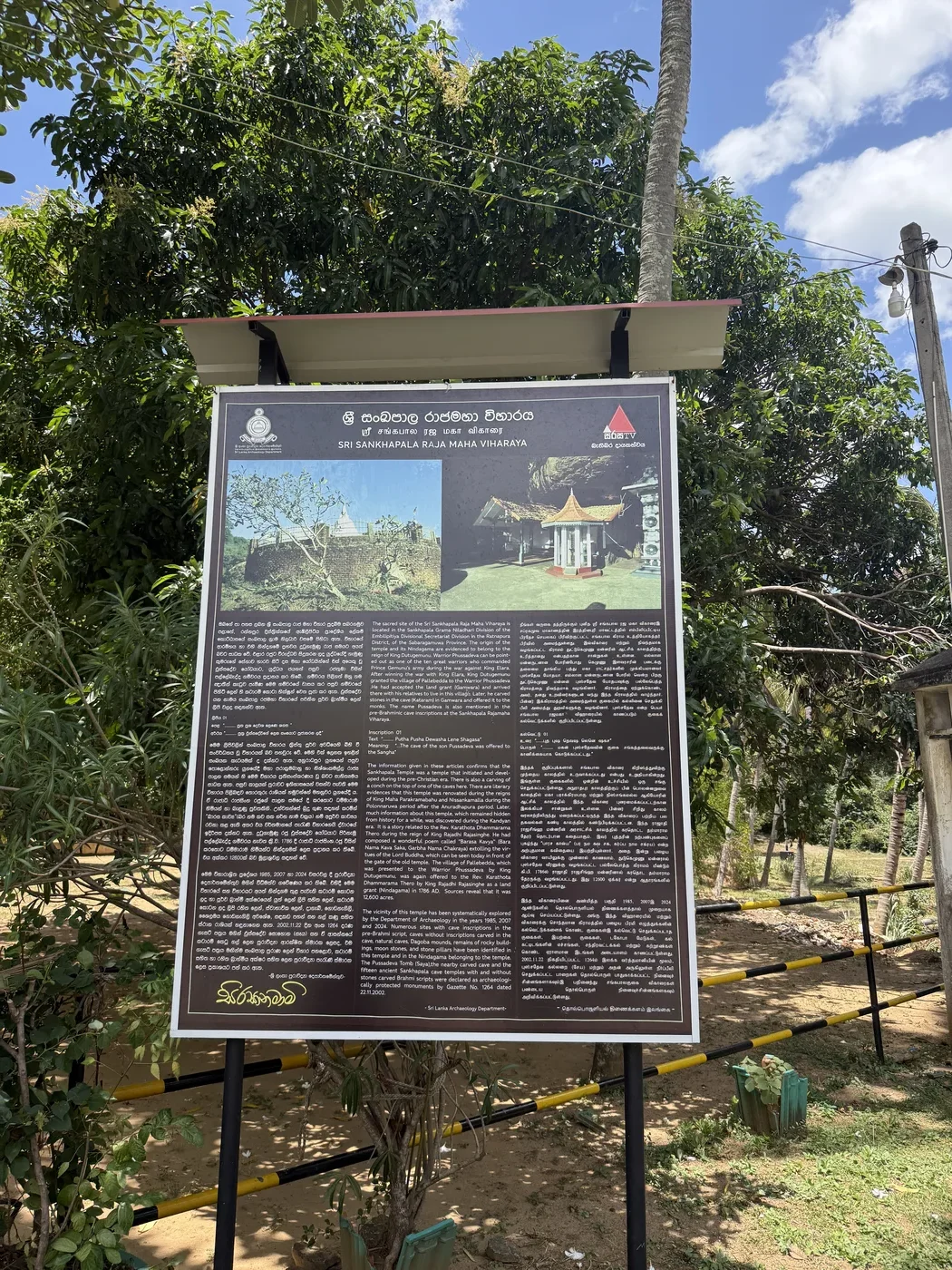
The warrior Pussadeva and King Dutugemunu. According to the board, the origin of the temple and its land grant (nindagama) belong to the reign of King Dutugemunu in the second century BCE. Pussadeva was one of the ten great warriors who commanded Prince Gemunu’s army in the war against King Elara. After the victory, Dutugemunu granted him the village of Pallebedda. Pussadeva settled there with his relatives, carved a cave (katarama), and offered it to the monks. Tradition says he later gave up his worldly life, became a monk, and attained arahatship here. He is remembered as a conch-blower, and the name Sankapala is usually explained as coming from “sanka” (conch).
The cave inscription. The board records an early Brahmi inscription at the temple, which reads “Putha Pusha Dewasha Lene Shagasa” and means “the cave of the son Pussadeva was offered to the Sangha”. There is also a conch carving above one of the caves. The board describes the temple as one that began and developed in the pre-Christian era.
Renovation in the Polonnaruwa period. Literary evidence suggests that the temple was renovated during the reigns of King Maha Parakramabahu and King Nissankamalla in the Polonnaruwa period.
Rediscovery in the Kandyan era. The temple later stayed hidden from history for a while, and information about it came to light in the Kandyan era through the Rev. Karatota Dhammarama Thera. In the reign of King Rajadhi Rajasinghe, he composed a poem called Barasa Kavya (also known as the Garbha Nama Chakraya), praising the virtues of the Buddha, and it can still be seen at the old temple gate. In 1786, King Rajadhi Rajasinghe presented the Pallebedda village to the Thera as a land grant (nindagama), which sources say was about 12,600 acres.
Archaeological protection. The Department of Archaeology has studied the area in 1985, 2007 and 2024. They have identified cave inscriptions in early Brahmi script, caves without inscriptions, natural caves, dagoba mounds, ruins of rock buildings, moonstones and stone pillars. The Pussadeva Tomb (Saya), a nearby carved cave and the fifteen ancient Sankapala cave temples were declared archaeologically protected monuments by Gazette No. 1264 dated 22 November 2002.
Tips for Visiting Sankapala Temple
- Go early or late. The rock heats up by midday, and the hilltop has little shade.
- Cover up. Legs and arms must be covered, and you will be barefoot on the temple grounds.
- Wear shoes you can slip off easily, and expect a lot of stone steps.
- Watch for monkeys. Keep food and loose items out of reach.
- Budget about an hour or a little more, longer if you want to linger at the top.
- Take small change for flowers and lamps from the stalls.
- Be respectful. This is an active place of worship, so keep your voice low and ask before photographing monks or people praying.
Combining Sankapala With Your Udawalawe Trip
The temple works well as a short stop before or after a safari. I did it between the morning safari and the afternoon feeding at the Elephant Transit Home. Our complete guide to Udawalawe National Park covers the safari side in detail, and the Sankapala temple is an easy way to add a cultural stop on the same day.
Is Sankapala Temple Worth Visiting?
Yes. Sri Lanka has temples on almost every corner, but this one stands out for its old art and statues, its cave setting, and a view that rewards the climb. It is free, easy to reach, and very close to Udawalawe, so if you have a spare hour or two, this is one of the best ways to use it.
Location Map
Nearby Atractions
- Udawalawe Ath Athuru Sevana (Elephant Transit Home) - Visitor Guide, Feeding Times & Tickets - 6.5 km
- Complete Guide to Udawalawe National Park - 13.5 km
- Idalgashinna Railway Station: Sri Lanka's Fifth Highest Station and a Ride Worth Taking - 40.4 km
- Adisham Bungalow (St. Benedict’s Monastery): A Peaceful Colonial Retreat in Haputale - 41.2 km
- Haputhale Travel Guide - 42.3 km
- Lipton’s Seat: A Scenic Viewpoint Above Sri Lanka’s Tea Country - 47 km
- Sudagala Ella & Beyond - A Jungle Glamping Escape in Kuruwita - 55.8 km
- Monara Gala Mountain (Peacock Hill) - 72.8 km
- Galle Fort: A Historic Coastal Treasure of Sri Lanka - 75.7 km
- Kondagala Rock – A Hidden Hike Above Sri Lanka’s First Tea Estate - 78.5 km